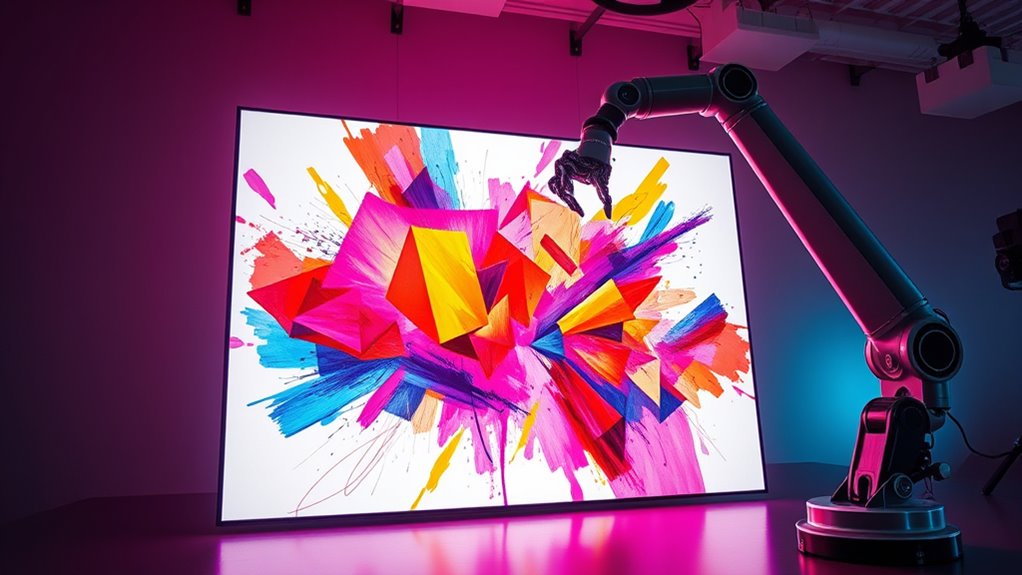

Artificial intelligence in art acts as both a collaborator and a competitor. It helps you experiment with new styles, accelerate your workflow, and push creative boundaries, offering exciting opportunities. At the same time, AI challenges traditional notions of originality and ownership, creating market disruption and ethical debates. As this shift evolves, you’ll discover how artists are steering this blend of partnership and competition—continue exploring to understand the full impact.
Key Takeaways
- AI acts as a creative collaborator, enhancing artistic innovation and expanding stylistic possibilities through tools like Midjourney and DALL-E.
- It also functions as a competitor by enabling easier, faster art production, challenging traditional artists’ livelihoods and market dynamics.
- The integration of AI shifts artistic values, prompting society to reevaluate authenticity and human ingenuity in art creation.
- Ethical and legal concerns, such as ownership rights and copyright issues, position AI both as a disruptive force and a contentious competitor.
- The evolving perception of AI in art suggests it will increasingly serve as a complementary partner rather than a replacing adversary.
The Rise of AI-Generated Art in the Market

The rise of AI-generated art is transforming the market at an impressive pace. The global AI art market is expected to grow from $0.43 billion in 2024 to $0.62 billion in 2025, with a CAGR of 42.4%. By 2029, it could reach $2.51 billion, maintaining a 42% growth rate. Overall, the broader AI art sector might hit $8.6 billion by 2033, expanding rapidly across industries like interior design, entertainment, and media. North America leads the charge, holding 38% of the market. Visual art dominates, making up over half of AI-generated art sales. Key drivers include increased adoption by artists, AI startups, and industries integrating AI tools, fueling innovation and boosting demand worldwide. Market growth projections indicate a significant acceleration driven by technological advancements and rising industry interest, highlighting the importance of understanding AI art integration as it continues to evolve. Additionally, the development of AI-driven creative tools is making AI art more accessible to a broader audience, further accelerating market growth. Recognizing the role of technological advancements in this sector underscores the rapid pace of innovation shaping the future of AI art. Moreover, ongoing research in machine learning algorithms contributes to improving the quality and diversity of AI-generated artworks, opening new possibilities for artists and collectors alike. Continuous improvements in creative intelligence are also helping to refine the aesthetic quality of AI artworks, making them more appealing to traditional art collectors.
Transforming Creativity: How AI Enhances Artistic Processes

AI-generated art is revolutionizing how artists approach their creative processes, opening up new avenues for expression and innovation. You can now explore fresh ideas during brainstorming, design, and post-production, thanks to AI tools like Midjourney that dominate the market. AI enhances artistic workflows by facilitating experimentation with styles and techniques previously difficult to achieve. It allows you to create richer, more nuanced artworks by combining your intuition with AI’s analytical power. Nearly half of artists believe AI positively influences their practices, while many see it as a valuable tool rather than a primary creator. This synergy pushes the boundaries of creativity, enabling innovative and previously unthinkable art forms. AI’s role in artistic processes continues to expand, transforming how you conceive and produce art. AI content clusters can help artists organize and explore different thematic elements, further elevating their creative potential. Additionally, integrating organizational strategies drawn from home improvement principles can help artists maintain efficient workflows and manage their creative projects more effectively. Moreover, understanding technological integration within artistic workflows can ensure more seamless and effective adoption of AI tools. For example, leveraging industry insights from the art world can guide artists in choosing the most suitable AI applications for their unique styles.
Public Perception and Cultural Shifts Toward AI Art
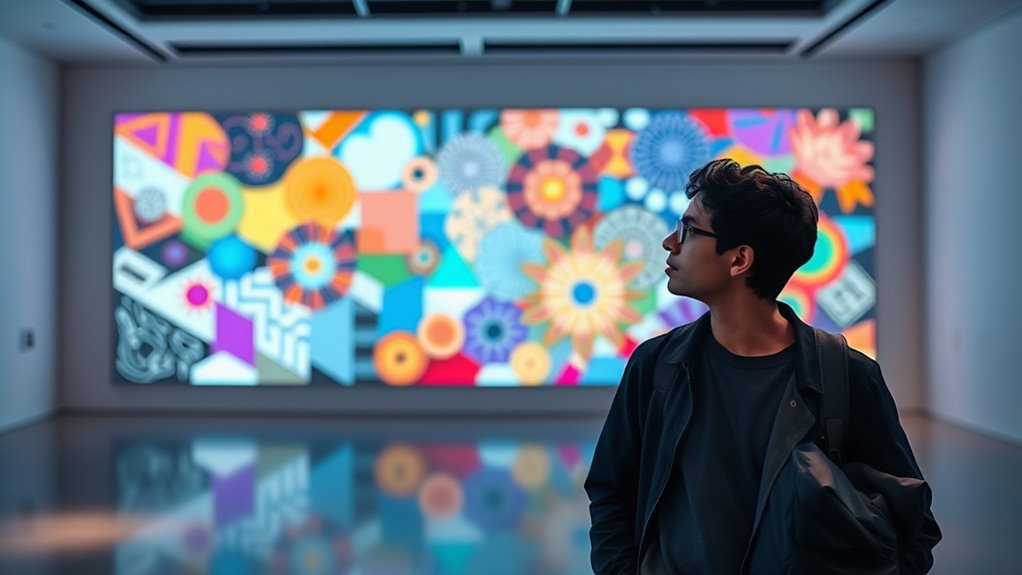
Public perception of AI art is evolving as more people encounter it through social media and digital galleries, yet many still question its authenticity. You might notice a divide in how audiences value originality and trust, with some embracing AI as a creative partner and others viewing it as a threat to traditional artistic standards. These cultural shifts reflect changing artistic values and growing acceptance, but skepticism about trust and authenticity remains widespread. Additionally, ongoing copyright infringement concerns and legal actions highlight the contentious relationship between AI-generated content and intellectual property rights. As creative practice evolves with technological advancements, society continues to grapple with defining what constitutes genuine artistic expression. The integration of trailer music composition techniques into AI tools is influencing how new works are produced, further shaping perceptions of originality and authorship. Furthermore, the development of electric bikes and related technologies demonstrates how innovation continually influences artistic and cultural landscapes.
Changing Artistic Values
As AI art becomes more visible and accessible, public perception shifts, sparking debates about its legitimacy and value. About 27% of Americans have seen AI-generated art, yet many don’t recognize it in this manner. Despite increased visibility, 76% still don’t consider AI works true art. High-profile sales, like the “Portrait of Edmon Belamy” for $432,000, boost AI’s mainstream profile, while tools like Canva lead in adoption. The generative AI market is expected to surpass $1.3 trillion by 2032, reflecting its growing influence. AI’s market value is projected to grow rapidly, and as the technology advances, discussions about artistic authenticity continue to evolve. Society’s view of creativity is evolving, with AI challenging traditional notions of artistic authenticity. Artists and audiences are reconsidering what constitutes art, driven by innovations that reshape cultural expectations and redefine the role of human ingenuity in creative expression. Additionally, the integration of AI into creative fields is prompting reassessments of traditional artistic skills and the importance of human touch in art. Furthermore, ongoing research indicates that public acceptance of AI art varies widely across different demographics, influencing future trends in the art world.
Trust and Authenticity
The rise of AI art challenges long-held ideas about authenticity and trust in creative works. You might find it hard to tell AI-generated images from human-made ones, raising fears of deception, especially in art markets and media. Without clear attribution, many question who truly created the work, leading to skepticism about its originality and value. Public awareness remains limited; only 27% of Americans have seen AI art, and many aren’t sure whether what they see is AI or human-made. This confusion fuels mistrust, with 76% of people denying AI creations as genuine art and concerns about the lack of soul or intent. As exposure increases, perceptions may shift, but doubts about authenticity and ethical concerns still cast a shadow over AI’s role in art. Public perception varies widely, and ongoing debates about the ethical use of AI in creative industries continue to influence how society views AI-generated art. Additionally, the trustworthiness of AI systems themselves is under scrutiny, impacting public confidence in AI-created works. Furthermore, understanding the cultural shifts around AI art is essential as society adapts to new forms of creativity and expression. Moreover, integrating artistic integrity principles could help bridge the gap between AI innovation and public trust. Recognizing the importance of brand reputation and transparency can also promote greater acceptance of AI-driven creative endeavors. It is crucial to consider the technological limitations of AI tools, as they can influence the authenticity perceived by audiences and critics alike.
Cultural Acceptance Trends
Have you noticed how AI-generated art is gradually becoming more visible across galleries, online communities, and social media? Despite this exposure, many people still question whether it qualifies as genuine art—76% disagree. Public awareness is growing; 27% have seen AI art, yet recognition remains limited. Online discussions about AI art have increased by 50%, and exhibitions have risen 25%, signaling greater acceptance. Here’s a quick overview:
| Aspect | Trend | Public Perception |
|---|---|---|
| Visibility | Increasing in galleries | Many don’t recognize AI art as “real” art |
| Market Acceptance | Growing, projected 5% by 2025 | Skepticism persists despite commercial success |
| Cultural Debate | Ongoing discussions | Concerns about authenticity and creative value |
These shifts show cultural acceptance is evolving, though skepticism still influences perceptions.
Economic Opportunities and Challenges for Artists and Collectors
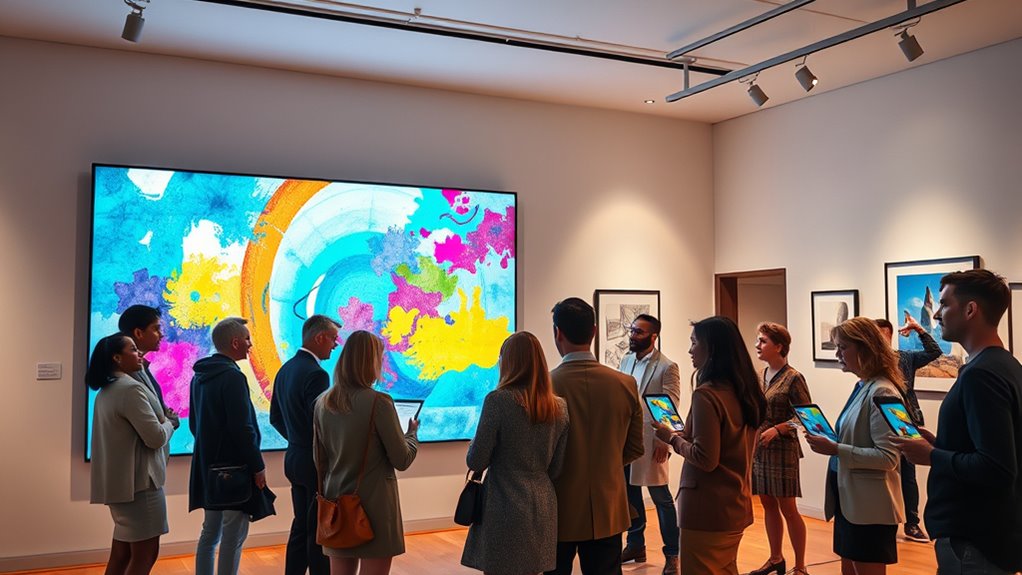
AI creates new revenue opportunities for both artists and collectors, opening up markets and digital sales channels. However, it also risks disrupting traditional art economies and raises questions about ownership and rights. steering these opportunities and challenges will be key to shaping the future of AI-driven art commerce.
New Revenue Streams
New revenue streams are emerging as artificial intelligence transforms the art industry. You can now sell AI-generated art, which is expected to hit $5 billion by 2025, opening new markets for innovative creators. Collaborating with AI systems allows you to craft unique pieces, expanding your earning potential across traditional and digital platforms. AI-assisted tools help you focus on creative direction, increasing productivity and output. AI-driven algorithms recommend your work to new audiences, boosting sales and exposure. Digital art platforms powered by AI provide additional channels to monetize your creations efficiently. For collectors, investing in AI art and NFTs offers fresh opportunities, with some pieces fetching significant prices. AI also aids in valuing artworks and discovering emerging artists, enhancing your investment strategies.
Market Disruption Risks
The rapid rise of AI-generated art has introduced significant risks and opportunities that reshape the art market. You might find it easier to create and sell art with AI tools, lowering barriers for new creators. However, the flood of AI artworks saturates platforms, making it harder for individual artists to stand out. The shift toward digital and cloud-based delivery bypasses traditional galleries, disrupting established channels. Prices for AI art often fall below those of traditional works, potentially depressing market values. As AI art becomes more prevalent, it could dilute the value of unique, handcrafted pieces, challenging artists’ livelihoods. Meanwhile, collectors face increased volatility, with fluctuating valuations and shifting demographics, especially among millennials and Gen Z. Overall, AI’s market influence demands careful navigation of these economic risks and opportunities.
Ownership and Rights
Ownership and rights in AI-generated art present complex legal and economic challenges for artists and collectors. The U.S. Copyright Office emphasizes human authorship, meaning AI-created works without significant human input aren’t eligible for copyright. Laws remain unclear, especially for purely AI-generated pieces, leading to disputes and lawsuits—over 16 filed in recent years. Artists have opportunities: AI can open new revenue streams and expand reach, with AI art expected to make up 5% of the market by 2025. Yet, issues like unauthorized use of copyrighted data, uncertain ownership, and resale risks complicate matters. The table below sums up key ideas:
| Aspect | Challenges | Opportunities |
|---|---|---|
| Legal Status | Unclear copyright protections | New revenue streams |
| Disputes & Litigation | Frequent lawsuits over infringement | Litigation clarifies boundaries |
| Market Impact | Resale value concerns | Growing AI art market |
| Artist Revenues | Under threat from mass AI outputs | Monetization via licensing |
| Transparency | Lack of disclosure standards | Better attribution practices |
Technological Breakthroughs Driving Artistic Innovation

Advancements in artificial intelligence algorithms have revolutionized the way artists create and innovate, enabling more sophisticated and nuanced works. You now have access to powerful tools that generate detailed art from simple prompts, thanks to generative models like DALL-E and Midjourney. Machine learning models can be customized to mimic specific styles, expanding creative possibilities. Neural networks simulate human-like creativity, pushing the boundaries of traditional art forms. Collaborative AI platforms foster partnerships between humans and machines, enhancing artistic expression.
Here are three key breakthroughs:
- Generative art tools transforming text prompts into detailed images.
- Customizable machine learning models tailoring unique artistic styles.
- Collaborative platforms enabling seamless human-AI partnerships.
Navigating Legal and Ethical Concerns in AI-Driven Art

As AI-generated art becomes more prevalent, steering the legal and ethical challenges it presents is increasingly complex. You face issues like copyright infringement allegations, where AI tools allegedly use artists’ work without permission, risking legal battles. Since AI creates without human authorship, it often doesn’t qualify for copyright protection, complicating ownership rights. Companies claim fair use, arguing their transformative use doesn’t harm original artists, but this remains contentious. Ethically, questions arise about using artists’ work for training AI without consent and whether artists deserve fair compensation. Transparency about how AI models are trained is crucial. Existing legal frameworks struggle to keep pace, highlighting the need for new regulations and international cooperation to address these evolving issues effectively.
The Future of Collaboration Between Human Artists and AI

The evolving legal and ethical landscape surrounding AI-generated art is shaping how artists and institutions approach collaboration. As AI tools become more integrated, hybrid workflows are emerging, blending human creativity with machine assistance. This opens new avenues for experimentation, innovation, and reaching wider audiences. You’ll see increasing collaborations that produce unique artworks, accelerating the creative process and expanding artistic boundaries.
- AI acts as a collaborative partner, offering new styles and techniques.
- Artists leverage AI for rapid prototyping, freeing time for creative decisions.
- Growing acceptance from galleries and collectors suggests AI-human projects will become mainstream.
With more investment and accessibility, your future collaborations with AI will likely become more dynamic, transforming the creative landscape and redefining what art can be.
Balancing Tradition and Innovation in the Digital Age

Balancing tradition and innovation in the digital age requires artists and institutions to navigate a landscape where classic techniques coexist with emerging technologies. You’ll see traditional art forms like painting and sculpture making a comeback, often as a response to digital art’s rapid growth. Investors tend to favor traditional art for stability, while digital art’s market remains volatile. Preservation techniques are evolving, blending digital tools with conventional methods to safeguard cultural heritage. Digital enhancements now restore and expand access to traditional works.
| Traditional Art Revival | Digital Transformation | Market Dynamics |
|---|---|---|
| Resurgence of painting and sculpture | Virtual reality engagement | Digital art market fluctuations |
| Stable investments | New forms of expression | Rapid trend shifts |
| Preservation techniques | Audience participation | Evolving sales channels |
| Cultural significance | Cross-disciplinary collaborations | Investment strategies |
| Cultural heritage | Digital accessibility | Price volatility |
Frequently Asked Questions
How Do Copyright Laws Apply to Ai-Generated Artwork?
You wonder how copyright laws apply to AI-generated artwork. Currently, laws require human authorship for protection, meaning AI alone can’t hold copyrights. If you add significant creative input—like editing or choosing elements—you may secure copyright. But if AI creates the work independently, it won’t be protected. Courts emphasize human creativity must be central; otherwise, your AI-generated work remains in the public domain.
Can AI Truly Replicate Human Emotional Expression in Art?
Can AI truly replicate human emotional expression in art? You might think so, but AI mainly recombines existing data without genuine feelings. It analyzes cues and mimics emotional elements, yet lacks the lived experience and depth humans bring. You’ll notice AI-generated art often feels superficial or stereotypical. While AI can assist your creative process, authentic emotional resonance still relies on human insight and personal expression—AI remains a tool, not a substitute.
Will AI Replace Traditional Artists or Serve as a Tool?
You might wonder if AI will replace traditional artists or just serve as a tool. It’s more likely that AI will act as an enhancer, expanding your creative possibilities rather than replacing your skills. By integrating AI into your workflow, you can explore new ideas, visualize concepts faster, and push boundaries. Think of AI as a collaborative partner that amplifies your talents, helping you create innovative art without losing your unique human touch.
What Are the Ethical Implications of AI Creating Original Art?
You should consider that AI creating original art raises ethical questions about ownership and authorship, especially when laws are unclear. It also impacts human artists’ livelihoods and challenges traditional notions of creativity. Transparency about AI’s role, accountability, and disclosure are essential to prevent deception. Additionally, biases, privacy issues, and environmental concerns emerge, urging you to think carefully about the societal and moral consequences of AI-generated art.
How Accessible Are AI Art Tools for Independent Artists?
You might find AI art tools increasingly accessible as they become more affordable and user-friendly. Many platforms offer cloud-based, device-agnostic options, making it easier for you to experiment without advanced technical skills. However, costs and subscription models can still pose barriers. While some artists embrace AI’s potential, others hesitate due to ethical concerns or limited understanding. Overall, AI tools are gradually breaking down accessibility barriers for independent creators like you.
Conclusion
You might worry AI threatens human creativity, but it actually opens new doors for expression. Embracing AI as a collaborator can deepen your artistry and challenge you to explore uncharted ideas. Don’t let fear hold you back—your unique perspective remains irreplaceable. By working together, humans and AI can elevate art to inspiring new heights, proving that innovation and tradition can thrive side by side. The future of art is yours to shape.