Social media transforms your engagement with art activism by allowing you to share powerful visual stories, reach wider audiences, and organize communities instantly around social issues. It enables direct interaction through comments, shares, and likes, helping you measure impact and adapt strategies quickly. With its democratizing power, social media gives everyone a voice, turning art into a personal tool for change. If you want to explore how this digital shift amplifies activism, there’s more to discover below.
Key Takeaways
- Social media enables artists and activists to collaborate broadly, amplifying messages and mobilizing supporters instantly across borders.
- Visual storytelling through images and videos turns complex social issues into emotional, shareable content that inspires action.
- Viral campaigns and consistent branding build a recognizable digital movement, increasing visibility and engagement around social causes.
- Real-time feedback and metrics allow activists to adapt strategies quickly, enhancing the impact of their campaigns.
- Social media democratizes activism by providing accessible platforms for diverse voices, empowering individuals to contribute and drive social change.
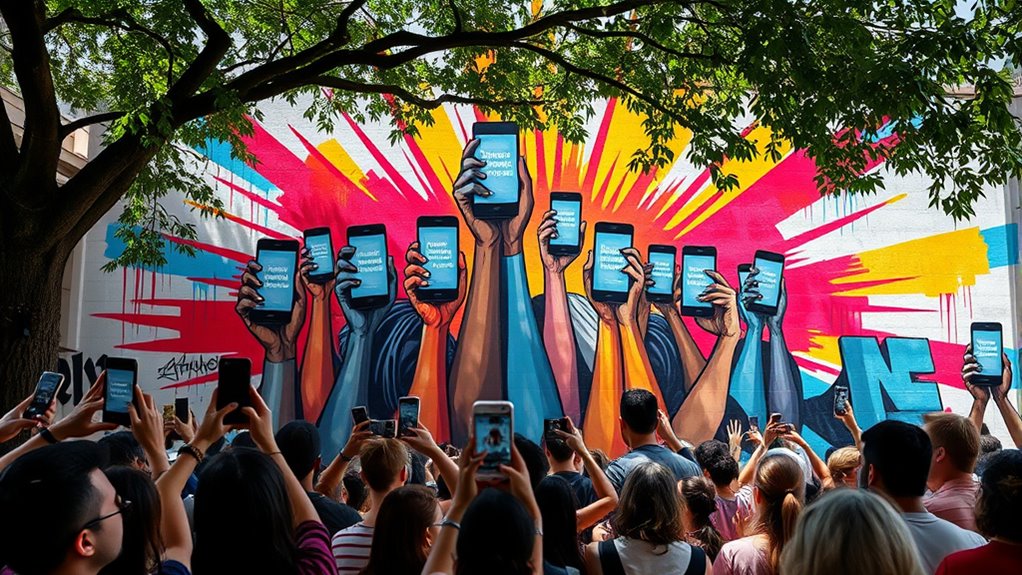
Social media has transformed the way artists and activists collaborate, enabling them to reach wider audiences and spark conversations instantly. With just a few clicks, you can share powerful messages, mobilize supporters, and create a ripple effect that transcends geographic boundaries. Central to this digital landscape is digital engagement, which allows you to connect directly with your audience in real-time. Through comments, shares, and likes, you can measure the impact of your activism and adapt your strategies accordingly. Social media platforms serve as dynamic tools that amplify your voice and foster community around pressing social issues.
Visual storytelling plays a vital role in this process. Unlike traditional methods, social media allows you to craft compelling narratives through images, videos, and multimedia content that resonate emotionally with your audience. When you share impactful visuals—whether it’s a striking photograph, a short documentary, or an eye-catching infographic—you turn abstract ideas into tangible experiences. Visual storytelling helps you communicate complex issues in a way that’s accessible and memorable, making it easier for others to understand and support your cause. It’s about creating a visual language that speaks directly to people’s emotions, inspiring action and empathy.
You can leverage social media’s instant sharing capabilities to highlight activism and art projects that might otherwise go unnoticed. A single post can go viral, attracting media attention and rallying community support. By consistently using powerful visuals and engaging content, you build a recognizable identity for your movement that encourages followers to participate actively. You become part of a larger digital conversation, where your art becomes a catalyst for social change. The immediacy of social media means you can respond quickly to current events, framing your art activism in real-time and keeping your audience engaged with ongoing developments. Additionally, understanding how website performance metrics are tracked can help you analyze the reach and effectiveness of your campaigns.
A single post can go viral, sparking support and turning art into a catalyst for social change.
Furthermore, social media democratizes art activism, giving everyone a platform regardless of their background or resources. You don’t need gallery space or traditional media to showcase your work; instead, you can reach millions directly. This accessibility fosters diverse voices and innovative approaches to activism through art. As you harness digital engagement and visual storytelling, you empower others to join in, share their perspectives, and contribute to a collective movement. Ultimately, social media turns art into a tool for activism that’s immediate, personal, and profoundly impactful—making it an essential part of modern social change.
As an affiliate, we earn on qualifying purchases.
Frequently Asked Questions
How Can Artists Measure the Impact of Social Media Activism?
You can measure your impact by tracking digital engagement, such as likes, shares, comments, and hashtag use, to see how your message resonates. Additionally, analyze your audience reach—note increases in followers or mentions across platforms. Monitoring website traffic or event participation linked to your social media campaigns also helps gauge your activism’s effectiveness. These metrics reveal how well you’re connecting with and mobilizing your audience.
What Are the Ethical Considerations in Online Art Activism Campaigns?
Oh, the irony of online art activism—you’re risking digital censorship and authenticity challenges just to be heard. Ethically, you must respect privacy, avoid misrepresentation, and consider the potential harm your work might cause. Remember, engaging authentically matters more than likes. Stay transparent, honest, and sensitive to diverse perspectives; otherwise, your campaign risks undermining its purpose and crossing moral boundaries you didn’t intend to breach.
How Does Social Media Influence Art Activism in Different Cultural Contexts?
You see social media shaping art activism differently across cultures by enabling digital storytelling that highlights unique cultural representations. It amplifies voices and issues specific to each community, fostering global awareness. However, you should also be mindful of cultural sensitivities and avoid misrepresentation. Social media’s reach allows for powerful, localized messages, but it requires respectful engagement to ensure authentic cultural expression and impact in diverse contexts.
What Are the Risks of Online Harassment for Art Activists?
They say, “What you post is what you get,” and for art activists, online harassment can be a real threat. You risk cyberbullying dangers and privacy invasion, which can silence your voice or even harm your safety. Staying vigilant and protecting your personal info is essential. Remember, the digital world amplifies your message but also exposes you to risks—so tread carefully and safeguard your space.
How Can Emerging Technologies Enhance Social Media Art Activism Efforts?
You can enhance your social media art activism efforts by leveraging emerging technologies like augmented reality and interactive installations. These tools make your messages more engaging and immersive, encouraging audience participation. With augmented reality, you can bring your art to life in real-world settings, while interactive installations invite viewers to directly engage with your work. Embracing these technologies helps you create powerful, memorable campaigns that resonate and spread your activism more effectively.
visual storytelling equipment for activism
As an affiliate, we earn on qualifying purchases.
As an affiliate, we earn on qualifying purchases.
Conclusion
You might think social media amplifies art activism’s voice, but sometimes it just turns passionate protests into fleeting likes and shares. What’s the point of sparking change if it’s gone in a scroll? Ironically, the very platforms meant to empower can numb you to real issues, making activism feel like a trendy hashtag instead of a movement. In the end, true change still depends on your willingness to go beyond the screen.
viral campaign branding materials
As an affiliate, we earn on qualifying purchases.
As an affiliate, we earn on qualifying purchases.
real-time social media analytics tools
As an affiliate, we earn on qualifying purchases.
As an affiliate, we earn on qualifying purchases.