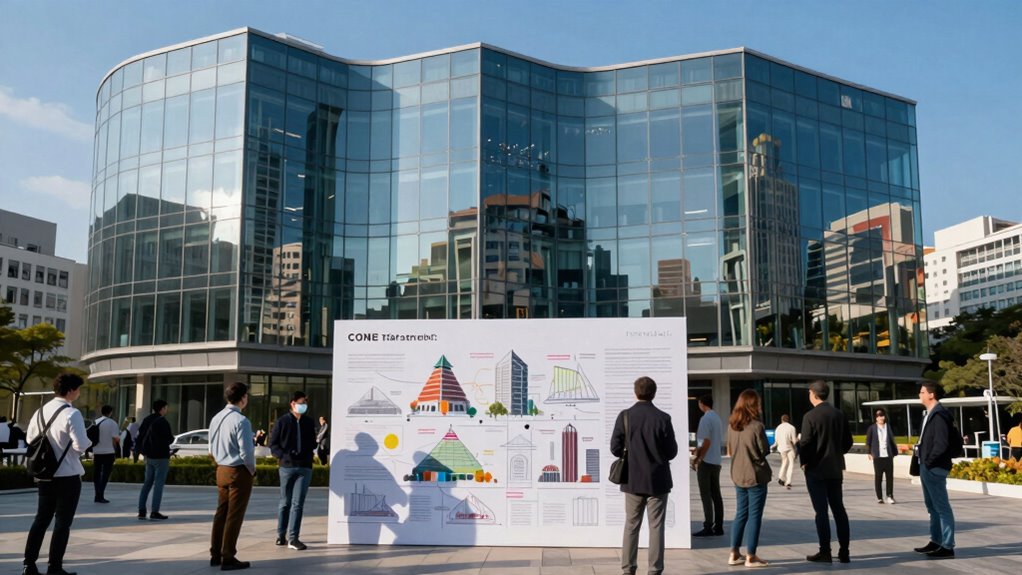

Design competitions influence real-world architecture trends because they serve as platforms for innovation and setting new standards. They challenge you to think creatively, pushing materials, structures, and sustainability limits. With juries made of industry leaders, winning ideas gain recognition and inspire mainstream adoption. These contests act as incubators for emerging concepts, shaping urban design and architectural practice over time. Keep exploring how these competitions continually drive the evolution of architecture in meaningful ways.

Get business pricing on monitors, keyboards and dev gear
- Business-only prices and quantity discounts
- Tax-exempt purchasing
- Multiple users, one account, clear invoices
Key Takeaways
- They serve as platforms for pioneering ideas that often set new industry standards and influence mainstream architecture.
- Judging by experts highlights innovative designs, encouraging adoption of new materials and sustainable practices.
- Competitions foster experimentation, leading to prototypes and concepts that transition into real-world applications.
- They spotlight emerging trends, guiding designers and developers to align with evolving societal and environmental priorities.
- Public engagement and recognition amplify innovative concepts, accelerating their integration into built environments.

Design competitions have become a powerful platform for shaping contemporary architecture, inspiring innovation, and challenging traditional boundaries. When you participate in or observe these contests, you quickly realize how they serve as catalysts for groundbreaking ideas. Innovative proposals emerge from the diverse pool of entries, often pushing the limits of material use, structural design, and sustainability. These competitions aren’t just about winning; they’re about setting new standards and inspiring the larger architectural community. The best ideas often originate from fresh perspectives, unencumbered by the constraints of existing projects or client demands, allowing creativity to flourish.
The influence of the jury is a critical factor in translating these innovative proposals into industry trends. You might notice that juries typically comprise prominent architects, designers, and industry experts whose opinions carry significant weight. Their judgments are not solely based on aesthetics but also on feasibility, environmental impact, and social relevance. When a particular design wins or garners high praise, it often signals a shift in architectural thinking, encouraging others to explore similar concepts. Jury influence can accelerate the adoption of new materials, construction techniques, or sustainable practices, inevitably shaping the direction of future projects across the globe. Furthermore, the judging process often highlights emerging priorities within the industry, guiding future research and development efforts. Additionally, the selection criteria used by juries often reflect evolving industry standards and societal needs, further shaping industry trends. Recognizing how these industry standards evolve can help architects and designers stay ahead of emerging trends and priorities.
Moreover, design competitions often act as testing grounds for emerging ideas that later evolve into standard practices. You see this happen when a winning innovative proposal demonstrates a novel approach to urban densification or resilient architecture. As these ideas gain recognition through competitions, they gradually influence mainstream architectural trends, prompting architects and developers to incorporate similar strategies in their work. The environment of these contests fosters experimentation, and successful proposals often serve as prototypes for real-world applications, setting precedents that ripple through the industry. Additionally, public engagement in these contests can amplify their influence, encouraging broader acceptance and adoption of new concepts. Recognizing the importance of collaborative innovation can further enhance the impact of competition-driven ideas on sustainability and societal well-being.
Additionally, competitions tend to spotlight cutting-edge concepts, encouraging architects to think beyond conventional boundaries. As a participant or observer, you recognize how the desire to impress the jury pushes designers to innovate and challenge norms. This drive results in a continuous flow of fresh ideas that influence what becomes popular or standard in architecture. Over time, the collective impact of these competitions shapes urban landscapes, pushes sustainability agendas, and influences cultural expressions through built environments. In summary, design competitions are more than contests—they’re dynamic incubators for the future of architecture, directly impacting the trends that define the field today and tomorrow.
As an affiliate, we earn on qualifying purchases.
Frequently Asked Questions
How Do Juries Select Winning Designs in Competitions?
You see that juries select winning designs based on clear jury criteria, which guide their design evaluation process. They assess creativity, functionality, sustainability, and how well the design addresses the competition’s goals. Jurors discuss and compare submissions, weighing strengths and weaknesses before reaching a consensus. Ultimately, they choose the design that best meets the criteria, balances innovation with practicality, and has the potential to influence future architectural trends.
What Are the Costs Associated With Participating in Design Competitions?
You might think participating costs little, but entry fees can add up quickly, especially if you enter multiple competitions. Plus, you’ll need to invest time in design revisions based on feedback, which can be demanding. These costs can be a barrier, but they also push you to refine your ideas. Ultimately, weighing entry fees against potential rewards helps you decide if participating is worth the investment.
How Do Design Competitions Impact Local Communities?
Design competitions boost local communities by fostering community engagement and encouraging cultural representation. When you participate, you help showcase local values and identity through innovative architecture. This process can strengthen community pride, attract tourism, and inspire local development. Your designs reflect the community’s character, making spaces more meaningful and inclusive. Ultimately, competitions serve as platforms for communities to express their culture while benefiting from fresh, creative ideas that enhance their environment.
Are There Any Ethical Concerns in Architecture Competitions?
You might wonder if architecture competitions pose ethical concerns. They can, especially around intellectual property—where designers risk their ideas being copied without credit. Fair compensation is another issue; sometimes, winners gain fame while others work hard without payment. This imbalance raises questions about fairness and respect. As a participant, you should consider these ethics, advocating for transparent rules and recognition to guarantee integrity in the competition process.
How Do Competitions Influence Architectural Education Curricula?
Design competitions shape your architectural education by encouraging innovative curricula that emphasize real-world problem-solving. They push you to develop essential skills like creativity, critical thinking, and technical expertise. Participating in these competitions exposes you to diverse design challenges, fostering a practical understanding of architecture. This hands-on experience influences your learning, ensuring you’re better prepared for professional practice while inspiring new trends in architectural education.
architectural design competition books
As an affiliate, we earn on qualifying purchases.
As an affiliate, we earn on qualifying purchases.
Conclusion
Think of design competitions as the compass guiding the ship of architecture through uncharted waters. They steer trends, spark innovation, and challenge you to push boundaries. By participating or observing, you become part of a dynamic voyage shaping the skyline of tomorrow. Embrace these competitions—they’re the lighthouse illuminating new ideas and inspiring your next move in the ever-evolving world of architecture. Your vision can help chart the course for future cityscapes.
As an affiliate, we earn on qualifying purchases.
innovative structural engineering tools
As an affiliate, we earn on qualifying purchases.
As an affiliate, we earn on qualifying purchases.
Fall Picks
fall essentials
As an affiliate, we earn on qualifying purchases.