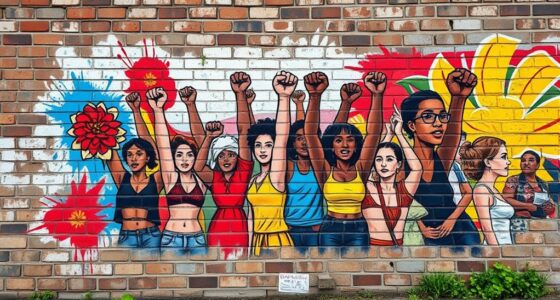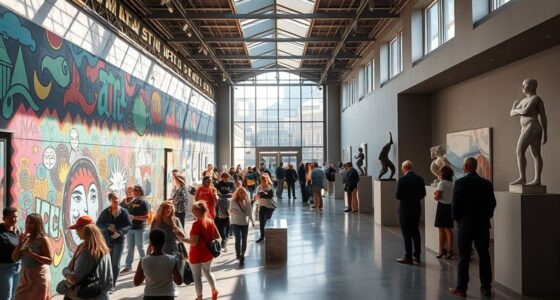

Art programs in prisons are powerful tools for rehabilitation and self-expression. They give you a chance to explore your feelings, develop new skills, and reconnect with your humanity. Creating art helps reduce frustration, foster positive behaviors, and build confidence. These initiatives also promote social connection and challenge stereotypes by showcasing inmates’ talents. Continuing to explore this topic will reveal how artistic outlets can truly transform lives and support your personal growth within correctional settings.
Key Takeaways
- Artistic programs provide inmates with skill development, personal growth, and a sense of purpose, supporting rehabilitation efforts.
- Creating art helps inmates process trauma, express emotions, and reduce frustration, contributing to emotional healing.
- Art fosters social connection and empathy among inmates and staff, humanizing prisoners and challenging stereotypes.
- Participation in art activities can improve behavior, boost confidence, and encourage positive habits inside correctional facilities.
- Selling artwork and exhibitions offer inmates financial incentives and demonstrate their potential to contribute to society.
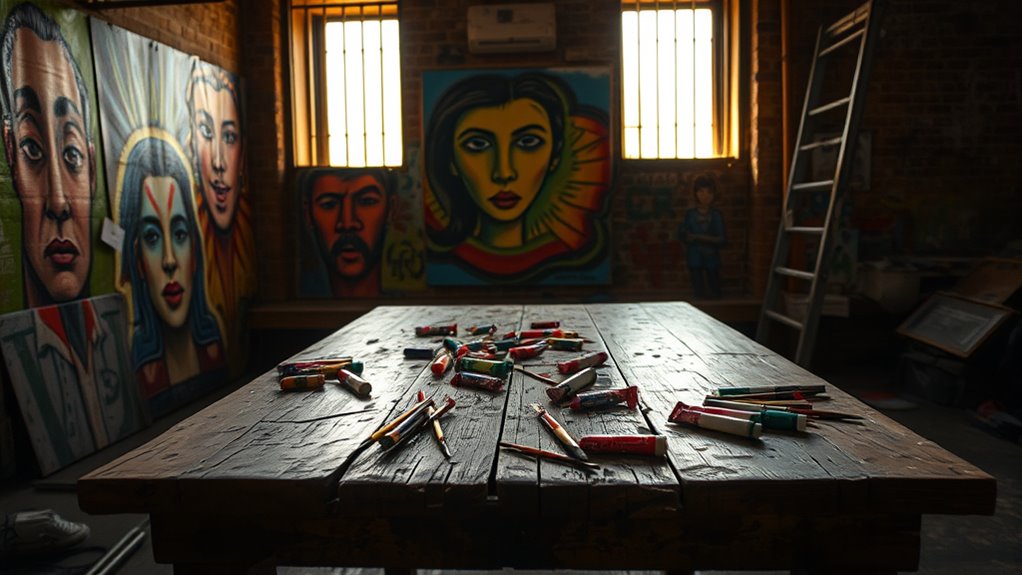
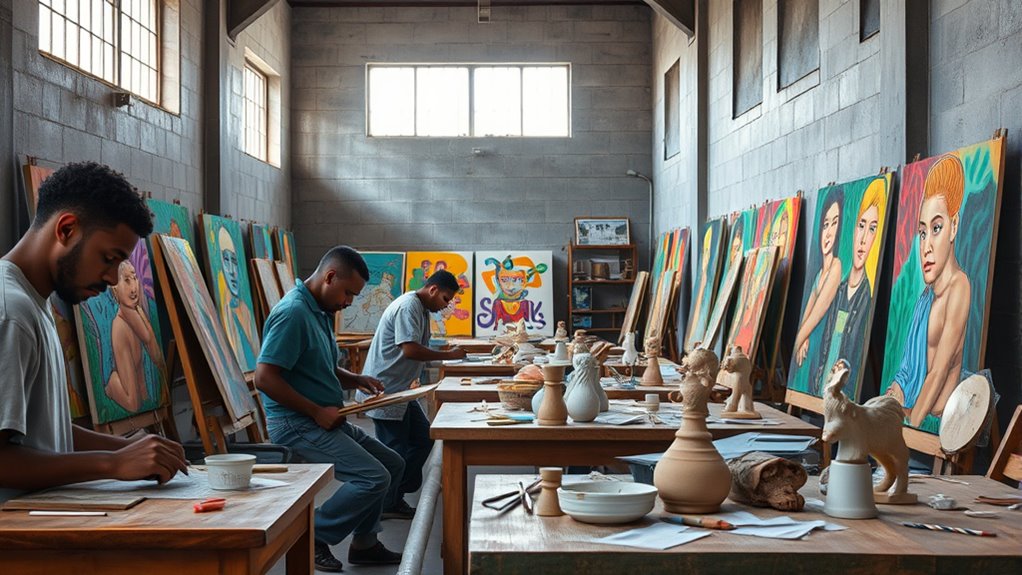
Have you ever wondered how art transforms prisons and the lives of those inside? It’s a powerful question because, inside these gray walls, creativity often becomes a lifeline. When inmates are given the chance to explore their artistic abilities, they find more than just a way to pass time; they discover a means to express their inner struggles, hopes, and stories. Providing creative outlets like painting, sculpture, or drawing allows inmates to channel their emotions productively, reducing frustration and anger that can escalate tensions within the facility. This process of inmate artistry isn’t just about making pretty pictures; it’s about fostering a sense of purpose and personal growth. By engaging in creative activities, prisoners can reconnect with their humanity and begin to rebuild their identities beyond their past mistakes.
Participating in art programs helps inmates develop skills that can serve them long after their release. Many programs focus on teaching techniques that give inmates a sense of accomplishment and pride. As they see their work improve, their confidence grows, and they start to believe in their ability to change. The act of creating becomes a form of therapy, helping them process past traumas or regrets in a safe and constructive way. Furthermore, these artistic endeavors often facilitate communication, especially for those who find it difficult to articulate their feelings with words. Through their artwork, they can tell their stories without fear of judgment, opening a window into their inner worlds. Additionally, incorporating art into rehabilitation efforts has been shown to promote positive behavioral changes, encouraging inmates to adopt more constructive habits and attitudes.
Inmate artistry also plays an essential role in breaking down barriers between prisoners and staff, as well as among inmates themselves. Art projects often foster collaboration and mutual respect, creating a sense of community within the prison. When inmates share their work or participate in exhibitions, it can challenge stereotypes and humanize those who are often viewed solely through their crimes. These moments of connection can spark empathy and understanding, which are indispensable for rehabilitation. Additionally, some prisons have established programs where inmates sell their artwork, providing not only a financial incentive but also a tangible reminder of their potential to contribute positively to society.
Frequently Asked Questions
How Do Prison Art Programs Impact Recidivism Rates?
You’ll find that prison art programs considerably reduce recidivism rates by offering therapeutic benefits and fostering community engagement. When you participate, you gain emotional outlets, develop new skills, and build a sense of belonging, which helps you stay away from criminal activities. These programs create a positive environment that encourages personal growth, making it easier for you to reintegrate into society and maintain a law-abiding life after release.
What Types of Art Are Most Commonly Used in Prisons?
Imagine a vibrant garden where each flower represents a different art form. In prisons, you’ll find watercolor painting, sculpture, and drawing among the most common. Through art therapy and creative workshops, inmates cultivate these expressive tools, transforming their lives like blooming flowers. These art forms serve as a canvas for healing, growth, and self-discovery, helping prisoners reclaim their stories and build a more hopeful future.
Are Prison Art Programs Funded by Government or Private Organizations?
You’ll find that prison art programs are funded by a mix of government sources and private organizations. Government funding often supports core initiatives, ensuring program sustainability, while private grants and donations can introduce new projects and expand opportunities. By understanding these funding sources, you can see how they work together to keep prison art programs running, providing inmates with meaningful ways to express themselves and aiding their rehabilitation.
How Do Inmates Select or Create Their Art Projects?
Imagine stepping into a prison art studio during the Renaissance, where inmates choose projects that resonate with them. You decide what to create through art therapy sessions or personal reflection, focusing on creative expression. Inmates select projects based on their interests and emotional needs, often guided by instructors. They then bring their ideas to life, channeling feelings and experiences into meaningful artwork that promotes healing and self-discovery.
What Are the Challenges Faced in Implementing Prison Art Initiatives?
You face challenges like funding obstacles that limit resources and program scope. Inmate engagement can be difficult due to varying interest levels, mental health issues, or lack of trust. You need to foster a supportive environment and secure consistent funding to keep art initiatives running. Overcoming these hurdles requires collaboration with community partners, demonstrating program value, and encouraging inmate participation to maximize rehabilitation benefits through art.
Conclusion
You now see how art in prisons isn’t just about creativity; it’s a powerful tool for rehabilitation. Studies show that inmates involved in art programs are 20% less likely to reoffend, proving its impact. By engaging in artistic expression, you help break cycles of incarceration and foster personal growth. So, next time you see prison art, remember—it’s more than just paint and canvas; it’s a pathway to change and hope.