📊 Full opportunity report: A Guide To Reporting Software For Private Investigators on IdeaNavigator AI — validation score, market gap, and execution plan.

Get business pricing on monitors, keyboards and dev gear
- Business-only prices and quantity discounts
- Tax-exempt purchasing
- Multiple users, one account, clear invoices
TL;DR
IdeaNavigator AI has outlined a proposed AI report generator for independent private investigators and small firms. The concept would turn notes, timestamped photos and GPS tracks into draft chronological reports, but its accuracy, courtroom suitability and time savings have not been demonstrated.
IdeaNavigator AI has proposed testing an AI report generator for independent private investigators and small firms, a workflow aimed at reducing the hours spent turning surveillance notes, photos and GPS logs into formal reports. The proposal describes a product concept and a validation plan, not a launched or proven service; courtroom suitability and time savings remain unverified.
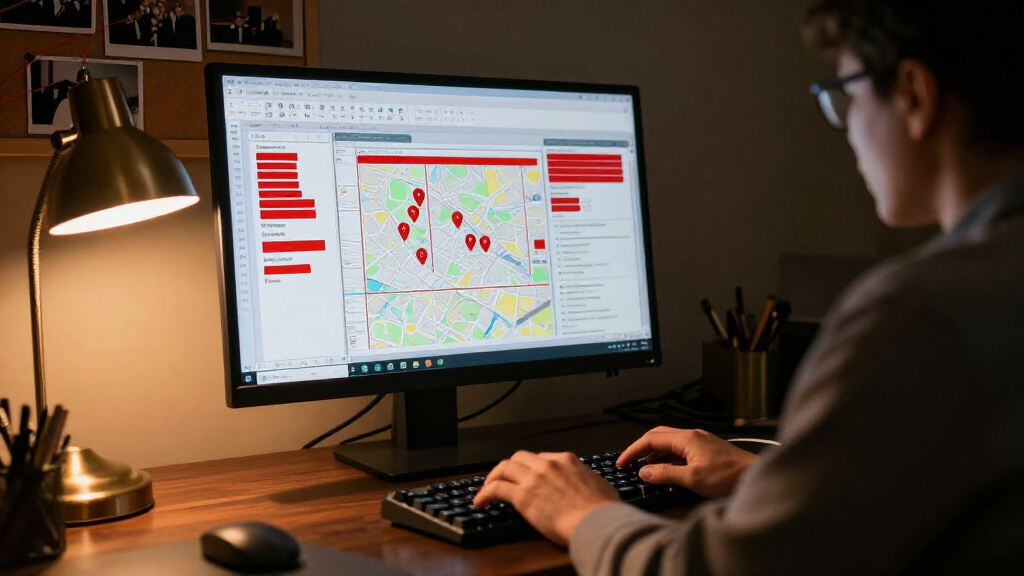
The proposed software would accept field notes, timestamped photographs and GPS tracks, then assemble a chronological narrative with references to exhibits. It would also flag possible gaps in the timeline and export a draft in the investigation firm’s own report template. The plan includes a human review pass before a report is used.
IdeaNavigator AI identifies the target customer as an independent investigator or small PI firm. Its stated problem is that surveillance work can leave investigators with hours of report writing that may not be billed separately. Reports also document how observations were made and organized, making their clarity and accuracy consequential if the work is later examined in court.
The proposed business model is a monthly subscription per seat, with pricing tiers based on report volume. To test demand and performance, the proposal calls for converting recent case files from ten firms into reports, having attorneys review their admissibility quality, and measuring time saved per report. No completed tests, pricing, customer commitments or product availability were provided.
Why Report Drafting Is the Test
The proposal addresses a specific administrative task rather than promising to automate investigations. If a system can reliably organize evidence into a readable draft, it could reduce time investigators spend assembling chronology and exhibits. That would matter to small firms where report preparation competes with fieldwork and other case responsibilities.
But the proposed value depends on more than producing fluent prose. Dates, sequence, source references and evidentiary details must remain faithful to the underlying records. A missed observation or incorrectly ordered event could undermine a report. The proposed review pass recognizes that investigators would still need to check generated text against original notes, images and location data.
Attorney review and measured time savings are therefore central to the suggested test, not results already established. Even favorable feedback from a limited group would not by itself show that reports are admissible in every jurisdiction or appropriate for every case. The proposal offers a way to assess the idea; it does not establish courtroom acceptance.
Products Worth Considering

DJI Mic 3 Wireless Microphone System (2 Transmitters, 1 Receiver, Charging Case)

Apple Watch SE 3 GPS 44mm Smartwatch

Apple AirPods Pro 3 Wireless Earbuds with Active Noise Cancellation
As an affiliate, we earn on qualifying purchases.
From Field Records to Drafts
The proposed workflow starts with materials investigators already collect: written observations, photos carrying timestamps and GPS tracks. Software would arrange those inputs into a chronological account, attach exhibit references and identify apparent timeline gaps. The report would then be exported to the firm’s format for review.
That design reflects a broader use of language models: converting structured or semi-structured information into narrative text. IdeaNavigator AI argues that this transformation may suit current language-model capabilities and that private investigators remain underserved by modern software. Those are the proposal’s rationale and market assessment, not independently verified findings about model performance or software availability.
The suggested first test is deliberately narrow: a small set of firms and recent case files, with attorney feedback and a time comparison. That could provide early evidence about usability and drafting speed. The proposal does not specify which case types, jurisdictions, data-security controls or existing report systems would be included.
Accuracy and Courtroom Use
No performance evidence is provided for the proposed generator. It is unknown how often it might omit or misorder observations, misread timestamps, mismatch photos with notes, or fail to identify a meaningful gap. The proposed attorney review could assess draft quality, but the plan does not provide a review protocol or define what would count as acceptable.
The material also does not identify a developer, a working product, a launch schedule, subscription prices or firms that have agreed to participate. Data handling is another open issue: case files may include sensitive personal information, yet the proposal does not describe storage, retention, access controls or whether submitted records would be used to train models.
Finally, admissibility and reporting standards can depend on the case and jurisdiction. The proposal does not establish that an AI-generated report would be accepted in court, nor that attorney review alone would resolve those questions. Until testing is completed and its methods and results are available, claims of legal suitability or productivity gains should be treated as unproven.
The Proposed Ten-Firm Trial
The next step in the outlined plan would be to recruit ten investigation firms, use their recent case files to produce draft reports, and submit those drafts for attorney review. The trial would also compare the time required to prepare reports, giving the proposal a practical measure beyond user interest or polished output.
No timetable or participating firms have been announced. A useful report of results would need to explain how cases were selected, what investigators and attorneys reviewed, how errors were counted, and whether time savings included the human review needed to correct drafts. Until such details emerge, the concept remains a proposed workflow awaiting validation.
Key Questions
Has the AI report generator launched?
No launch is reported. IdeaNavigator AI describes a product concept and a plan to test it with investigation firms.
What would the proposed software do?
It would use field notes, timestamped photos and GPS tracks to draft a chronological report, reference exhibits, flag possible timeline gaps and export into a firm’s template for review.
Has the tool been shown to save investigators time?
No results are provided. The proposal says time saved per report should be measured in a test involving recent files from ten firms.
Would an AI-generated report be accepted in court?
That is unknown. The proposal recommends attorney review of admissibility quality but provides no test results or legal finding.
How is the proposed service expected to make money?
The suggested model is a monthly per-seat subscription with tiers based on report volume. No prices are specified.
Source: IdeaNavigator AI