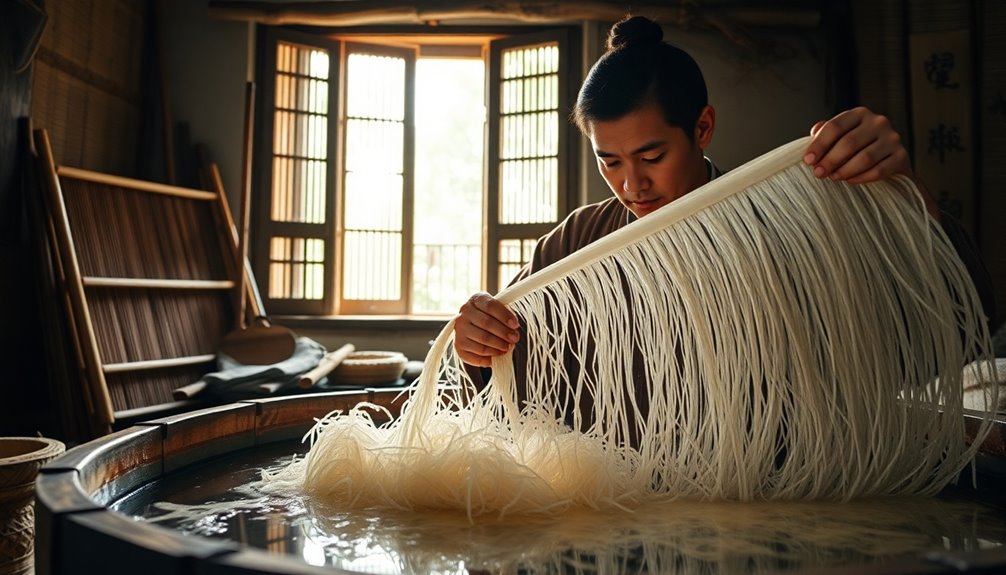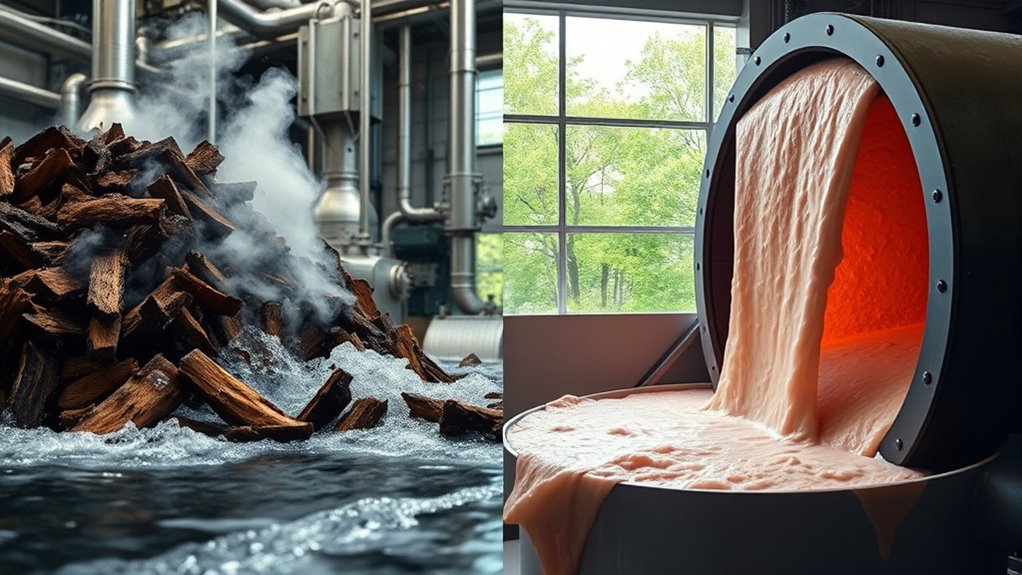

When comparing kraft and sulfite pulping, you’ll find that kraft uses sodium-based chemicals, producing strong, durable pulp ideal for many paper types, while sulfite employs sulfurous acid, resulting in brighter, higher-quality paper. Kraft offers better efficiency, higher yields, and handles various wood types, making it popular industry-wide. Sulfite is less efficient but can produce finer paper suited for specialty products. If you’re interested, there’s more to uncover about their differences and impacts.

Get business pricing on monitors, keyboards and dev gear
- Business-only prices and quantity discounts
- Tax-exempt purchasing
- Multiple users, one account, clear invoices
Key Takeaways
- Kraft process uses sodium hydroxide and sodium sulfide, producing durable pulp with high yield; sulfite uses sulfurous acid, yielding brighter pulp.
- Kraft is more efficient, scalable, and suitable for diverse wood types, while sulfite offers higher quality for printing and specialty papers.
- Kraft generates significant black liquor requiring treatment; sulfite produces less black liquor, easing recovery but with lower efficiency.
- Environmental impacts of kraft are managed with modern treatment, but it remains more polluting; sulfite has fewer emissions but is less efficient.
- Industry trends favor kraft for large-scale production, with innovations improving sustainability; sulfite remains niche due to limitations.

Have you ever wondered how the paper you use every day is made? The process behind transforming raw materials into the paper on your desk involves several steps, but two of the most common methods are chemical pulping processes: kraft and sulfite. Both techniques aim to break down wood into pulp, yet they differ considerably in environmental impact and process efficiency. Understanding these differences can help you appreciate the trade-offs involved in paper production and the choices companies make to balance quality, sustainability, and cost.
In the kraft process, also known as sulfate pulping, the goal is to produce strong, durable pulp suitable for a wide range of paper products. This method uses a chemical mixture called white liquor, primarily composed of sodium hydroxide and sodium sulfide, to break down the wood chips. The process is highly efficient because it can handle a variety of wood types and yields a high percentage of usable pulp. This efficiency translates into lower production costs and faster processing times, which makes it popular among pulp manufacturers. However, the environmental impact is a concern, as the kraft process generates significant amounts of black liquor—a byproduct rich in lignin and chemicals—that needs careful treatment to prevent pollution. Advances have been made to improve the process’s environmental footprint, but it still consumes considerable energy and produces emissions.
On the other hand, the sulfite process employs sulfurous acid and other chemicals to dissolve lignin and separate cellulose fibers. While it might seem more environmentally friendly because it produces less black liquor and allows for easier chemical recovery, the sulfite process tends to be less process efficient. It is more sensitive to the type of wood used and often results in lower pulp yields. Additionally, the chemicals involved can be more hazardous, requiring specialized handling and disposal procedures to mitigate environmental risks. Despite these drawbacks, sulfite pulp can produce paper with superior quality and brightness, which is desirable for certain applications like printing and specialty papers.
When comparing the two, you’ll see that the kraft process generally offers better process efficiency, making it more economical and scalable for large production volumes. Its environmental impact, while notable, can be managed with modern treatment facilities. Conversely, sulfite pulping, though potentially cleaner in some respects, faces limitations in efficiency and environmental management that restrict its widespread use. Interestingly, recent innovation in remote hackathons and collaborative virtual events has accelerated research and development in sustainable pulping methods, fostering new solutions to industry challenges. Ultimately, the choice between kraft and sulfite depends on the specific needs of the paper product, cost considerations, and environmental regulations. As a consumer or industry stakeholder, understanding these differences helps you grasp the complex balance between sustainability and efficiency in paper manufacturing.
As an affiliate, we earn on qualifying purchases.
Frequently Asked Questions
How Does Environmental Impact Differ Between Kraft and Sulfite Processes?
You should know that kraft pulping generally has a lower environmental impact than sulfite, mainly due to better emission control and more effective recycling initiatives. Kraft processes produce fewer pollutants and allow for easier recovery of chemicals, reducing waste. Sulfite pulping, on the other hand, tends to generate more emissions and waste, making it less eco-friendly. Overall, kraft is often considered the greener option for sustainable paper production.
What Are the Cost Differences in Operating Kraft Vs Sulfite Mills?
You’ll find that operating costs differ between kraft and sulfite mills. Kraft mills generally have lower operational expenses due to simpler processes and more widespread technology, which also means maintenance requirements are typically less intensive. Sulfite mills tend to be more costly to operate because of their specialized equipment and chemicals. Overall, kraft mills usually offer more economical operation, making them a popular choice for large-scale pulp production.
Which Chemical Recovery Methods Are Used in Each Process?
Think of chemical recovery as the phoenix rising from the ashes; in kraft mills, you mainly use the recovery boiler for chemical recovery, recycling black liquor through process integration. Sulfite mills, on the other hand, rely on lime kiln processes for chemical recovery, converting calcium sulfite and sulfate. Both methods aim to maintain efficiency and sustainability, but they differ markedly in process design and integration.
How Do Pulp Qualities Compare in Terms of Strength and Brightness?
You’ll find that Kraft pulp generally offers higher pulp strength due to its stronger lignin removal, making it more durable and suitable for packaging. Sulfite pulp tends to be brighter because of its milder cooking process, which preserves more cellulose and lignin removal leads to increased brightness. If you prioritize strength, Kraft is ideal; for a brighter appearance, sulfite pulp is better.
What Advancements Are Being Made to Improve Both Processes?
You’re seeing advancements like biomass integration and enzyme applications that boost both processes. While biomass integration reduces environmental impact and enhances energy efficiency, enzyme applications improve pulp quality by increasing pulp yield and brightness. These innovations work together to make pulping more sustainable and cost-effective. As a result, you’ll benefit from stronger, brighter pulp with a smaller ecological footprint, pushing the industry toward greener, more efficient practices.
As an affiliate, we earn on qualifying purchases.
Conclusion
So, which pulping method suits your needs best—kraft or sulfite? Kraft offers strength and versatility, making it ideal for most paper products, while sulfite provides a smoother finish for specialty papers. Your choice depends on your specific requirements and environmental considerations. Are you ready to choose the process that will shape your paper’s future? Remember, understanding these differences helps you make smarter, more sustainable decisions. Isn’t it time you picked the right pulping method for your needs?
As an affiliate, we earn on qualifying purchases.
kraft and sulfite pulp processing
As an affiliate, we earn on qualifying purchases.
As an affiliate, we earn on qualifying purchases.
Fall Picks
fall essentials
As an affiliate, we earn on qualifying purchases.