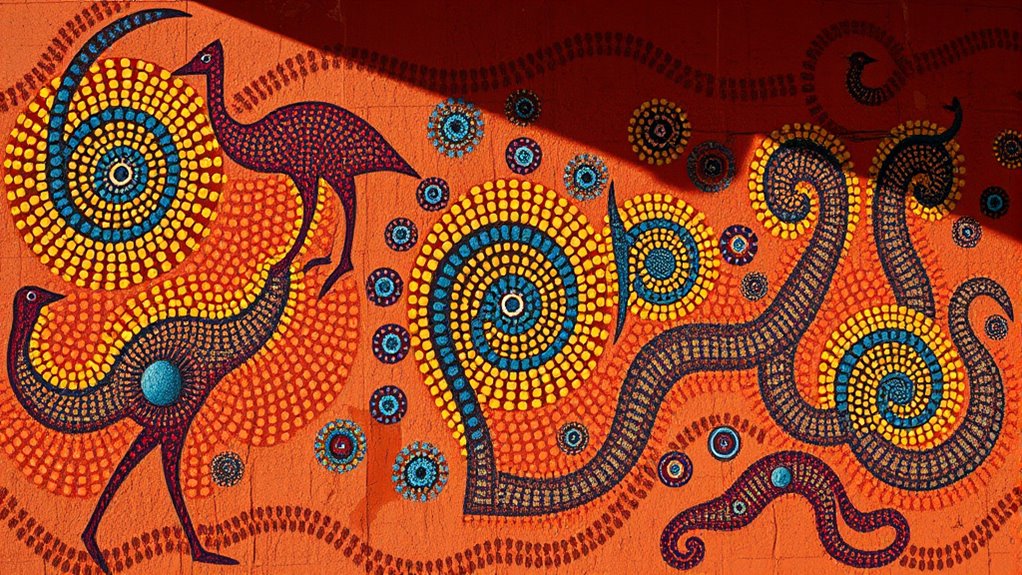

Indigenous Australian art and heritage center around Dreamtime stories that explain the creation of the land, spirit beings, and natural features. These stories are expressed through symbols, patterns, and ceremonial paintings that connect you to ancestors and spiritual beliefs. The art uses natural pigments and traditional techniques, preserving cultural knowledge and land connections. Understanding these powerful stories reveals a rich worldview that continues to shape Indigenous culture today. Keep exploring to uncover more about this vibrant heritage.
Key Takeaways
- Indigenous Australian art features Dreamtime stories that depict creation, spiritual beliefs, and laws, preserving cultural identity through symbols and patterns.
- Ceremonial paintings express sacred narratives during rituals, serving as a means of transmitting cultural knowledge across generations.
- Traditional techniques use natural pigments like ochre and charcoal, emphasizing storytelling and spiritual connection over aesthetics.
- Artworks maintain links to ancestral spirits, land, and environment, reinforcing cultural values and spiritual beliefs.
- Contemporary Indigenous art continues evolving, supporting cultural preservation, education, and the expression of a deep spiritual and land-based heritage.

Indigenous Australian art is a vibrant and ancient tradition that reflects the deep connection between Aboriginal people and their land. This art form isn’t just about creating beautiful images; it embodies stories, laws, and spiritual beliefs passed down through generations. Central to this tradition are Dreamtime stories, which describe how the world was created and how natural features and animals came into existence. These stories aren’t just myths—they’re a crucial part of cultural identity, guiding behavior and understanding of the environment. When you explore Indigenous art, you’re delving into these sacred narratives, often represented visually through intricate symbols and patterns.
Ceremonial paintings play a significant role in expressing these stories, serving as a means of transmission during rituals and gatherings. These paintings are more than decorative; they’re a way to connect with ancestors and the spiritual domain. You’ll often find ceremonial paintings on rocks, bark, or even bodies, used during initiation rites, corroborees, or other sacred events. Their designs are highly symbolic, with each mark or color holding specific meanings tied to Dreamtime stories. For example, concentric circles might symbolize waterholes or meeting places, while lines can represent paths or journeys. By engaging with these paintings, you’re participating in a living tradition that preserves ancient knowledge and cultural values.
Additionally, the techniques involved in creating Indigenous ceremonial paintings are deeply rooted in tradition and often passed down orally. Whether using natural pigments like ochre or charcoal, artists apply their skills with great care and intention. These artworks aren’t created solely for aesthetic purposes; they serve as a form of storytelling and cultural preservation. When you observe these paintings, you gain insight into the land’s significance, the animals that inhabit it, and the spiritual beings that shaped the world. Such art helps maintain a connection to ancestral spirits and guarantees that stories remain alive within the community.
Understanding Indigenous Australian art means recognizing that it’s a living expression of identity and history. It’s not static but continually evolving while respecting its roots. Every line, dot, and pattern carries meaning, inviting you to explore a worldview deeply intertwined with the land, spirituality, and community. By appreciating ceremonial paintings and Dreamtime stories, you’re not just observing art—you’re engaging with a profound cultural legacy that has persisted for tens of thousands of years. This tradition reminds you that storytelling, art, and land are inseparable in Indigenous Australian culture, shaping a rich heritage that continues to thrive today.
Furthermore, research supports the idea that Indigenous Australian art can be a powerful tool for cultural preservation, helping to keep traditions alive for future generations.

Kangas Canvas Hanging Poster Wall Art, Aboriginal Cultural Sun Dots None Red Wall Hanging Posters Home Classroom Office Cubicle Decor 12×16 Inches
- Theme & Design Elements: Aboriginal silhouettes with sun and dot patterns
- Material & Craftsmanship: Printed on durable canvas with vibrant colors
- Structure & Installation: Scroll format with wooden frame for easy hanging
As an affiliate, we earn on qualifying purchases.
As an affiliate, we earn on qualifying purchases.
Frequently Asked Questions
How Do Indigenous Australian Art Styles Vary Across Regions?
You’ll notice regional diversity in Indigenous Australian art styles, reflecting unique cultural traditions. Artistic symbolism varies across regions, with specific patterns, colors, and motifs representing different stories, landscapes, and Dreamtime legends. In some areas, you might see intricate dot paintings, while others feature bold, expressive symbols. This variation allows each community to preserve its identity and history, making each art style a distinct and essential expression of their cultural heritage.
What Are the Traditional Materials Used in Indigenous Australian Art?
You’ll find that traditional materials in Indigenous Australian art include natural pigments like ochre, charcoal, and clay, which are used for vibrant coloring. Bark paintings are also common, created on the inner bark of trees using these pigments. These materials hold cultural significance, allowing artists to connect with their ancestors and environment. By using traditional pigments and bark, they preserve ancient techniques and stories through their artwork.
How Is Indigenous Australian Art Preserved and Protected Today?
You can help preserve Indigenous Australian art by supporting digital archiving efforts and cultural revitalization initiatives. Digital archiving guarantees artworks and stories are stored securely and accessible worldwide, while cultural revitalization keeps traditions alive for future generations. By engaging with these efforts, you contribute to protecting this rich heritage, fostering appreciation, and promoting respect for Indigenous communities and their artistic expressions. Your involvement makes a meaningful difference in safeguarding their cultural legacy.
What Role Does Storytelling Play in Indigenous Australian Artworks?
Storytelling plays a crucial role in Indigenous Australian artworks by conveying cultural significance and passing down traditions. You see, each piece often embodies stories that preserve history, laws, and spiritual beliefs. By engaging with these stories, you help keep cultural preservation alive, ensuring that future generations understand their heritage. The artworks become a visual language that maintains the community’s identity and keeps their storytelling traditions thriving.
How Do Contemporary Artists Incorporate Traditional Symbols Into Their Work?
You see contemporary artists incorporate traditional symbols into their work through symbolic storytelling and cultural symbolism, blending old and new. They often adapt ancient motifs, like patterns or Dreamtime stories, to express modern themes or personal identities. By doing so, they honor their heritage while making it relevant today. This approach allows viewers to connect deeply with the cultural significance behind each piece, fostering understanding and appreciation of Indigenous traditions.

JoyCat Fantasy Storybook Art Kit, Write Your Own Book for Kids, 2 Books
- Ignites Creativity and Confidence: Encourages kids to express ideas confidently
- Comprehensive Writing Tools: Includes vocabulary, prompts, and story structures
- Create Your Own Storybooks: Includes materials for two themed storybooks
As an affiliate, we earn on qualifying purchases.
As an affiliate, we earn on qualifying purchases.
Conclusion
You now understand how Indigenous Australian art and heritage are woven into the fabric of their culture. Through vibrant paintings and storytelling, they keep their traditions alive, passing wisdom from generation to generation. Remember, “A picture is worth a thousand words,” and these artworks speak volumes about their history and identity. By appreciating their rich culture, you help preserve a legacy that’s as timeless as the land itself.

Natural Earth Paint Pigment Sample Pack – 20 Non-Toxic, Archival Earth & Mineral Pigments for DIY Paint – Eco-Friendly, Sustainably Sourced Colors – No Fillers or Additives
- Number of Pigments: 20 natural earth and mineral pigments
- Eco-Friendly Sourcing: Sustainably sourced and non-toxic
- Versatile Use: Suitable for various DIY paints
As an affiliate, we earn on qualifying purchases.
As an affiliate, we earn on qualifying purchases.

SODEF Wooden Aboriginal Mask 50 cm Hand-Painted Wall Decor Bohemian Style – Multicolor, 4×4 inch
- Size: 50 cm wall decor
- Material: Hand-carved Albesia wood
- Design: Hand-painted traditional motifs
As an affiliate, we earn on qualifying purchases.
As an affiliate, we earn on qualifying purchases.