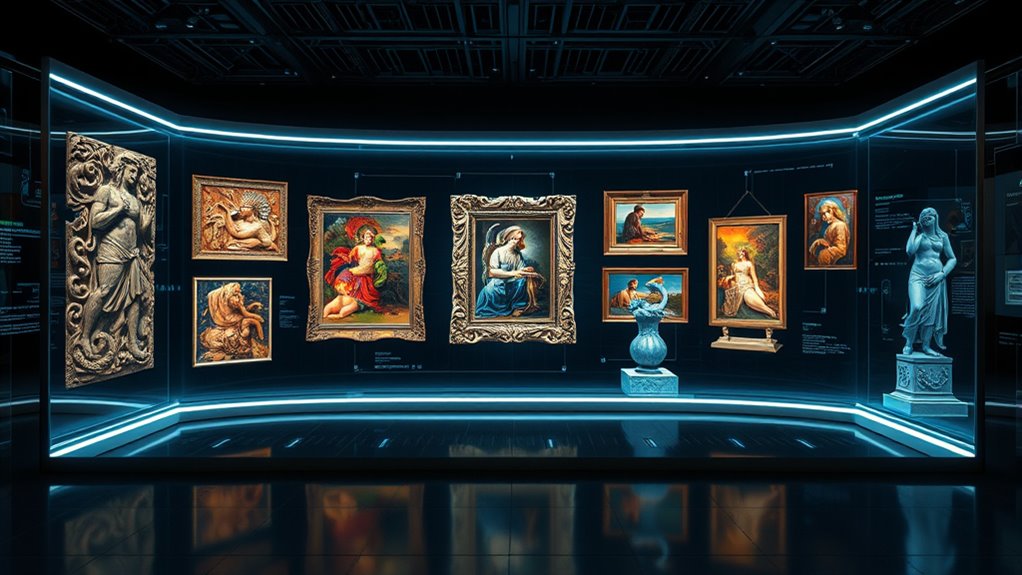

Virtual museums use digital techniques like restoration, online exhibitions, and digital archiving to protect stolen art. They make artworks accessible worldwide, helping to prevent theft and assist in recovery efforts. By creating detailed digital records, these museums support investigations and keep stolen pieces visible. They also promote cultural education and preservation, ensuring valuable art remains protected for future generations. If you want to see how these innovative methods work, there’s more to discover below.
Key Takeaways
- Digital archiving preserves images of stolen artworks, aiding in identification and recovery efforts.
- Virtual exhibitions keep stolen art accessible, maintaining public awareness and deterring illicit trade.
- Digital restoration ensures images of stolen or damaged art remain intact for investigative purposes.
- Online platforms facilitate collaboration among museums and law enforcement to track and recover stolen art.
- Enhanced digital records support provenance verification, strengthening authenticity and ownership defense.
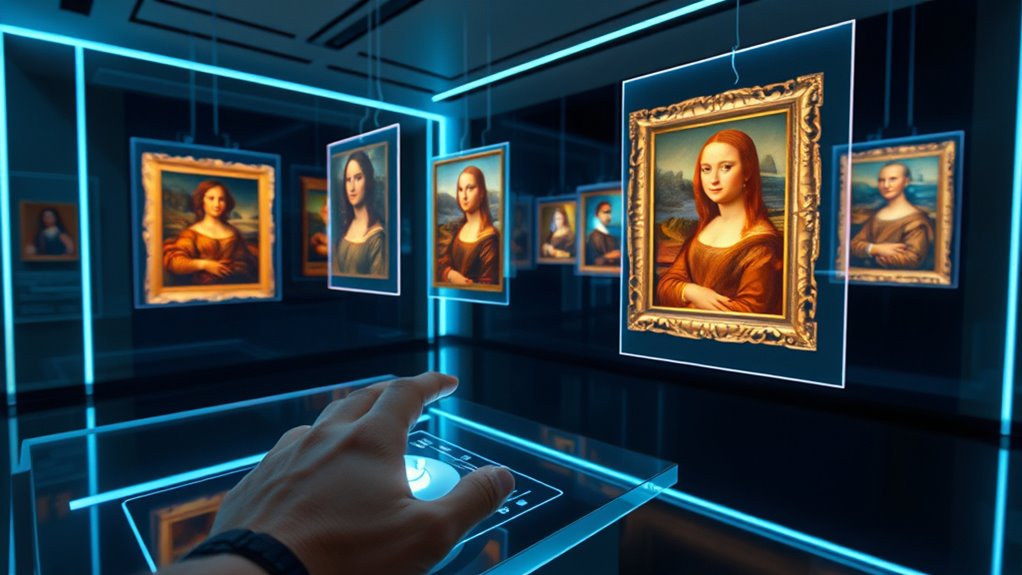
Have you ever wondered how you can explore world-class museums from your own home? Thanks to the rise of virtual museums, you can now access some of the world’s most renowned art collections without stepping outside. These digital portals use innovative techniques like digital restoration and online exhibitions to present artworks in ways that preserve their history and beauty while making them accessible to everyone. Digital restoration plays a pivotal role in this process, allowing curators to enhance and clean digitized images of artworks, revealing details that might be obscured by time, damage, or poor original documentation. This technology helps preserve the integrity of the artwork and offers viewers a clearer, more detailed view of masterpieces that could be hidden behind centuries of grime or deterioration. Online exhibitions, on the other hand, serve as virtual galleries, bringing curated collections directly to your screen. They allow you to navigate through themed displays, zoom in on intricate details, and learn about each piece’s history and significance without the constraints of physical space or geographic barriers. Additionally, digital archiving ensures that even damaged or stolen artworks are documented thoroughly, aiding in their recovery and preservation. These virtual experiences also serve as powerful tools to combat the theft and illicit trade of stolen art. When artworks are stolen and later recovered, digital restoration ensures that images of these pieces remain accessible and intact for educational and investigative purposes. Online exhibitions can be updated swiftly to include recovered stolen art, making it easier for the public and authorities to recognize and identify stolen pieces. Virtual museums can act as a digital record, documenting provenance and ownership history, which is essential for verifying authenticity and tracing stolen art back to its rightful owners. They also foster global collaboration among museums, law enforcement, and researchers, creating a united front against art theft. Through digital restoration, damaged or altered stolen artworks can be virtually restored to their original state, aiding investigations and helping return stolen treasures to their rightful place. Furthermore, these online platforms democratize access, enabling people from all over the world to appreciate, study, and understand art regardless of their location or financial means. They serve as educational resources, promoting awareness of the importance of cultural preservation and the fight against art theft. By integrating digital restoration techniques and extensive online exhibitions, virtual museums not only preserve stolen art but also ensure that these cultural treasures remain visible, appreciated, and protected for future generations. As technology advances, you can expect these digital collections to become even more immersive and interactive, making the experience of exploring world-class art more accessible and engaging than ever before.

Adobe Photoshop Restoration & Retouching
As an affiliate, we earn on qualifying purchases.
As an affiliate, we earn on qualifying purchases.
Frequently Asked Questions
How Do Virtual Museums Verify the Authenticity of Displayed Stolen Art?
You can verify the authenticity of stolen art in virtual museums through digital authentication and provenance verification. Digital authentication involves using advanced technology to confirm the artwork’s unique attributes, while provenance verification traces its ownership history to ensure it’s legitimate. By combining these methods, virtual museums confidently display genuine pieces, helping to prevent the spread of stolen art and maintaining the integrity of their collections.
Are Virtual Museums Legally Protected When Showcasing Stolen Artworks?
You should know that virtual museums aren’t usually legally protected when showcasing stolen artworks. Legal challenges arise because provenance verification is complex, and authorities often question the legitimacy of such displays. If you display stolen art without proper proof of ownership, you risk legal action. To stay protected, guarantee thorough provenance verification and seek legal advice, because showcasing stolen art can lead to serious legal consequences.
Can Virtual Museums Facilitate the Return of Stolen Art to Original Owners?
Think of virtual museums as digital detectives working tirelessly to facilitate the return of stolen art. They can help clarify digital provenance and ownership disputes, acting like a bridge between past and present. While they can’t physically return stolen pieces, showcasing verified information online encourages rightful owners to reclaim their art. By raising awareness and fostering transparency, virtual museums play a crucial role in resolving ownership disputes and aiding in rightful restitution efforts.
How Do Virtual Museums Handle Sensitive or Controversial Stolen Pieces?
You should know that virtual museums handle sensitive or controversial stolen pieces carefully by applying digital ethics principles, ensuring respectful representation and transparency. They often include contextual information, acknowledging the controversy, and engaging the audience thoughtfully. This approach fosters audience engagement by encouraging dialogue and education while respecting the cultural significance of the pieces. Ultimately, they aim to balance preservation with ethical responsibility, promoting awareness and sensitive handling of difficult topics.
What Technologies Are Used to Enhance Security in Virtual Museums?
You use digital surveillance to monitor access and detect suspicious activity, ensuring the virtual museum stays secure. Blockchain authentication helps verify the originality and ownership of digital art pieces, preventing theft and forgery. These technologies work together to protect sensitive and controversial stolen artworks, giving you confidence in the museum’s integrity. By implementing these security measures, you safeguard valuable assets and maintain trust with your audience.

Acrylic Display Case Clear Action Figure Display Case with Mirrored Back, Dustproof Protection Display Box Alternative Glass Case for Collectibles Figures Models Doll Toys (6x6x10 inch; 15x15x25 cm)
- Item Dimensions: 6x6x10 inches
- Inner Size: 5.43×5.59×9.53 inches
- Easy Assembly: Triangular connection, no glue needed
As an affiliate, we earn on qualifying purchases.
As an affiliate, we earn on qualifying purchases.
Conclusion
As you explore virtual museums, it’s almost ironic how they help preserve stolen art you might never see in person. Technology unexpectedly becomes a safeguard, turning coincidence into a powerful tool for protection. You realize that, in a way, the digital world preserves what theft once threatened to erase—proof that even stolen masterpieces find a new home online. Sometimes, the very theft that seemed to destroy art’s legacy actually helps keep it alive.

Interdisciplinary Digital Preservation Tools and Technologies
As an affiliate, we earn on qualifying purchases.
As an affiliate, we earn on qualifying purchases.

YVV Rotating Display Stand, Spinning Display Stand with Colored Lights, Lighted LED Base for Glass Art , Electric & Battery-Operated Platform 4.72in, Adjustable Speed Electric Turntable White
- Multi-Color LED Lighting: Enhances product presentation with various light modes
- Adjustable Speed & Rotation: Control rotation speed and enjoy smooth 360° spin
As an affiliate, we earn on qualifying purchases.
As an affiliate, we earn on qualifying purchases.