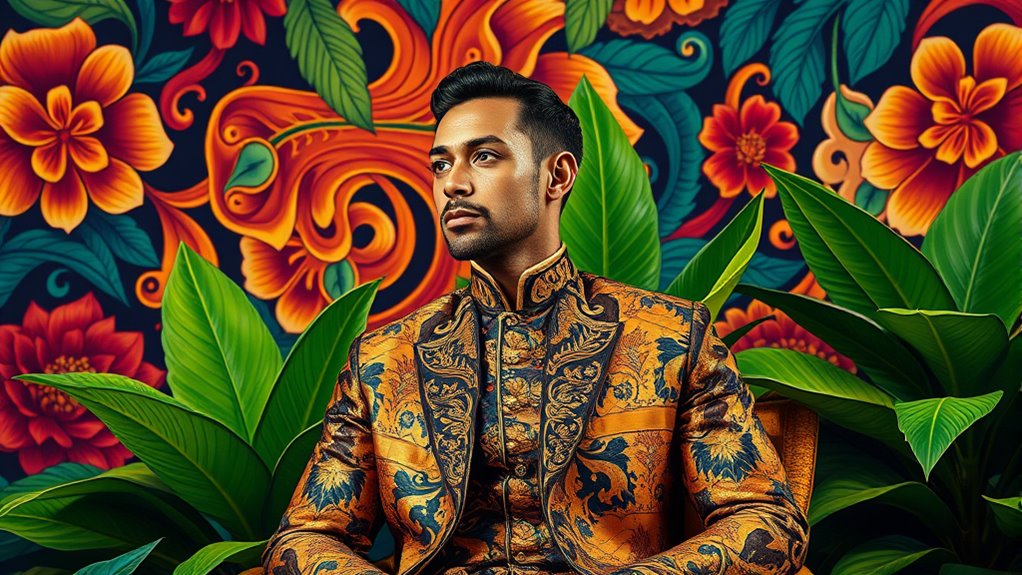

Kehinde Wiley reimagines portraiture by blending traditional styles with contemporary urban culture. He elevates everyday people, often young Black men, by placing them in regal poses against vibrant, patterned backgrounds inspired by cultural symbolism. Wiley challenges social hierarchies, transforming streetwear into symbols of dignity and power. His work invites you to see identity, community, and tradition in a new, impactful light—exploring deeper meanings behind each striking image. Keep exploring to uncover more about his innovative approach.
Key Takeaways
- Kehinde Wiley reimagines traditional portraiture by placing contemporary urban figures in regal, historically inspired settings with vibrant backgrounds.
- He blends classical motifs with street art, graffiti patterns, and cultural symbolism to challenge social hierarchies.
- Wiley centers everyday people, often young Black men, emphasizing their dignity and cultural significance through modern aesthetics.
- His work critiques traditional power structures by elevating marginalized communities to positions of honor and reverence.
- Wiley’s portraits create layered narratives that celebrate identity, community, and diversity within a contemporary artistic framework.

Have you ever wondered how traditional portraiture can be transformed to challenge perceptions of race, identity, and power? Kehinde Wiley does just that by reimagining classic portrait styles with a contemporary twist. His work merges the grandeur of historical portraiture with the raw energy of urban aesthetics, creating a striking dialogue between the past and present. Wiley’s paintings often feature figures set against vibrant, patterned backgrounds that draw heavily on cultural symbolism, infusing each piece with meaning rooted in identity and community. These backgrounds aren’t mere decoration; they serve as visual statements that elevate everyday individuals and spotlight their cultural significance.
Kehinde Wiley reimagines portraiture with vibrant urban backgrounds, celebrating identity, culture, and challenging traditional power structures.
In Wiley’s eyes, traditional portraiture has long been used to reinforce social hierarchies and notions of superiority. He flips this script by placing ordinary people—often young black men—at the center of his compositions, dressed in contemporary streetwear, yet portrayed with the same regal dignity as historical monarchs. This juxtaposition challenges viewers’ expectations and invites a reconsideration of who deserves to be celebrated in art. By doing so, Wiley asserts that identity isn’t fixed or confined by societal stereotypes but is vibrant, layered, and deserving of recognition. His work emphasizes that race and cultural background are integral to personal identity, not obstacles to be erased but assets to be embraced.
The urban aesthetics woven into his portraits serve as a visual bridge between communities and art history. Wiley incorporates graffiti-inspired patterns, bold colors, and street culture motifs, transforming traditional settings into modern-day royal courts. This fusion underscores the idea that urban environments are rich sites of cultural expression, deserving of the same reverence historically reserved for European aristocracy. Wiley’s use of cultural symbolism deepens this message. Every pattern, color, and pose is carefully chosen to evoke specific histories, traditions, and social commentaries. These elements work together to create layered narratives that challenge viewers to think critically about identity, power, and representation.
Through his innovative approach, Wiley redefines what portraiture can be. His work invites you to see beyond superficial appearances and recognize the cultural significance embedded in every individual’s story. By blending urban aesthetics with cultural symbolism, he creates portraits that are not only visually enthralling but also politically charged. Wiley’s art becomes a platform for dialogue—one that questions established norms and celebrates the diversity and complexity of human identity. In doing so, he transforms the tradition of portraiture into a powerful tool for social commentary and change. Additionally, his incorporation of color fidelity ensures that the vibrancy and emotional impact of his works are preserved, further enhancing their cultural resonance.
Frequently Asked Questions
How Does Wiley Choose His Subjects for Portraits?
You notice Wiley chooses his subjects based on their cultural representation, aiming to highlight diverse identities often underrepresented in traditional portraiture. He actively seeks out individuals from different backgrounds and communities, using their stories as artistic inspiration. By doing so, Wiley challenges stereotypes and celebrates cultural richness, making each portrait a powerful statement on identity and inclusion. His process emphasizes authenticity and personal significance, creating portraits that resonate on a deeper societal level.
What Techniques Differentiate Wiley’s Style From Traditional Portraiture?
You notice Wiley’s style stands out through his use of vibrant colors and the integration of classical motifs. He actively transforms traditional portraiture by replacing typical backgrounds with bold, intricate patterns that highlight his subjects. This technique creates a striking contrast, making the figures pop. His innovative approach challenges conventions, emphasizing individuality and cultural identity, and making each portrait both contemporary and timeless.
How Has Wiley’s Background Influenced His Artwork?
Your background deeply influences Wiley’s artwork through his rich cultural heritage and artistic inspiration. Growing up in Nigeria and the U.S., he blends vibrant patterns and traditional motifs with contemporary themes, celebrating Black culture. This fusion creates powerful portraits that challenge stereotypes. His diverse experiences inspire him to reimagine classical portraiture, making it more inclusive and reflective of a broader cultural narrative.
Are There Specific Cultural Symbols in Wiley’s Portraits?
You might think Wiley’s portraits are just stylish, but they’re packed with cultural symbolism and iconography integration. He deliberately includes specific symbols—like traditional African patterns or Western motifs—that reflect the subject’s heritage and identity. This blend challenges viewers to see beyond surface appearances, highlighting cultural richness and history. So, when you look at his work, you’re engaging with layered storytelling that celebrates diverse backgrounds through powerful, meaningful iconography.
What Impact Has Wiley’s Work Had on Contemporary Art?
Your work has made a significant impact on contemporary art through artistic innovation and fostering cultural dialogue. By blending traditional portrait techniques with modern themes and diverse cultural symbols, you challenge stereotypes and expand representation. This approach encourages viewers to rethink identity and history, inspiring other artists to explore similar themes. Your contributions create a more inclusive art world, pushing boundaries and enriching cultural conversations worldwide.
Conclusion
You step into Wiley’s world and see a young man confidently posed against a vibrant, patterned background—like a king on his throne. His art challenges traditional ideals, transforming everyday people into icons. Just as Wiley reimagines history with bold colors, you realize that your perspective can also shift, turning ordinary moments into extraordinary stories. His work proves that by rethinking portraiture, you can see beauty and power in anyone, anywhere.