
Choosing between glossy photo paper and fine art paper depends on your desired look and feel. Glossy paper gives your images vibrant colors, sharp details, and a sleek finish, perfect for striking photographs. Fine art paper offers a textured, elegant appearance with softer hues, ideal for artistic projects and reproductions. If you want a more refined, timeless style or enhanced texture, fine art might suit you better. Continue exploring to find the best match for your creative vision.

Get business pricing on monitors, keyboards and dev gear
- Business-only prices and quantity discounts
- Tax-exempt purchasing
- Multiple users, one account, clear invoices
Key Takeaways
- Glossy paper offers vibrant colors and sharp details with a smooth, reflective surface; fine art paper provides textured surfaces with a more subdued, elegant look.
- Glossy finishes enhance image brightness and saturation but are prone to glare and fingerprints; fine art paper reduces glare and hides imperfections.
- Glossy photo paper is ideal for vivid, striking images needing high detail; fine art paper suits artistic, textured, and subtle presentations.
- Fine art paper is more durable and resistant to fingerprints, making it better for long-term display; glossy paper requires careful handling to prevent damage.
- The choice depends on desired visual impact: glossy for vivid, eye-catching photos; fine art for a refined, artistic aesthetic.
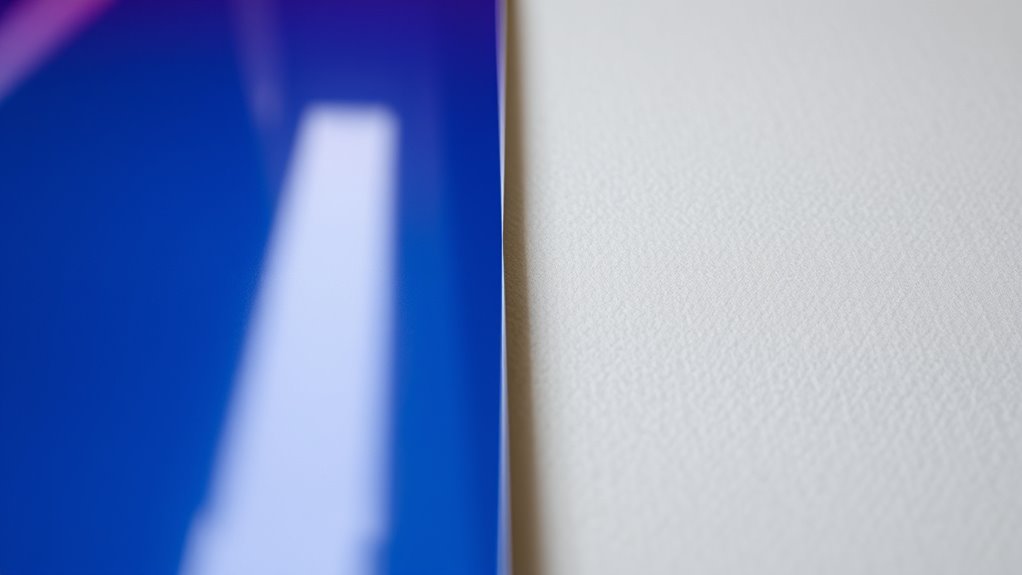
When choosing between glossy photo paper and fine art paper, understanding their differences can considerably impact the final look of your prints. Glossy paper is designed to produce vibrant, eye-catching images with sharp details and rich color vibrancy. Its smooth, reflective surface enhances the intensity of colors, making photographs pop with brilliance. If you want your images to look vivid and dynamic, glossy paper is often the ideal choice. However, glossy finishes tend to emphasize reflections and glare, which can sometimes detract from viewing in brightly lit environments.
Glossy photo paper delivers vibrant, sharp images with rich colors and a reflective surface.
Fine art paper, on the other hand, offers a different aesthetic. Its surface features more texture differences—ranging from smooth to heavily textured—adding a tactile dimension to your prints. This textured surface can lend a sense of depth and artistry, making fine art paper especially suited for fine art photography, reproductions, or creative projects where a subtle, elegant appearance matters. The texture differences in fine art paper can soften colors and reduce their vibrancy compared to glossy options, but this trade-off creates a more refined, timeless feel that appeals to collectors and art enthusiasts alike.
Color vibrancy is a key factor when choosing between the two. Glossy paper tends to maximize vibrancy, making colors appear more saturated and lively. If you’re aiming for images that demand attention—like landscapes, portraits, or commercial photography—glossy paper enhances every hue and detail, ensuring your work stands out. Conversely, fine art paper may slightly diminish color intensity but offers a more subdued, sophisticated aesthetic. Its less reflective surface reduces glare, which can be advantageous for viewing angles and lighting conditions, providing a more consistent viewing experience across various environments.
Texture differences also influence how your prints are perceived and handled. Glossy paper’s slick surface can be prone to fingerprints, scratches, and other marks, requiring careful handling. Fine art paper’s textured surface not only adds visual interest but also helps hide fingerprints and minor imperfections, making it more durable for long-term display or handling. The tactile quality of fine art paper can deepen the emotional impact of your work, especially when the texture complements the subject matter or artistic intent.
Ultimately, your choice depends on the look and feel you want for your prints. If you prioritize vivid, striking images with sharp details, glossy photo paper is your best bet. If you prefer a more artistic, textured, and subtle presentation, fine art paper offers a refined alternative. Both options have their unique strengths, and understanding their differences in color vibrancy and texture can help you make a more informed decision aligned with your creative goals.
As an affiliate, we earn on qualifying purchases.
Frequently Asked Questions
Which Paper Type Is More Environmentally Friendly?
You’ll find that fine art paper is generally more eco-friendly because it often features eco-friendly manufacturing processes and uses biodegradable materials. Glossy photo paper tends to involve chemical coatings and less sustainable production methods. By choosing fine art paper, you support environmentally responsible options, reducing waste and pollution. So, if sustainability matters to you, opt for fine art paper to minimize your environmental impact and promote greener printing practices.
How Does Paper Choice Affect Digital Printing Options?
Choosing the right paper is like picking the perfect dance partner—you want smooth moves and vibrant energy. Your paper affects digital printing options by influencing ink absorption and color vibrancy; glossy paper often offers sharper, more vibrant images, while fine art paper provides a softer, textured look. This choice impacts your print’s durability and appearance, so consider your project’s needs carefully to guarantee your artwork truly shines.
Can Glossy Photo Paper Be Used for Fine Art Reproductions?
Yes, you can use glossy photo paper for fine art reproductions, but keep in mind it may impact image longevity and color accuracy. Glossy surfaces tend to enhance vibrant colors and sharp details, making your reproduction stand out. However, they might not offer the same archival qualities as fine art paper. If preserving your artwork’s longevity and true color fidelity is essential, consider specialized fine art papers instead.
What Are the Best Storage Conditions for Each Paper Type?
You should store glossy photo paper and fine art paper in archival conditions, maintaining consistent humidity levels and avoiding temperature fluctuations. Keep them flat, in acid-free sleeves or boxes, away from direct sunlight, and in a cool, dry environment. Proper humidity control prevents warping and deterioration, ensuring your prints stay vibrant and intact. By managing these storage conditions, you protect your artwork’s longevity and preserve its quality over time.
How Does Paper Cost Influence Overall Project Expenses?
Your paper cost considerably impacts overall project expenses and should be factored into your budget planning. Higher-quality papers like fine art paper often come with increased costs, which may limit the number of prints you can produce. Conversely, glossy photo paper is usually more affordable, helping you manage costs more effectively. Considering cost considerations early on ensures you choose the right paper type without compromising your project’s quality or budget.
fine art textured paper for printing
As an affiliate, we earn on qualifying purchases.
As an affiliate, we earn on qualifying purchases.
Conclusion
Ultimately, choosing between glossy photo paper and fine art paper depends on your goals. If you want vibrant, eye-catching images, glossy paper is your best bet. But if you’re after a sophisticated, textured look, fine art paper shines. Remember, it’s not just about the surface—it’s about what you want your artwork to say. Don’t put all your eggs in one basket; weigh your options carefully to get the best results for your projects.
high quality photo paper for vibrant images
As an affiliate, we earn on qualifying purchases.
As an affiliate, we earn on qualifying purchases.
archival fine art paper for prints
As an affiliate, we earn on qualifying purchases.
As an affiliate, we earn on qualifying purchases.
Fall Picks
fall essentials
As an affiliate, we earn on qualifying purchases.