
The best continuous integration tools for developers depend on whether you need a working CI platform, help configuring one, or guidance on delivery practices. From this roundup, CI/CD Pipelines for Developers is the strongest all-around starting point for comparing Jenkins, GitHub Actions, and GitLab CI, while GitHub Actions in Action suits teams centered on GitHub and Learning Continuous Integration with Jenkins, 2nd Edition offers a focused route into Jenkins. The main tradeoff is breadth versus depth: multi-platform guides help you compare approaches, while platform-specific books can offer more detail on one workflow. The books differ in how much they cover hands-on pipeline setup, testing, deployment, and team-level delivery practices. Read on for the full breakdown and a guide to choosing the right fit.

Get business pricing on monitors, keyboards and dev gear
- Business-only prices and quantity discounts
- Tax-exempt purchasing
- Multiple users, one account, clear invoices
Key Takeaways
- CI/CD Pipelines for Developers stands out as the broadest practical comparison because its scope includes Jenkins, GitHub Actions, and GitLab CI rather than centering on one platform.
- GitHub Actions in Action and Automating DevOps with GitLab CI/CD Pipelines serve different platform commitments; choosing between them should start with where your code and team workflows already live.
- The Jenkins books split between a newer second-edition learning path and narrower pipeline-building guidance, so readers should match the title to whether they need broad CI/CD foundations or Jenkins-specific implementation.
- Books such as Grokking Continuous Delivery and Continuous Deployment focus more on release principles and feedback practices than on teaching a particular CI configuration.
- Specialist titles on Dagger, Java delivery, testing at scale, and platform engineering address distinct needs; their narrower scope is an advantage only when those needs match your environment.
| Learning Continuous Integration with Jenkins: An End-to-End Guide to Creating Operational, Secure, Resilient, and Cost-Effective CI/CD Processes |  | Best for Jenkins Operations | Topic: Continuous integration and delivery | Platform: Jenkins | Coverage: End-to-end CI/CD processes | VIEW LATEST PRICE | See Our Full Breakdown |
| DevOps for Developers: Practical Continuous Integration and Delivery |  | Best for a Practical DevOps Starting Point | Subject: DevOps for developers | Topic: Continuous integration and delivery | Orientation: Practical | VIEW LATEST PRICE | See Our Full Breakdown |
| Git, GitHub, and CI/CD: The Professional Developer’s Handbook | 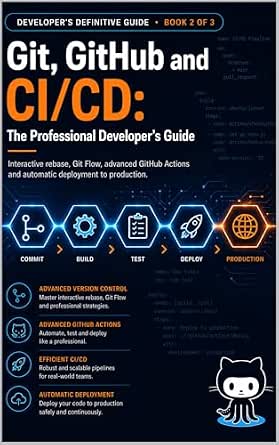 | Best for GitHub-Based Workflows | Subject: Git, GitHub, and CI/CD | Audience: Professional developers | Git topics: Interactive Git rebase and Git Flow | VIEW LATEST PRICE | See Our Full Breakdown |
| Learning Continuous Integration with Jenkins, 2nd Edition |  | Best for Jenkins Beginners | Edition: 2nd Edition | Subject: Continuous integration and continuous delivery | Software: Jenkins 2 | VIEW LATEST PRICE | See Our Full Breakdown |
| The Continuous Testing 2.0 Toolkit: Lab-as-a-Service Tools and Best Practices for DevOps at Scale |  | Best for Continuous Testing at Scale | Subject: Continuous testing | Toolkit focus: Lab-as-a-service tools and best practices | Target environment: DevOps at scale | VIEW LATEST PRICE | See Our Full Breakdown |
| CI/CD Pipelines for Developers: Automate Testing, Deployment, and Delivery with Jenkins, GitHub Actions, and GitLab CI |  | Best for Comparing CI Platforms | Topics: CI/CD pipelines, testing, deployment, software delivery | Tools covered: Jenkins, GitHub Actions, GitLab CI | Primary focus: Automating testing, deployment, and software delivery | VIEW LATEST PRICE | See Our Full Breakdown |
| DevOps Tools for Java Developers: Best Practices from Source Code to Production Containers |  | Best for Java-to-Container Workflows | Primary audience: Java developers | Subject: DevOps tools and practices | Workflow scope: Source code to production containers | VIEW LATEST PRICE | See Our Full Breakdown |
| Dagger.io for Continuous Integration and Delivery: The Complete Guide for Developers and Engineers |  | Best for Dagger-Specific Exploration | Tool: Dagger.io | Topics: Continuous integration and delivery | Intended audience: Developers and engineers | VIEW LATEST PRICE | See Our Full Breakdown |
| Grokking Continuous Delivery |  | Best for Delivery Concepts | Title-identified topic: Continuous delivery | CI platform coverage: Not specified in supplied product data | Audience: Not specified in supplied product data | VIEW LATEST PRICE | See Our Full Breakdown |
| GitHub Actions in Action: Continuous Integration and Delivery for DevOps |  | Best for GitHub Actions Focus | Tool: GitHub Actions | Topics: Continuous integration and delivery | Workflow context: DevOps | VIEW LATEST PRICE | See Our Full Breakdown |
| Continuous Deployment: Enable Faster Feedback, Safer Releases, and More Reliable Software |  | Best for Release-Process Thinking | Format: Book | Subject: Continuous deployment | Stated focus: Faster feedback | VIEW LATEST PRICE | See Our Full Breakdown |
| The Platform Engineer’s Handbook: Build Secure, Developer-Focused Platforms That Streamline Modern Software Delivery |  | Best for Platform Teams | Format: Handbook | Subject: Platform engineering | Platform focus: Secure, developer-focused platforms | VIEW LATEST PRICE | See Our Full Breakdown |
| Continuous Integration: Improving Software Quality and Reducing Risk |  | Best for CI Fundamentals | Format: Book | Subject: Continuous integration | Stated quality focus: Improving software quality | VIEW LATEST PRICE | See Our Full Breakdown |
| Building CI/CD Pipelines with Jenkins |  | Best for Jenkins Pipeline Builders | Format: Book | Primary tool: Jenkins | Subject: CI/CD pipelines | VIEW LATEST PRICE | See Our Full Breakdown |
| Automating DevOps with GitLab CI/CD Pipelines |  | Best for GitLab-Based Automation | Format: Book | Primary platform: GitLab | Subject: CI/CD pipeline automation | VIEW LATEST PRICE | See Our Full Breakdown |
| continuous integration tools for developer | Subject | Format | ASIN |
|---|---|---|---|
| Learning Continuous Integratio | — | — | B0CQT1VMY5 |
| DevOps for Developers: Practic | DevOps for developers | Not specified in supplied product data | B0FJCDMS8N |
| Git | Git, GitHub, and CI/CD | — | B0H26WVY93 |
| Learning Continuous Integratio | Continuous integration and continuous delivery | — | 1788479351 |
| The Continuous Testing 2.0 Too | Continuous testing | Not specified in supplied product data | 1484222857 |
| CI/CD Pipelines for Developers | — | Not specified in supplied product data | — |
| DevOps Tools for Java Develope | DevOps tools and practices | Not specified in supplied product data | — |
| Dagger.io for Continuous Integ | — | — | — |
| Grokking Continuous Delivery | — | Not specified in supplied product data | — |
| GitHub Actions in Action: Cont | — | — | — |
| Continuous Deployment: Enable | Continuous deployment | Book | — |
| The Platform Engineer’s Handbo | Platform engineering | Handbook | 1806380137 |
| Continuous Integration: Improv | Continuous integration | Book | 0321336380 |
| Building CI/CD Pipelines with | CI/CD pipelines | Book | B0GP75QMKY |
| Automating DevOps with GitLab | CI/CD pipeline automation | Book | 1803233001 |
More Details on Our Top Picks
Learning Continuous Integration with Jenkins: An End-to-End Guide to Creating Operational, Secure, Resilient, and Cost-Effective CI/CD Processes
This guide is the strongest fit here for developers who need to think beyond getting a Jenkins pipeline to run. Its end-to-end focus on operational, secure, and resilient CI/CD makes it more service-oriented than Learning Continuous Integration with Jenkins, 2nd Edition, which is described as a beginner’s guide to Jenkins 2. The attention to cost-effectiveness also speaks to teams responsible for keeping CI infrastructure sustainable, not just automating builds. The tradeoff is that the supplied details do not identify its format, chapter structure, or specific implementation examples, so buyers cannot judge how hands-on the material is before choosing it. Developers seeking broad tool coverage may prefer DevOps for Developers, though its supplied description offers little basis for comparison.
Pros:- Covers the CI/CD process end to end
- Addresses security and resilience alongside pipeline work
- Includes operational considerations for running CI/CD processes
- Considers cost-effectiveness, a useful concern for teams maintaining CI infrastructure
Cons:- The supplied product information does not describe the format or chapter structure
- Specific exercises, examples, and Jenkins versions are not identified
Best for: Jenkins practitioners and team leads who need guidance spanning CI/CD operations, security, resilience, and cost management.
Not ideal for: Readers who want a confirmed beginner-level walkthrough, detailed chapter previews, or coverage centered on tools beyond Jenkins.
- Topic:Continuous integration and delivery
- Platform:Jenkins
- Coverage:End-to-end CI/CD processes
- Operational focus:Operational CI/CD processes
- Security focus:Secure CI/CD processes
- Resilience focus:Resilient CI/CD processes
- ASIN:B0CQT1VMY5
Our verdict“Choose this guide if your Jenkins learning needs include operating secure, resilient, and cost-aware CI/CD processes, not only building pipelines.”
DevOps for Developers: Practical Continuous Integration and Delivery
The title positions this as a practical introduction to continuous integration and delivery for developers, rather than a guide tied to a named CI platform. That makes it a potentially useful starting point for readers who want a developer-oriented DevOps perspective before choosing among Jenkins, GitHub Actions, or other tools in this roundup. Compared with Learning Continuous Integration with Jenkins, 2nd Edition, it does not signal a specific platform or beginner curriculum; compared with Git, GitHub, and CI/CD: The Professional Developer’s Handbook, it does not advertise advanced GitHub Actions or deployment topics. The supplied product record includes no description, features, or technical details beyond the title, so the scope and practical depth are difficult to verify. I would choose it only when that uncertainty is acceptable.
Pros:- Title explicitly targets developers
- Focuses on both continuous integration and delivery
- Practical orientation is signaled in the title
- Does not name a single platform, leaving room for a broader DevOps angle
Cons:- No product description or chapter-level information is supplied
- Specific tools, workflows, and skill level are not identified
- The practical scope cannot be confirmed from the available product data
Best for: Developers seeking a broadly framed, practical introduction to CI and delivery who have not settled on a platform.
Not ideal for: Readers who need verified tool coverage, a defined skill level, or specific exercises and implementation details before selecting a guide.
- Subject:DevOps for developers
- Topic:Continuous integration and delivery
- Orientation:Practical
- Named platform:Not specified in supplied product data
- Edition:Not specified in supplied product data
- Format:Not specified in supplied product data
- ASIN:B0FJCDMS8N
Our verdict“Consider this as a broad developer-oriented CI/CD starting point only if you can accept that its tools and depth are unspecified.”
Git, GitHub, and CI/CD: The Professional Developer’s Handbook
This handbook connects source-control practice to delivery automation, making it the most specifically GitHub-oriented choice in this set. Its stated coverage of interactive Git rebase, Git Flow, and advanced GitHub Actions suits developers who want to refine collaboration and automate pipelines within a GitHub-centered workflow. Automated production deployments extend the focus beyond CI configuration toward shipping software. Compared with Learning Continuous Integration with Jenkins: An End-to-End Guide, this book foregrounds Git and GitHub rather than Jenkins operations, security, and resilience. That focus is an advantage for GitHub teams, but a limitation for developers seeking platform-neutral CI instruction. The supplied data also gives no further detail on its examples or scope, so buyers should not assume coverage of other CI systems.
Pros:- Covers interactive Git rebase and Git Flow
- Includes advanced GitHub Actions
- Addresses automated production deployments
- Connects source-control workflows with CI/CD practices
Cons:- The listed focus is GitHub-specific rather than platform-neutral
- The supplied product data gives no chapter, example, or skill-level details
Best for: Professional developers and teams already using GitHub who want guidance linking advanced Git practices, GitHub Actions, and production deployment automation.
Not ideal for: Jenkins users or teams seeking platform-neutral CI guidance, since the listed coverage centers on Git, GitHub, and GitHub Actions.
- Subject:Git, GitHub, and CI/CD
- Audience:Professional developers
- Git topics:Interactive Git rebase and Git Flow
- CI platform:GitHub Actions
- GitHub Actions coverage:Advanced GitHub Actions
- Deployment coverage:Automated production deployments
- ASIN:B0H26WVY93
Our verdict“Pick this handbook if GitHub is already central to your development workflow and you want CI/CD guidance connected to Git practices and deployment.”
Learning Continuous Integration with Jenkins, 2nd Edition
For a new Jenkins user, this is the clearest starting point in the group: the supplied description explicitly identifies it as a beginner’s guide to CI and CD using Jenkins 2. That makes its intended audience easier to judge than the more operations-focused Learning Continuous Integration with Jenkins: An End-to-End Guide, which emphasizes security, resilience, and cost-effective processes but does not specify a beginner level. This book’s stated Jenkins 2 focus gives newcomers a defined platform, although it may be less suitable for teams seeking a broader comparison of CI tools. The source provides no chapter details, examples, or added features, so I cannot establish how current or hands-on the instruction is beyond the stated subject and platform.
Pros:- Explicitly designed for beginners
- Covers continuous integration and continuous delivery
- Names Jenkins 2 as its software focus
Cons:- The supplied source provides no chapter or exercise details
- Its focus is Jenkins 2 rather than a cross-platform CI comparison
- The available description does not establish coverage beyond the beginner-level overview
Best for: Developers new to Jenkins who want a beginner-oriented guide to implementing CI and CD with Jenkins 2.
Not ideal for: Experienced CI engineers seeking advanced Jenkins operations, multi-platform comparisons, or a clearly documented set of practical examples.
- Edition:2nd Edition
- Subject:Continuous integration and continuous delivery
- Software:Jenkins 2
- Audience:Beginners
- CI coverage:Continuous integration
- Delivery coverage:Continuous delivery
- ASIN:1788479351
Our verdict“Choose this edition if you are starting with Jenkins 2 and want a guide explicitly aimed at beginners.”
The Continuous Testing 2.0 Toolkit: Lab-as-a-Service Tools and Best Practices for DevOps at Scale
This book takes a specialized angle: its stated subject is continuous testing, with lab-as-a-service tools and practices aimed at DevOps at scale. That makes it a complement to pipeline-centered guides, rather than a direct substitute for Learning Continuous Integration with Jenkins, 2nd Edition or the GitHub Actions focus of Git, GitHub, and CI/CD. Teams dealing with test environments and large-scale DevOps practices may find the topic more relevant than another introduction to pipeline setup. The limitation is equally clear: the supplied data does not identify specific tools, methods, examples, or a CI platform. Developers who need a step-by-step guide to configuring builds should look to one of the Jenkins or GitHub-focused books instead.
Pros:- Focuses specifically on continuous testing
- Names lab-as-a-service tools as a subject
- Targets DevOps practices at scale
- Offers a testing-centered perspective distinct from the Jenkins and GitHub workflow guides
Cons:- The supplied data does not name specific tools or platforms
- Examples, implementation steps, and chapter details are not provided
- Its specialized testing focus may not meet the needs of buyers seeking general CI setup guidance
Best for: DevOps and test-infrastructure teams exploring lab-as-a-service approaches and continuous testing practices at scale.
Not ideal for: Developers seeking a hands-on introduction to CI pipeline setup or guidance tied to a named platform such as Jenkins or GitHub Actions.
- Subject:Continuous testing
- Toolkit focus:Lab-as-a-service tools and best practices
- Target environment:DevOps at scale
- Named CI platform:Not specified in supplied product data
- Specific tools:Not specified in supplied product data
- Format:Not specified in supplied product data
- ASIN:1484222857
Our verdict“Choose this toolkit when your main concern is continuous testing infrastructure at scale, not learning to configure a general CI pipeline.”
CI/CD Pipelines for Developers: Automate Testing, Deployment, and Delivery with Jenkins, GitHub Actions, and GitLab CI
This guide’s clearest advantage is its coverage of Jenkins, GitHub Actions, and GitLab CI in one place. That makes it a useful starting point for developers choosing a pipeline approach, or teams that need to compare tools before standardizing. Its focus spans testing, deployment, and software delivery, so the subject reaches beyond running builds alone. Compared with GitHub Actions in Action, which centers on a single platform, this book appears broader in tool coverage; the tradeoff is that the available description does not establish how deeply it treats any one tool. The supplied data also gives no format, skill level, or detail on examples. I’d choose it for a cross-platform orientation, but favor a focused title when a team already knows which CI system it needs to implement.
Pros:- Covers three widely used CI/CD tools in a single guide
- Addresses testing automation as well as deployment and delivery
- Provides a cross-platform frame for comparing pipeline choices
Cons:- Available product information does not specify the level of detail or practical examples
- The broad tool coverage may offer less depth on any one platform than a focused guide
Best for: Developers and technical leads comparing Jenkins, GitHub Actions, and GitLab CI before choosing a pipeline platform
Not ideal for: Teams already committed to one CI platform that need verified, step-by-step implementation depth
- Topics:CI/CD pipelines, testing, deployment, software delivery
- Tools covered:Jenkins, GitHub Actions, GitLab CI
- Primary focus:Automating testing, deployment, and software delivery
- Format:Not specified in supplied product data
- Skill level:Not specified in supplied product data
- Depth and examples:Not specified in supplied product data
Our verdict“Choose this guide for a multi-platform introduction to pipeline automation, but pick a single-tool book when implementation depth is the priority.”
DevOps Tools for Java Developers: Best Practices from Source Code to Production Containers
Java developers whose delivery path ends in production containers may find this a more relevant companion than a general pipeline primer. The title frames its subject around DevOps tools and practices from source code through production containers, connecting CI to the wider journey software takes after a change is committed. That breadth distinguishes it from GitHub Actions in Action, which is specifically about one automation platform, but the supplied description does not name particular CI tools or confirm how much pipeline configuration the book covers. Its Java focus is also a clear boundary: developers working mainly in other languages may get less direct value. I’d shortlist it when container delivery is part of the Java team’s workflow, while treating it as a less certain choice for readers seeking a dedicated, hands-on CI reference.
Pros:- Tailors its subject to Java development workflows
- Covers a delivery path extending from source code to production containers
- Places CI-related work within broader DevOps practices
Cons:- Supplied data does not identify specific CI platforms or pipeline techniques
- Its Java and container focus may not suit teams using other stacks or deployment targets
Best for: Java developers who want to understand how DevOps tools connect source code work to production container delivery
Not ideal for: Developers outside the Java ecosystem or readers seeking a clearly specified, platform-specific CI tutorial
- Primary audience:Java developers
- Subject:DevOps tools and practices
- Workflow scope:Source code to production containers
- CI platform coverage:Not specified in supplied product data
- Container focus:Production containers
- Format:Not specified in supplied product data
Our verdict“Pick this for Java-focused DevOps context reaching production containers, not as a substitute for a clearly documented CI-platform manual.”
Dagger.io for Continuous Integration and Delivery: The Complete Guide for Developers and Engineers
This title is the most narrowly targeted option here: it focuses on Dagger.io for continuous integration and delivery, rather than surveying several CI platforms. That specialization could suit developers and engineers who have already settled on Dagger and want a guide centered on that tool. Compared with CI/CD Pipelines for Developers, which names Jenkins, GitHub Actions, and GitLab CI, this book offers a more focused subject but less visible platform breadth. The limitation is that the supplied information gives no further details about Dagger features, examples, prerequisites, or the guide’s depth. The word “complete” in the title does not establish what the book covers. I’d treat it as a potentially relevant Dagger-specific resource, but verify its contents before relying on it as an implementation reference.
Pros:- Centers on Dagger.io rather than spreading attention across multiple CI platforms
- Explicitly connects the tool to both continuous integration and delivery
- Names developers and engineers as its intended audience
Cons:- Supplied product data provides no detail on specific features or hands-on examples
- Its single-tool focus offers less help for comparing CI platform alternatives
Best for: Developers and engineers already evaluating or adopting Dagger.io for CI and delivery workflows
Not ideal for: Readers choosing among several CI platforms or needing confirmed details about examples, prerequisites, and coverage
- Tool:Dagger.io
- Topics:Continuous integration and delivery
- Intended audience:Developers and engineers
- Platform breadth:Dagger.io-focused
- Examples and exercises:Not specified in supplied product data
- Format and skill level:Not specified in supplied product data
Our verdict“Consider this for a Dagger-focused learning path, but check the contents if you need confirmed implementation detail or platform comparisons.”
Grokking Continuous Delivery
The supplied data identifies only the title, so this is the least verifiable choice in the group. Continuous delivery is the stated subject, making the book a possible fit for readers seeking a delivery-focused perspective rather than a guide tied to a named CI platform. That distinguishes it from CI/CD Pipelines for Developers, whose description specifies Jenkins, GitHub Actions, and GitLab CI alongside automation topics. Here, no description confirms the book’s approach, intended level, examples, or whether it includes practical pipeline instructions. I would not choose it on the assumption that it teaches a particular tool. It may suit someone looking for a title centered on delivery, but buyers who need to implement or compare CI systems have better-documented alternatives in this roundup.
Pros:- The title directly identifies continuous delivery as its subject
- Offers a delivery-focused alternative to platform-specific CI guides
- May appeal to readers seeking a dedicated treatment rather than a multi-tool survey
Cons:- Supplied data includes no description beyond the title
- Tool coverage, practical content, and intended skill level are unverified
Best for: Readers who want a book centered on continuous delivery and are willing to verify its scope before buying
Not ideal for: Developers who need confirmed CI tool coverage, practical pipeline instructions, or details about the book’s level
- Title-identified topic:Continuous delivery
- CI platform coverage:Not specified in supplied product data
- Audience:Not specified in supplied product data
- Practical examples:Not specified in supplied product data
- Skill level:Not specified in supplied product data
- Format:Not specified in supplied product data
Our verdict“Choose this only if a delivery-centered title fits your goals and you can confirm its contents before purchase.”
GitHub Actions in Action: Continuous Integration and Delivery for DevOps
For developers who want to focus on GitHub’s own automation platform, this title has a clearer lane than the broader CI/CD Pipelines for Developers, which also covers Jenkins and GitLab CI. Its stated subject is GitHub Actions for continuous integration and delivery within DevOps workflows, giving it a direct connection to teams already building around GitHub. That focus can make learning more relevant than a general survey, but it also narrows its usefulness if your organization runs another CI platform or is still comparing options. The supplied description offers no information on example workflows, prerequisites, or depth, so I can’t infer how implementation-focused it is. I’d put it on the shortlist for GitHub-centered teams, while readers seeking cross-platform guidance should favor a broader title.
Pros:- Focuses specifically on GitHub Actions
- Covers both continuous integration and delivery
- Frames the subject within DevOps workflows
Cons:- Its GitHub-specific focus limits usefulness for teams on other CI platforms
- Supplied data does not describe examples, prerequisites, or instructional depth
Best for: Developers and DevOps teams using GitHub who want a guide focused on Actions for CI and delivery
Not ideal for: Teams using Jenkins or GitLab CI, or buyers comparing multiple automation platforms before choosing
- Tool:GitHub Actions
- Topics:Continuous integration and delivery
- Workflow context:DevOps
- Platform focus:GitHub
- Examples and exercises:Not specified in supplied product data
- Format and skill level:Not specified in supplied product data
Our verdict“Choose this for a GitHub Actions-centered learning path, and prefer a multi-tool guide if you still need to compare platforms.”
Continuous Deployment: Enable Faster Feedback, Safer Releases, and More Reliable Software
This book is the strongest fit here for developers who want to connect CI checks to the release process that follows them. Its stated focus on faster feedback, safer releases, and reliability makes it broader than a tool-specific guide such as Building CI/CD Pipelines with Jenkins: it points toward deployment practices rather than one named platform. That can help teams examine how pipeline results shape release decisions, not just how to configure jobs. The tradeoff is limited product information: the supplied description does not identify tools, examples, or technical depth, so readers seeking copy-ready configuration steps may prefer the Jenkins or GitLab-focused books. I would choose this for principles around continuous deployment, not as a substitute for hands-on documentation.
Pros:- Centers on the relationship between continuous deployment and faster feedback
- Frames release safety and software reliability as core goals
- Offers a platform-neutral perspective compared with the Jenkins-specific pipeline book
Cons:- The available description does not name tools, techniques, or example projects
- May be too release-focused for readers who primarily need CI configuration instructions
Best for: Developers and delivery leads who already run CI and want a book focused on feedback loops, safer releases, and deployment reliability
Not ideal for: Readers seeking step-by-step setup for Jenkins, GitLab CI, or another named CI platform; no platform or implementation details are provided
- Format:Book
- Subject:Continuous deployment
- Stated focus:Faster feedback
- Stated release goal:Safer releases
- Stated quality goal:More reliable software
- Named CI platform:Not specified
Our verdict“Choose this for deployment and release principles after CI is in place, not for platform-specific pipeline recipes.”
The Platform Engineer’s Handbook: Build Secure, Developer-Focused Platforms That Streamline Modern Software Delivery
For developers whose CI friction comes from scattered tools, inconsistent environments, or weak delivery guardrails, this handbook takes a wider view than a pipeline recipe book. Its focus on secure, developer-focused platforms makes it relevant to the systems around CI: the shared platform that can standardize delivery while giving teams a clearer path to ship. Compared with Automating DevOps with GitLab CI/CD Pipelines, it is less narrowly tied to one CI product and more oriented toward platform engineering. That broader scope is also its main tradeoff: the supplied description does not confirm specific CI integrations, implementation examples, or technical coverage, so a team needing immediate GitLab pipeline patterns may get more direct guidance from the GitLab book. I would pick this for platform strategy, not as a standalone CI setup manual.
Pros:- Connects developer-focused platform design with modern software delivery
- Makes security part of the platform-building brief
- Has broader platform scope than the GitLab-specific pipeline guide
Cons:- The supplied description does not specify CI tools or hands-on pipeline coverage
- Its platform-level focus may be too broad for teams seeking immediate job and workflow examples
Best for: Platform engineers and engineering leads designing secure internal platforms to make CI and software delivery more consistent across teams
Not ideal for: Individual developers looking for detailed, tool-specific CI configuration or a guide centered on a single pipeline platform
- Format:Handbook
- Subject:Platform engineering
- Platform focus:Secure, developer-focused platforms
- Delivery focus:Streamlining modern software delivery
- Named CI platform:Not specified
- ASIN:1806380137
Our verdict“Choose this if your CI challenge is building a secure shared delivery platform rather than configuring one pipeline.”
Continuous Integration: Improving Software Quality and Reducing Risk
This is the most direct choice in the group for readers who want to understand why continuous integration matters to software quality and project risk. Its stated subject is CI itself, rather than the wider deployment focus of Continuous Deployment: Enable Faster Feedback, Safer Releases, and More Reliable Software or the platform engineering scope of The Platform Engineer’s Handbook. That makes it a natural fit for developers building a foundation in integration practices and their intended outcomes. The limitation is that the product data does not describe its methods, examples, or coverage of current CI services, so I would not assume it offers modern, platform-specific tutorials. Compared with the Jenkins and GitLab titles, this book appears more conceptual from the available description; readers who need implementation steps should favor those tool-focused alternatives.
Pros:- Focuses directly on continuous integration rather than a broader DevOps topic
- Links CI practices to software quality and risk reduction
- Provides a distinct fundamentals-oriented alternative to tool-specific pipeline guides
Cons:- The supplied data does not establish its examples, techniques, or level of technical detail
- No specific CI platform or current service is identified
Best for: Developers, students, and team leads seeking a foundational explanation of how CI can improve quality and reduce delivery risk
Not ideal for: Practitioners who need current, step-by-step configuration for Jenkins, GitLab CI, or hosted CI services
- Format:Book
- Subject:Continuous integration
- Stated quality focus:Improving software quality
- Stated risk focus:Reducing project risk
- Series:Addison-Wesley Signature Series (Fowler)
- ASIN:0321336380
Our verdict“Choose this for a CI-centered foundation; pick Jenkins or GitLab titles when you need platform-specific implementation guidance.”
Building CI/CD Pipelines with Jenkins
When the immediate task is building CI/CD workflows in Jenkins, this title is the most tool-specific pick in this batch. That focus can make the material more actionable for agile teams standardizing around Jenkins than Continuous Integration: Improving Software Quality and Reducing Risk, whose description points to CI principles rather than a named platform. It also gives this entry a clear place beside Automating DevOps with GitLab CI/CD Pipelines: the choice is largely shaped by which system your team already runs. The tradeoff is that Jenkins guidance may be less useful to teams committed to GitLab or hosted CI services, and the supplied product details do not confirm particular plugins, examples, or coverage. I would select it for Jenkins-specific learning, while checking that its treatment matches the team’s Jenkins environment.
Pros:- Names Jenkins as the central platform, giving the book a clear practical audience
- Covers both continuous integration and continuous delivery pipeline building
- Targets agile teams working on software delivery workflows
Cons:- Jenkins-specific focus limits its usefulness for teams using other CI platforms
- The supplied description does not specify examples, plugins, or Jenkins version coverage
Best for: Developers and agile teams responsible for creating or maintaining CI/CD pipelines in a Jenkins-based environment
Not ideal for: Teams standardized on GitLab CI, GitHub Actions, or platform-neutral delivery practices who need guidance for those systems
- Format:Book
- Primary tool:Jenkins
- Subject:CI/CD pipelines
- Delivery approach:Agile teams
- CI platform coverage:Jenkins-focused
- ASIN:B0GP75QMKY
Our verdict“Choose this when Jenkins is your team’s CI/CD platform and pipeline construction is the main learning goal.”
Automating DevOps with GitLab CI/CD Pipelines
This is the clearest fit for developers who have chosen GitLab and want pipeline guidance spanning code checks, security, and deployment. The description specifically promises real-life examples and covers verifying, securing, and deploying code, which gives it a more concrete scope than the platform-level The Platform Engineer’s Handbook. Against Building CI/CD Pipelines with Jenkins, the deciding factor is platform alignment: this book is relevant to GitLab users, while Jenkins teams will need the Jenkins-focused alternative. Its narrow platform focus is also the main drawback, and the available information does not identify the exact examples or technical depth. I would choose it when GitLab is already part of the development workflow and practical pipeline automation is the goal.
Pros:- Covers code verification, security, and deployment in the same CI/CD context
- Uses real-life examples, according to the product description
- Provides a more direct GitLab path than the Jenkins-specific pipeline book
Cons:- Its GitLab focus limits transfer to teams using other CI platforms
- The supplied data does not specify the examples’ scope or the technical depth
Best for: Developers and DevOps practitioners using GitLab who want to automate code verification, security checks, and deployment in one pipeline workflow
Not ideal for: Teams using Jenkins, GitHub Actions, or platform-neutral CI systems, and readers seeking a broad introduction to CI concepts
- Format:Book
- Primary platform:GitLab
- Subject:CI/CD pipeline automation
- Coverage:Code verification, security, and deployment
- Example approach:Real-life examples
- ASIN:1803233001
Our verdict“Choose this for practical CI/CD automation if your team already builds and ships with GitLab.”

How We Picked
I compared these 15 titles as learning resources for developers choosing, adopting, or improving continuous integration workflows—not as a direct ranking of CI software platforms. The main criteria were practical usefulness for building and maintaining pipelines, clarity about testing and delivery, coverage of relevant tools, and fit for different experience levels. I gave broader, hands-on guides an advantage for readers still comparing platforms, while focused books ranked higher for a specific use case only when their scope clearly matched it.
The ranking also reflects tradeoffs visible in the titles and stated coverage: a book centered on Jenkins or GitHub Actions can offer a more direct learning path, but it cannot provide the same cross-platform comparison as a multi-tool guide. Conceptual works on continuous delivery and deployment help teams improve release decisions, though they may leave configuration details to other resources. Since this list consists of books and handbooks rather than CI services, readers should treat them as guidance for selecting and using tools, not as substitutes for the tools themselves.
| continuous integration tools for developer | Format |
|---|---|
| Learning Continuous Integratio | — |
| DevOps for Developers: Practic | Not specified in supplied product data |
| Git | — |
| Learning Continuous Integratio | — |
| The Continuous Testing 2.0 Too | Not specified in supplied product data |
| CI/CD Pipelines for Developers | Not specified in supplied product data |
| DevOps Tools for Java Develope | Not specified in supplied product data |
| Dagger.io for Continuous Integ | — |
| Grokking Continuous Delivery | Not specified in supplied product data |
| GitHub Actions in Action: Cont | — |
| Continuous Deployment: Enable | Book |
| The Platform Engineer’s Handbo | Handbook |
| Continuous Integration: Improv | Book |
| Building CI/CD Pipelines with | Book |
| Automating DevOps with GitLab | Book |
Factors to Consider When Choosing Continuous Integration Tools For Developers
Before choosing a CI learning resource, start with the job you need it to do. A guide for adopting a platform should answer different questions from a book meant to improve release practices or standardize pipelines across many teams.
Match the guide to your current platform
Start with your repository host and existing automation rather than picking a book because its title sounds broad. A GitHub-centered team may get more immediate value from a focused Actions guide, while a GitLab user may prefer material built around GitLab CI/CD. If your organization is still comparing platforms, a multi-tool book can help expose differences before you commit. A common mistake is to study a platform-specific workflow without checking whether your permissions, runners, and repository setup support it. Choose focused coverage for implementation; choose cross-platform coverage when the platform decision is still open.
Separate pipeline mechanics from delivery practice
CI setup teaches how code is built and tested, while continuous delivery and deployment material addresses release decisions, risk, and feedback. These concerns connect, but one kind of book may not answer the other’s questions. If your main obstacle is a failing build or an unfamiliar pipeline file, prioritize implementation examples. If teams already automate builds but releases remain slow or risky, delivery principles may be the more useful next step. Avoid expecting a conceptual guide to provide copy-ready configuration, or expecting a platform manual to settle organizational release policy. Many teams need both, but the immediate bottleneck should decide what comes first.
Check the examples against your stack
Pipeline patterns change when languages, deployment targets, and test environments change. A Java-focused guide can be useful when container builds and production packaging are central to your work, but may not map neatly to a different stack. Likewise, examples built around hosted runners may need adaptation for private networks or specialized hardware. Before relying on a book, check whether its examples cover the stages your team actually runs: dependency setup, tests, artifact creation, and release. A frequent source of wasted effort is copying a demonstration pipeline without accounting for secrets, permissions, or environment differences. Favor resources that explain why each step exists so you can adapt the pattern rather than reproduce it blindly.
Account for scale, security, and ownership
A pipeline that works for one repository may become difficult to govern across dozens of teams. At larger scale, runner capacity, reusable workflows, permissions, audit needs, and shared templates can matter as much as syntax. Books on testing at scale or platform engineering address some of these organizational concerns, whereas an introductory tool guide may not. Do not pay for advanced material merely because the topic sounds enterprise-ready; first identify a real bottleneck, such as duplicated pipeline logic or inconsistent access controls. If developers own their pipelines, prioritize clear and adaptable workflows; if a platform team provides shared services, look for guidance on guardrails and self-service. This distinction helps prevent either over-centralizing simple projects or under-planning a growing system.
Decide how much breadth you need
Broad coverage helps during evaluation, but it can spread attention across tools your team will never adopt. A focused guide may offer a quicker path to useful knowledge when the platform choice is settled. Beginners often benefit from a structured overview before tackling specialist subjects such as Dagger or platform engineering. Experienced developers may prefer a narrow resource that fills a specific gap, such as GitLab pipeline automation or deployment strategy. One common mistake is choosing the broadest title by default and then finding too little detail for the task at hand. Match breadth to uncertainty: compare while deciding, then go deeper once the choice is made.
Frequently Asked Questions
Should I choose a multi-platform CI/CD guide or a book focused on one tool?
Choose a multi-platform guide if your team has not settled on a CI system or needs to compare workflows across providers. It can clarify the tradeoffs between Jenkins, GitHub Actions, and GitLab CI, but its coverage may be less detailed for any one platform. A focused book is a better fit when your repository and team already use a particular service and you need practical instruction. Check whether your problem is choosing a platform or making an existing setup work better. If both apply, start broad and then use a focused resource to build implementation depth.
Are these books substitutes for a continuous integration service?
No. The titles in this roundup are books and handbooks intended to teach CI/CD concepts, platform workflows, and delivery practices; they do not run builds or tests. You will still need a CI service or self-managed system, along with repository access, runners or agents, and the required build environment. A book can help you compare options and plan a pipeline, but current product documentation is still useful for version-specific setup details. Treat the resource as a learning aid, not a software license or hosted service.
What should a beginner read if they have not chosen a CI platform?
A beginner who has not picked a platform should start with a resource that explains pipeline fundamentals and compares more than one workflow. In this list, CI/CD Pipelines for Developers is a practical starting point because its stated scope covers Jenkins, GitHub Actions, and GitLab CI. Pair that broad view with a small project so you can judge how each approach fits your repository and deployment needs. Avoid starting with a specialist topic unless your team already has a clear reason to use it. Once a platform is selected, a tool-specific guide can fill in the configuration details.
Do I need a separate book on continuous delivery after learning CI?
Not every developer needs one immediately. If your current challenge is automating builds and tests, a practical CI guide may be enough to get the pipeline working. Delivery-focused material becomes more valuable when releases remain risky, feedback arrives late, or teams disagree about deployment practices. A book such as Grokking Continuous Delivery or Continuous Deployment can address process and release thinking beyond platform configuration. Choose that next step when the bottleneck is how software moves through delivery, not how a job is written.
When does a specialist CI/CD book make more sense than a general guide?
A specialist book makes sense when a concrete need narrows the problem: a Java delivery stack, GitLab pipeline automation, Dagger-based workflows, or testing across a larger organization. Focused material can save time by concentrating on the practices most relevant to that environment. It is less useful when the team has not confirmed that the platform or architecture fits its needs. Before choosing one, identify the gap you need to close and check that the book’s stated scope matches it. If your needs span several platforms, a general guide is a safer starting point.
Conclusion
For most developers comparing approaches, I recommend CI/CD Pipelines for Developers as the best overall choice because it spans Jenkins, GitHub Actions, and GitLab CI. For best value in learning breadth, it is also the strongest starting point for readers who want one guide to inform a platform decision, while GitHub Actions in Action is the better focused pick for a GitHub-based workflow. Beginners should start with the multi-platform overview before moving to tool-specific configuration; readers committed to Jenkins can choose Learning Continuous Integration with Jenkins, 2nd Edition. For a premium, specialized learning path, match the subject to your real need: platform engineering for shared developer infrastructure, testing at scale for larger quality systems, or Dagger for that workflow model. If your main concern is release safety rather than pipeline syntax, choose a delivery-focused title instead of buying another platform manual.