
TL;DR

Get business pricing on monitors, keyboards and dev gear
- Business-only prices and quantity discounts
- Tax-exempt purchasing
- Multiple users, one account, clear invoices
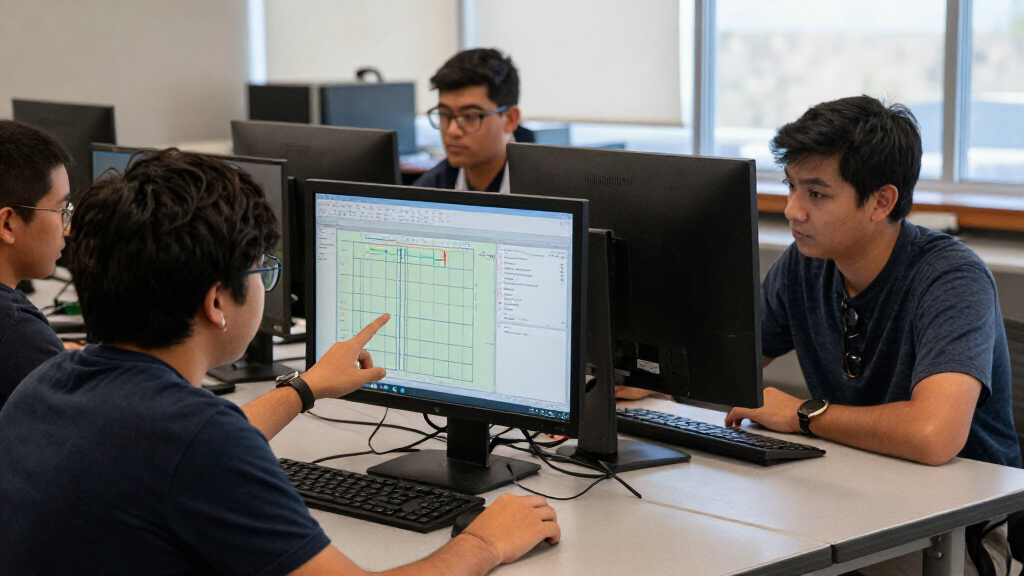
Google hosted its second annual Colorado Impact Hackathon at its Boulder offices with CU Boulder and the Colorado Energy Office. Student teams presented three projects focused on solar planning, battery support during wildfire shutoffs and predictive grid hardening; Google named SolarSnap the winner.
Students presented projects on solar panel planning, battery networks and grid hardening at Google’s second annual Colorado Impact Hackathon, held at the company’s Boulder offices with CU Boulder and the Colorado Energy Office. Google said the teams were asked how to help create a clean, secure and resilient electric grid in Colorado, and listed SolarSnap as the first-place project.
According to Google, SolarSnap took first place with an artificial-intelligence app intended to help homeowners identify a suitable solar-panel setup using a phone camera. Google described the project’s purpose but did not provide details about how the app works, whether a prototype was tested, or how its recommendations would be verified.
Grid Watch placed second. Google described it as an AI-managed battery network designed to keep electricity available during wildfire-related power shutoffs while reducing costs. Grid Guard, which placed third, was presented as a predictive tool for targeting electricity-grid hardening. The company’s account does not specify the teams’ membership, the projects’ technical readiness or whether any will be developed beyond the hackathon.
Google said Colorado Attorney General Phil Weiser and CU Boulder Vice Chancellor for Sustainability Andrew Mayock spoke at the event about innovation and the state’s clean-energy future. The report did not provide direct quotations from either official or describe specific remarks.
Student Ideas Address Colorado Grid Risks
The projects focus on issues that affect how households and communities plan for a more resilient electricity system. SolarSnap centers on residential solar decisions, while Grid Watch addresses backup power during wildfire-related shutoffs and Grid Guard focuses on where grid upgrades might be targeted.
Those aims are relevant to Colorado’s energy planning, but the hackathon report establishes that the ideas were presented—not that they have been deployed or shown to work. The projects’ practical impact will depend on factors such as technical performance, cost, access to reliable data and coordination with utilities and other energy providers. Google did not report testing results or commitments to fund or adopt any of the proposals.
The event also brought students together with a technology company, a university and a state agency. That mix can give students exposure to real-world challenges and give partners a chance to hear early-stage ideas. The source does not say whether the organizers will continue supporting the teams after the event.
Products Worth Considering

Jackery HomePower 3000 Portable Power Station with Two 200W Solar Panels

EcoFlow Smart Home Panel 2 Whole-Home Backup System Hub

Anker SOLIX S2000 Portable Power Station, 2,010Wh, 1,500W
As an affiliate, we earn on qualifying purchases.
A Second Boulder Hackathon
Google identified the gathering as the second annual Colorado Impact Hackathon, hosted at its Boulder offices in partnership with CU Boulder and the Colorado Energy Office. The stated challenge was to develop ideas for a clean, secure and resilient electricity grid in Colorado.
Google’s October 29, 2026, account placed the projects against concerns including wildfire risks and energy backlogs, but offered no figures or further explanation of those issues. The report is the source for the event details and rankings; it does not include independent evaluation of the proposals or technical documentation.
Project Readiness Remains Unknown
Google’s report does not say whether any project was demonstrated with working equipment or tested with homeowners, utilities or grid operators. It also provides no information about accuracy, costs, safety, data sources or deployment plans.
The meaning of Grid Watch’s goal to keep power on during wildfire-related shutoffs is also not explained. The report does not describe how the proposed batteries would be connected, who would operate them, or how the system would coordinate with power shutoffs. These details matter when judging whether a hackathon concept could be used in practice.
Google did not disclose the number of participants, participating schools beyond its CU Boulder partnership, judging criteria or any prizes. It is also unclear whether the Colorado Energy Office or CU Boulder plans to continue working with the winning teams.
Follow-Up Could Test the Concepts
Google’s account does not announce a follow-up program, funding or a schedule for further development. The next reported step would be for the organizers or project teams to share whether the concepts will be tested, refined or taken forward with energy-sector partners.
Until then, the three entries should be understood as student proposals from a hackathon, rather than confirmed grid services or products. Further information on prototypes, trials and partnerships would help clarify whether the ideas can move from the event to practical use.
Key Questions
What was the Colorado Impact Hackathon?
Google said it was the second annual event, held at its Boulder offices with CU Boulder and the Colorado Energy Office. Students worked on ideas for a clean, secure and resilient Colorado electricity grid.
Which project won first place?
SolarSnap placed first. Google described it as an AI app intended to help homeowners find a suitable solar-panel setup using a phone camera.
What were the other student projects?
Grid Watch, the second-place entry, was described as an AI-managed battery network for wildfire-related shutoffs and electricity-cost reduction. Third-place Grid Guard was described as a predictive tool for targeted grid hardening.
Are the projects available to the public?
Google’s report does not say that any project is publicly available, fully developed or being deployed. It provides no release dates or details about further testing.
Who organized the event?
Google hosted the hackathon at its Boulder offices in partnership with CU Boulder and the Colorado Energy Office, according to the company.
Source: blog.google