
The right resource for learning software testing automation tools depends heavily on which framework you’re committing to and how much AI you want in your stack. Playwright Automation Testing: Complete Guide with TypeScript takes my best overall spot because Playwright has become the default modern web automation framework, and this guide covers it with the language most teams actually use. Close behind are Ultimate Web Automation Testing with Cypress for teams locked into the JavaScript and Cypress ecosystem, and AI Testing with Python for engineers who want LLM-powered testing woven into their automation workflow. The main tradeoff in this category is depth versus breadth — framework-specific guides go deeper but age faster, while architecture and methodology books stay relevant longer but won’t fix your broken selector strategy. Keep reading for the full breakdown, including budget picks, certification prep, and the growing cluster of AI-assisted testing titles.

Get business pricing on monitors, keyboards and dev gear
- Business-only prices and quantity discounts
- Tax-exempt purchasing
- Multiple users, one account, clear invoices
Key Takeaways
- Playwright dominates this lineup: four of the fifteen titles are dedicated to it, and it claims the best overall pick because Microsoft’s framework has become the safest bet for new web automation projects in 2026.
- AI-assisted testing is no longer a niche — five titles cover LLMs, agentic AI, or self-healing tests — but they split into two camps: practical Python-based guides (AI Testing with Python) and experimental agentic approaches (Intelligent Test Automation with Agentic AI).
- Selenium remains the enterprise default, but the Selenium-focused titles here lean toward certification-style learning and industry verticals, making them better for job seekers than for fast-moving startup teams.
- Architecture and methodology books (Guide to Test Automation Architecture, Complete Guide to Test Automation) offer the longest shelf life but assume you already know a framework — they’re worst first purchases for beginners.
- Two titles are hidden-value picks: Software Testing and Quality Assurance doubles as a cheap fundamentals reference, and the ISTQB-compliant study guide is the only option that maps directly to a recognized certification.
| Continuous Delivery: Reliable Software Releases through Build, Test, and Deployment Automation |  | Best Foundation for Automation Strategy | Format: Print / eBook | Authors: Jez Humble, David Farley | Focus: Continuous delivery, build/test/deploy automation | VIEW LATEST PRICE | See Our Full Breakdown |
| Ultimate Selenium WebDriver for Test Automation: Build and Implement Automated Web Testing Frameworks Using Java, Selenium WebDriver and Selenium Grid | 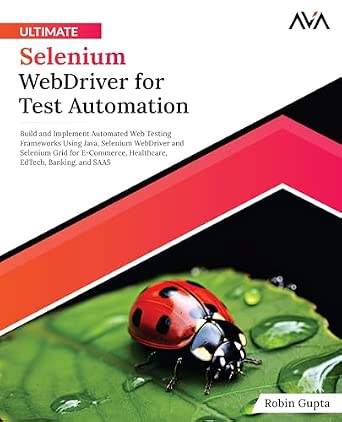 | Best for Enterprise Java Teams | Format: Print / eBook | Primary language: Java | Tools covered: Selenium WebDriver, Selenium Grid | VIEW LATEST PRICE | See Our Full Breakdown |
| Ultimate Web Automation Testing with Cypress: Master End-to-End Web Application Testing Automation |  | Best for Modern Frontend Teams | Format: eBook / Print | Primary tool: Cypress | Focus: End-to-end web application testing | VIEW LATEST PRICE | See Our Full Breakdown |
| AI Testing with Python: Build Intelligent Test Automation Using Python, Selenium, APIs, PyTest, LLMs & AI-Powered Testing Tools |  | Best for Future-Facing Skill Building | Format: eBook / Print | Primary language: Python | Tools covered: Selenium, PyTest, APIs, LLM-based testing tools | VIEW LATEST PRICE | See Our Full Breakdown |
| Playwright Automation Testing: Complete Guide with TypeScript |  | Best Overall Tool Guide for New Testers | Format: eBook / Print | Primary tool: Playwright | Primary language: TypeScript | VIEW LATEST PRICE | See Our Full Breakdown |
| Complete Guide to Test Automation: Techniques, Practices, and Patterns for Building and Maintaining Effective Software Projects |  | Best for Long-Term Strategy | Format: Book (digital/kindle edition available) | Focus: Test automation techniques, practices, and patterns | Tool coverage: Framework-agnostic | VIEW LATEST PRICE | See Our Full Breakdown |
| AI-Assisted QA and Software Testing with Claude Code |  | Best for AI-Forward Teams | Format: Digital guide/course material | Core technology: Anthropic’s Claude Code agentic assistant | Testing scopes covered: Unit, integration, end-to-end | VIEW LATEST PRICE | See Our Full Breakdown |
| Web Automation Testing Using Playwright: End-to-end, API, accessibility, and visual testing using Playwright (English Edition) |  | Best Single-Tool Playwright Guide | Format: Paperback/digital book (English Edition) | Framework covered: Playwright | Testing types: End-to-end, API, accessibility, visual | VIEW LATEST PRICE | See Our Full Breakdown |
| All You Need to Know About Software Testing: From Beginner to Job-Ready QA Engineer |  | Best for Career Changers | Format: Digital/book | Topics covered: Manual testing, automation, APIs, Selenium, Playwright, CI/CD, AI-assisted QA | Audience: Beginners and career changers | VIEW LATEST PRICE | See Our Full Breakdown |
| Test Automation Fundamentals: A Study Guide for the Certified Test Automation Engineer Exam, Advanced Level Specialist, ISTQB® Compliant |  | Best for Certification Prep | Format: Book/study guide (digital edition available) | Certification target: ISTQB® Certified Test Automation Engineer, Advanced Level Specialist | Compliance: ISTQB® compliant | VIEW LATEST PRICE | See Our Full Breakdown |
| Software Testing and Quality Assurance: Exploring Testing Levels, Test Tools, Automation, and Quality Metrics for Improved Software Quality |  | Best Broad Foundations | Format: Book (digital/print) | Primary Focus: Software testing and quality assurance | Topics Covered: Testing levels, test tools, automation, quality metrics | VIEW LATEST PRICE | See Our Full Breakdown |
| Intelligent Test Automation: Mastering Playwright with Agentic AI for Self-Healing, Adaptive Web Testing |  | Most Forward-Looking | Format: Book (digital/print) | Framework: Playwright | Specialty: Agentic AI, self-healing and adaptive testing | VIEW LATEST PRICE | See Our Full Breakdown |
| Guide to Test Automation Architecture: A Roadmap for Building Sustainable Test Automation Frameworks for Modern Software |  | Best for Framework Designers | Format: Book (digital/print) | Primary Focus: Test automation framework architecture | Topics Covered: Framework design, best practices, architecture principles, sustainability strategies | VIEW LATEST PRICE | See Our Full Breakdown |
| Hands-On Automated Testing with Playwright: Create fast, reliable, and scalable tests for modern web apps with Microsoft’s automation framework |  | Best Practical Playwright Guide | Format: Book (print/digital) | Framework: Microsoft Playwright | Primary Focus: Automated web application testing | VIEW LATEST PRICE | See Our Full Breakdown |
| Spec-Driven Software Testing with AI: Build Reliable Test Suites from Specifications with AI, Test Automation, TDD, API Testing, and CI/CD |  | Best End-to-End Pipeline Coverage | Format: Book (digital/print) | Primary Focus: Specification-driven, AI-assisted test suite development | Topics Covered: AI testing, test automation, TDD, API testing, CI/CD | VIEW LATEST PRICE | See Our Full Breakdown |
| software testing automation tool | Format | Skill level |
|---|---|---|
| Continuous Delivery: Reliable | Print / eBook | — |
| Ultimate Selenium WebDriver fo | Print / eBook | — |
| Ultimate Web Automation Testin | eBook / Print | — |
| AI Testing with Python: Build | eBook / Print | — |
| Playwright Automation Testing: | eBook / Print | — |
| Complete Guide to Test Automat | Book (digital/kindle edition available) | Intermediate to advanced |
| AI-Assisted QA and Software Te | Digital guide/course material | Intermediate to advanced |
| Web Automation Testing Using P | Paperback/digital book (English Edition) | Intermediate (JavaScript assumed) |
| All You Need to Know About Sof | Digital/book | Beginner to entry-level professional |
| Test Automation Fundamentals: | Book/study guide (digital edition available) | Advanced |
| Software Testing and Quality A | Book (digital/print) | Unspecified |
| Intelligent Test Automation: M | Book (digital/print) | Advanced |
| Guide to Test Automation Archi | Book (digital/print) | Intermediate to advanced |
| Hands-On Automated Testing wit | Book (print/digital) | Intermediate (JavaScript assumed) |
| Spec-Driven Software Testing w | Book (digital/print) | Intermediate to advanced |
More Details on Our Top Picks
Continuous Delivery: Reliable Software Releases through Build, Test, and Deployment Automation
While most books in this roundup teach you a specific tool, this one teaches you how to think about automation across the entire delivery pipeline. Humble and Farley’s classic covers the principles behind reliable build, test, and deployment automation — the architectural decisions that make or break a test suite. Compared with tool-specific picks like Ultimate Selenium WebDriver for Test Automation, this book won’t hand you working code on day one; instead, it explains why frameworks fail when pipelines are poorly designed, knowledge that outlasts any framework trend. The tradeoff is real: there’s no Cypress, Playwright, or Python here, so readers wanting hands-on scripts should pair it with a practical guide. But for engineers building automation strategy rather than just writing tests, this remains the reference that other titles in this space quietly borrow from.
Pros:- Timeless principles that apply regardless of which testing framework you choose
- Connects test automation to deployment and release reliability, a gap in tool-focused books
- Written by practitioners with deep enterprise delivery experience
- Strong coverage of pipeline design, artifact management, and feedback loops
Cons:- No hands-on exercises with current tools like Selenium, Cypress, or Playwright
- Dense and theory-heavy; beginners may struggle without prior DevOps context
Best for: DevOps engineers and tech leads designing CI/CD pipelines who need strategic depth, not just tool syntax
Not ideal for: Junior testers hunting for copy-paste scripts — the concepts are abstract and assume engineering maturity
- Format:Print / eBook
- Authors:Jez Humble, David Farley
- Focus:Continuous delivery, build/test/deploy automation
- Audience level:Intermediate to advanced
- Primary readers:DevOps engineers, software developers, release managers
- Tools covered:Tool-agnostic principles
- Industry recognition:Widely cited as a foundational CD text
Our verdict“Buy this if you’re architecting automation pipelines for the long haul; skip it if you need runnable test code this week.”
Ultimate Selenium WebDriver for Test Automation: Build and Implement Automated Web Testing Frameworks Using Java, Selenium WebDriver and Selenium Grid
Selenium remains the lingua franca of enterprise web test automation, and this book doubles down on that reality with Java, WebDriver, and Selenium Grid. Where Ultimate Web Automation Testing with Cypress targets modern JavaScript shops, this pick makes sense for teams whose codebases, CI servers, and hiring pipelines already run on Java. The Grid coverage is the differentiator: distributed, parallel test execution across browsers and machines is exactly what large regression suites in banking and healthcare need, and few titles in this roundup address it this directly. The industry-specific examples (e-commerce, healthcare, edTech, SaaS) help translate concepts into domain-relevant scenarios. The tradeoff: Java plus Selenium carries real setup and maintenance overhead compared to newer frameworks like Playwright, so this is a commitment, not a weekend project.
Pros:- Covers framework architecture, not just scripted examples
- Selenium Grid sections address large-scale parallel execution
- Domain-specific examples across five industries
- Selenium skills remain the most transferable in the job market
Cons:- Java setup and boilerplate make the learning curve steeper than modern alternatives
- Selenium’s flakiness issues require workarounds the book can’t fully eliminate
Best for: QA engineers in Java-heavy enterprises who need scalable, grid-based regression testing across browsers
Not ideal for: Frontend JavaScript developers — the Java toolchain will feel like overhead next to Cypress or Playwright
- Format:Print / eBook
- Primary language:Java
- Tools covered:Selenium WebDriver, Selenium Grid
- Focus:Automated web testing framework design
- Domain examples:E-commerce, healthcare, edTech, banking, SaaS
- Audience level:Intermediate
- Prerequisites:Java programming basics
Our verdict“The right choice for enterprise Java teams needing battle-tested, grid-scale automation; everyone else should look at lighter frameworks first.”
Ultimate Web Automation Testing with Cypress: Master End-to-End Web Application Testing Automation
This option stands out for teams that live in JavaScript and want fast, reliable end-to-end tests with minimal ceremony. Cypress flipped the testing model by running inside the browser, which means instant reloads, time-travel debugging, and far less of the flakiness that plagues the Selenium approach covered in Ultimate Selenium WebDriver for Test Automation. The book channels those advantages into QA process acceleration, making it a natural fit for frontend developers who own their own tests rather than a separate QA silo. Compared with Playwright Automation Testing: Complete Guide with TypeScript, Cypress has a smaller cross-browser footprint and weaker multi-tab/multi-origin handling — genuine limitations for complex app testing. And unlike Continuous Delivery, this is purely tactical: it won’t help you design a release pipeline. For modern single-page app teams, though, the developer experience here is hard to beat.
Pros:- Excellent developer experience with real-time reloads and debugging
- Strong alignment with modern frontend workflows
- Reduces test flakiness compared to WebDriver-based approaches
- Accessible to developers without deep QA backgrounds
Cons:- Limited cross-browser support compared to Selenium and Playwright
- Struggles with multi-tab and cross-origin testing scenarios
Best for: JavaScript frontend developers and QA engineers testing modern SPAs who want fast feedback loops
Not ideal for: Teams testing cross-browser edge cases or legacy apps — Cypress’s browser and origin limitations will bite
- Format:eBook / Print
- Primary tool:Cypress
- Focus:End-to-end web application testing
- Audience level:Beginner to intermediate
- Primary readers:QA professionals, frontend developers
- Prerequisites:JavaScript fundamentals
- Outcome focus:Accelerated QA processes
Our verdict“Pick this if your team builds JavaScript apps and values iteration speed over maximum browser coverage.”
AI Testing with Python: Build Intelligent Test Automation Using Python, Selenium, APIs, PyTest, LLMs & AI-Powered Testing Tools
This is the most ambitious skill-stacking book in the batch: Python, Selenium, API testing, PyTest, and large language models in one curriculum. Compared with AI-Assisted QA and Software Testing with Claude Code, which leans on a single vendor’s tooling, this book teaches a broader, tool-agnostic approach to weaving AI into test generation and execution — safer if you don’t want your career tied to one AI product. The Python-plus-PyTest foundation also makes it more portable across API and backend testing than browser-only picks like Ultimate Web Automation Testing with Cypress. The realistic tradeoff: breadth sacrifices depth, and the AI tooling landscape shifts so fast that specific chapters may age quickly. It also assumes you already know testing fundamentals, so it’s a second or third automation book, not a first.
Pros:- Combines Python, Selenium, APIs, and PyTest into one cohesive curriculum
- Vendor-neutral AI coverage avoids lock-in to a single assistant
- Python skills transfer well beyond UI testing into API and data work
- Timely coverage of LLM-driven test generation
Cons:- AI tooling sections will age faster than fundamentals-focused books
- Breadth over depth — some tools get only surface treatment
Best for: Experienced testers who know Python basics and want to add AI-augmented automation to their toolkit
Not ideal for: Automation newcomers — the multi-tool scope plus AI concepts assumes prior testing experience
- Format:eBook / Print
- Primary language:Python
- Tools covered:Selenium, PyTest, APIs, LLM-based testing tools
- Focus:AI-powered intelligent test automation
- Audience level:Intermediate to advanced
- Prerequisites:Python basics and testing fundamentals
- AI coverage:LLMs and AI-powered test tools
Our verdict“A smart second automation book for Python-fluent testers betting that AI-augmented QA is where the field is heading.”
Playwright Automation Testing: Complete Guide with TypeScript
If one tool-specific book deserves the top practical slot, it’s this one, because Playwright with TypeScript hits the current sweet spot: cross-browser coverage Cypress can’t fully match, auto-waiting that eliminates most Selenium flakiness, and a language that pairs naturally with modern web codebases. Compared with Ultimate Selenium WebDriver for Test Automation, you get the same browser breadth with dramatically less boilerplate. And where Hands-On Automated Testing with Playwright stays tactical, this guide spans setup through advanced techniques, giving beginners a single book to grow with instead of outgrowing. The genuine tradeoffs: TypeScript adds a typing learning curve for scripters coming from plain JavaScript, and Playwright’s ecosystem, while maturing fast, still has fewer community answers online than Selenium’s two-decade archive. For anyone starting automation today, though, this combination is the strongest default.
Pros:- True cross-browser and mobile emulation support out of the box
- TypeScript typing catches selector and data errors before runtime
- Progresses from beginner setup to advanced techniques in one volume
- Auto-waiting reduces flaky tests substantially
Cons:- TypeScript adds a learning curve for testers without typed-language experience
- Smaller community knowledge base than Selenium’s long history
Best for: New-to-automation engineers and frontend teams wanting one modern, cross-browser framework to standardize on
Not ideal for: Teams locked into legacy Java stacks or needing extensive third-party integrations Selenium already supports
- Format:eBook / Print
- Primary tool:Playwright
- Primary language:TypeScript
- Focus:Setup, best practices, advanced automation techniques
- Browser support:Chromium, Firefox, WebKit
- Audience level:Beginner to advanced
- Prerequisites:Basic JavaScript familiarity
Our verdict“The best single investment for teams starting test automation in the modern era — powerful, current, and beginner-friendly enough to grow into.”
Complete Guide to Test Automation: Techniques, Practices, and Patterns for Building and Maintaining Effective Software Projects
Most books in this roundup teach you a specific tool — Playwright, Selenium, Cypress. Complete Guide to Test Automation takes the opposite approach: it teaches the patterns and practices that outlast any framework. Where Web Automation Testing Using Playwright shows you how to write tests, this one explains how to keep a test suite maintainable three years later, which is where most automation efforts actually fail. I’d place this above Guide to Test Automation Architecture for readers who want breadth across techniques rather than a narrow roadmap. The tradeoff is obvious: there is no hands-on tool tutorial here, so a beginner who wants clickable step-by-step code will finish it without having written a single test. It works best as a second or third book, read after a tool-focused title has built basic muscle memory.
Pros:- Focuses on maintainability patterns, not just writing tests
- Framework-agnostic advice that survives tool migrations
- Strong coverage of building and sustaining automation long-term
- Written for both developers and testers
Cons:- No hands-on tutorials with a specific tool or code environment
- Vague publication and edition details make currency hard to verify
- Assumes prior testing knowledge without stating a skill floor
Best for: QA leads and senior engineers who already know a framework and need sustainable, maintainable test suites
Not ideal for: Beginners seeking a first book — it assumes automation experience and skips tool setup entirely
- Format:Book (digital/kindle edition available)
- Focus:Test automation techniques, practices, and patterns
- Tool coverage:Framework-agnostic
- Audience:Software developers and testers
- Skill level:Intermediate to advanced
- Primary outcome:Building and maintaining effective test processes
Our verdict“Buy this after you’ve learned a tool — it’s the book that turns test scripts into a durable automation practice.”
AI-Assisted QA and Software Testing with Claude Code
This is the most forward-looking entry in the lineup. Instead of teaching a traditional framework, it shows how an agentic AI assistant can generate and maintain unit, integration, and end-to-end tests. Compared with AI Testing with Python, which bolts LLMs onto a Selenium/PyTest stack you build yourself, this one centers the workflow on the AI assistant itself — a fundamentally different way of working that can compress testing cycles dramatically. The catch is that cutting-edge means fragile: agentic workflows evolve quickly, advice can date fast, and there’s a real learning curve before the AI produces tests you’d actually trust in CI. It also assumes comfort with developer tooling in a way that All You Need to Know About Software Testing deliberately does not. For teams already experimenting with AI in development, though, this is the most relevant title here.
Pros:- Covers unit, integration, and end-to-end testing in one AI workflow
- Teaches a genuinely modern, agentic approach rather than legacy scripting
- Can dramatically accelerate test creation and maintenance
- Unique in the roundup — no direct competitor covers this workflow
Cons:- Agentic tooling changes fast, so material can age quickly
- Steep learning curve for anyone new to AI-assisted development
- Sparse specifications make depth and prerequisites hard to judge
Best for: Developers and QA engineers on teams already adopting AI coding tools who want to automate test generation end to end
Not ideal for: Manual testers or QA newcomers — it assumes existing automation knowledge and developer-tool fluency
- Format:Digital guide/course material
- Core technology:Anthropic’s Claude Code agentic assistant
- Testing scopes covered:Unit, integration, end-to-end
- Approach:AI-assisted test generation and automation
- Audience:Developers and QA engineers familiar with AI tooling
- Skill level:Intermediate to advanced
Our verdict“The pick for teams already using AI coding assistants who want testing to keep pace — everyone else should learn a framework first.”
Web Automation Testing Using Playwright: End-to-end, API, accessibility, and visual testing using Playwright (English Edition)
Among the several Playwright titles in this roundup, this one stands out for breadth within one framework. It covers not just end-to-end testing but API testing, accessibility checks, and visual regression — four pillars of web quality in a single book. Compared with Hands-On Automated Testing with Playwright, which prioritizes fast, reliable test creation, this edition goes wider, making it the better choice when accessibility compliance or visual consistency matter to your product. Against Playwright Automation Testing: Complete Guide with TypeScript, the difference is scope: this book isn’t locked to TypeScript workflows, but it’s also less deep on typed framework architecture. The honest drawback is a lack of stated prerequisites — readers won’t know until they open it whether JavaScript fundamentals are assumed, and with no ratings available, quality is harder to verify than the Cypress or Selenium alternatives.
Pros:- Four testing disciplines covered in one framework: E2E, API, accessibility, visual
- Playwright is cross-browser and modern, so skills transfer well
- Suitable for both developers and dedicated testers
- Accessibility coverage is rare among Playwright books
Cons:- No stated prerequisites, so beginners may hit a JavaScript wall
- No customer reviews or ratings to validate quality
- Locked to one tool — skills don’t transfer to Cypress or Selenium shops
Best for: Front-end and QA engineers standardizing on Playwright who need API, accessibility, and visual coverage in one reference
Not ideal for: Teams testing native mobile or desktop apps — this is strictly web-focused
- Format:Paperback/digital book (English Edition)
- Framework covered:Playwright
- Testing types:End-to-end, API, accessibility, visual
- Target platform:Web applications
- Audience:Developers and testers
- Skill level:Intermediate (JavaScript assumed)
Our verdict“The most complete single-book Playwright resource here — ideal if accessibility and visual testing are on your requirements list.”
All You Need to Know About Software Testing: From Beginner to Job-Ready QA Engineer
This is the only entry in the roundup aimed at people starting from zero. Everything else — the Playwright guides, the ISTQB study material, AI-Assisted QA with Claude Code — presumes existing technical grounding. This book instead walks the full path: manual testing fundamentals, automation basics, APIs, Selenium, Playwright, CI/CD, and even AI-assisted QA, all framed around becoming employable rather than mastering one tool. The comparison that matters is against Ultimate Selenium WebDriver for Test Automation: that book goes deep on one framework, while this one goes wide on the whole discipline, trading depth for career coverage. That breadth is also the weakness — each tool gets a survey rather than mastery, so readers will still need a specialized follow-up like the Playwright titles. With no reviews or detailed specs available, it’s a calculated bet, but for a career switcher it’s the lowest-barrier entry point on this list.
Pros:- Covers the entire QA landscape: manual, automation, API, CI/CD
- Includes modern tools like Playwright and AI-assisted QA
- Explicitly structured around job readiness, not just theory
- Accessible to complete beginners with no coding background required to start
Cons:- Breadth over depth — every tool gets only introductory treatment
- No customer reviews or ratings to gauge quality
- Vague technical details make it hard to confirm currency of the material
Best for: Career changers and students who need one book covering everything from manual testing basics to a first QA job
Not ideal for: Working QA engineers — the first half re-covers fundamentals they already know
- Format:Digital/book
- Topics covered:Manual testing, automation, APIs, Selenium, Playwright, CI/CD, AI-assisted QA
- Audience:Beginners and career changers
- Skill level:Beginner to entry-level professional
- Primary outcome:Job-ready QA engineer foundation
- Tool depth:Introductory coverage of multiple tools
Our verdict“If you’re entering QA from another field, start here and graduate to a focused Playwright or Selenium title afterward.”
Test Automation Fundamentals: A Study Guide for the Certified Test Automation Engineer Exam, Advanced Level Specialist, ISTQB® Compliant
Every other title in this roundup is judged by practical skill gained; this one is judged by a different metric — passing the ISTQB® Certified Test Automation Engineer exam. That single purpose shapes everything: the structure follows the official syllabus, the depth targets advanced-level specialists, and the language mirrors certification terminology. Compared with Complete Guide to Test Automation, which covers similar conceptual ground, this guide is more exam-aligned but less philosophical about long-term practice. It also serves a genuinely different buyer than All You Need to Know About Software Testing — that book builds a career from scratch, while this one assumes you’re already an experienced engineer chasing a credential that many European and enterprise employers value. The tradeoff is real: it’s too technical and dry for beginners, and it won’t teach you to write Playwright or Cypress code. Buy it for the exam, not for hands-on skills.
Pros:- Directly aligned with the ISTQB® Certified Test Automation Engineer syllabus
- Strong theoretical grounding in automation fundamentals and architecture
- Credible credential support for enterprise and European job markets
- Focused structure that maps cleanly to exam objectives
Cons:- Too technical and abstract for beginners or career changers
- No hands-on tool instruction — zero Playwright, Selenium, or Cypress content
- Value collapses if your target employers don’t recognize ISTQB certification
Best for: Experienced test engineers preparing specifically for the ISTQB® CTAE advanced-level certification exam
Not ideal for: Practitioners who want hands-on coding skills — there’s no framework tutorial here, and employers ignoring ISTQB won’t reward it
- Format:Book/study guide (digital edition available)
- Certification target:ISTQB® Certified Test Automation Engineer, Advanced Level Specialist
- Compliance:ISTQB® compliant
- Content type:Exam-oriented fundamentals and theory
- Audience:Advanced-level test automation professionals
- Skill level:Advanced
- Hands-on coding:Not included — theory-focused
Our verdict“A purpose-built exam companion — worth it only if the ISTQB® CTAE credential is actually on your career path.”
Software Testing and Quality Assurance: Exploring Testing Levels, Test Tools, Automation, and Quality Metrics for Improved Software Quality
Most entries in this roundup go deep on a single tool or methodology, but this title takes the opposite approach: breadth across the entire QA discipline. Where Hands-On Automated Testing with Playwright assumes you already care about one framework, this book builds the case for why testing levels, metrics, and automation strategy fit together — the connective tissue that tool-focused guides skip. This pick makes the most sense for readers who want to understand what to automate and why before committing to how. The tradeoff is depth: compared with Guide to Test Automation Architecture, the hands-on framework guidance here is lighter, and the lack of clear edition or audience-level details makes it hard to gauge fit before buying.
Pros:- Broad coverage of testing levels, tools, and quality metrics in one place
- Connects automation decisions to measurable quality outcomes
- Good orientation read before diving into tool-specific books
- Useful for professionals improving processes, not just writing tests
Cons:- No tool-specific implementation detail or code examples
- Missing edition and audience-level information makes depth hard to judge
Best for: QA leads and managers who need a wide-angle view of testing levels, metrics, and automation strategy rather than tool tutorials
Not ideal for: Hands-on engineers who want copy-paste framework code — this stays at the conceptual level
- Format:Book (digital/print)
- Primary Focus:Software testing and quality assurance
- Topics Covered:Testing levels, test tools, automation, quality metrics
- Audience:Software testing professionals
- Skill Level:Unspecified
- Tool-Specific Content:Overview of test tools, no single-framework tutorials
Our verdict“Choose this if you need the strategic map of software quality before picking a specific automation tool.”
Intelligent Test Automation: Mastering Playwright with Agentic AI for Self-Healing, Adaptive Web Testing
This is the most ambitious title in the roundup, pairing Playwright with agentic AI for self-healing, adaptive test suites. Compared with AI Testing with Python, which leans on Selenium and LLM-assisted scripting, this book pushes toward autonomous systems that repair themselves when UI elements shift — a genuine differentiator if flaky tests are eating your team’s time. The self-healing strategies are the reason it earns a slot. But ambition cuts both ways: the material assumes you already know Playwright fundamentals (start with Playwright Automation Testing: Complete Guide with TypeScript if you don’t), and agentic techniques are still maturing, so some patterns may age faster than the classical approaches in the Complete Guide to Test Automation.
Pros:- Unique coverage of agentic AI applied to real web testing
- Self-healing strategies directly address test flakiness
- Combines a modern framework with forward-looking automation patterns
- Suited to advanced practitioners pushing beyond record-and-playback
Cons:- Too technical for beginners; assumes Playwright fluency
- Bleeding-edge techniques may not match every team’s toolchain
- Narrowly focused on web testing methodologies
Best for: Senior testers and developers already fluent in Playwright who want to experiment with AI-driven, self-maintaining test systems
Not ideal for: Beginners or teams needing stable, proven patterns — the agentic AI content assumes significant prior expertise
- Format:Book (digital/print)
- Framework:Playwright
- Specialty:Agentic AI, self-healing and adaptive testing
- Target Audience:Advanced testers and developers
- Testing Scope:Web application testing
- Skill Level:Advanced
Our verdict“A bet on where test automation is heading — worth it only if you already have solid Playwright foundations.”
Guide to Test Automation Architecture: A Roadmap for Building Sustainable Test Automation Frameworks for Modern Software
Once you know a tool, the harder question is how to structure automation that survives years of change — and that’s exactly where this book lives. Compared with Complete Guide to Test Automation, which surveys techniques broadly, this title narrows to architecture: framework layering, maintainability principles, and long-term sustainability. It pairs well with a tool tutorial like Ultimate Selenium WebDriver for Test Automation — that book teaches the instrument, this one teaches the building. The roadmap format makes it a strong fit for engineers about to greenfield a framework or rescue a decaying one. The tradeoff: it is not a coding manual, and beginners without at least one automation project behind them will find the architectural abstractions abstract indeed.
Pros:- Focused specifically on framework architecture, not just tool usage
- Roadmap structure suits real framework builds and redesigns
- Emphasizes sustainability and maintainability over quick wins
- Aligned with modern development practices
Cons:- No hands-on, tool-specific code walkthroughs
- Steep for beginners without prior automation experience
- Lacks edition and publication details
Best for: Automation engineers and tech leads designing or restructuring a test framework for long-term maintainability
Not ideal for: First-time automators looking for step-by-step tool tutorials — the architecture-level content needs prior project experience
- Format:Book (digital/print)
- Primary Focus:Test automation framework architecture
- Topics Covered:Framework design, best practices, architecture principles, sustainability strategies
- Target Audience:Automation engineers and architects
- Skill Level:Intermediate to advanced
- Tool Coverage:Tool-agnostic principles
Our verdict“The pick for engineers who already know a tool and now need to design a framework that lasts.”
Hands-On Automated Testing with Playwright: Create fast, reliable, and scalable tests for modern web apps with Microsoft’s automation framework
Among the Playwright titles in this roundup, this one earns the most practical label because of its practitioner orientation — building fast, reliable, and scalable tests for real web apps rather than cataloging API features. Compared with Web Automation Testing Using Playwright, which spreads across end-to-end, API, accessibility, and visual testing, this book concentrates on core test reliability and scaling, which usually matters more day to day. Its Microsoft-framework lineage is a plus for teams already in that ecosystem. The drawback mirrors its strength: broad QA topics like Spec-Driven Software Testing with AI covers — CI/CD pipelines, specification-driven design — appear only at the edges here, and the pacing assumes JavaScript competence that absolute beginners may lack.
Pros:- Hands-on approach centered on real test reliability and scaling
- Backed by a mature, well-documented Microsoft framework
- Focused scope avoids the dilution of multi-topic guides
- Directly applicable to modern web app workflows
Cons:- Assumes JavaScript familiarity; not a gentle on-ramp
- Limited coverage of CI/CD and broader QA strategy
Best for: Web developers and QA engineers who want a focused, practical path to writing production-grade Playwright tests
Not ideal for: Readers seeking QA breadth — testing strategy, metrics, or non-web automation are out of scope
- Format:Book (print/digital)
- Framework:Microsoft Playwright
- Primary Focus:Automated web application testing
- Key Outcomes:Fast, reliable, scalable test suites
- Target Audience:Developers and QA engineers working on web apps
- Skill Level:Intermediate (JavaScript assumed)
- Testing Scope:Web end-to-end testing
Our verdict“The go-to if your goal is writing dependable Playwright tests for a web app this quarter, not studying QA theory.”
Spec-Driven Software Testing with AI: Build Reliable Test Suites from Specifications with AI, Test Automation, TDD, API Testing, and CI/CD
This title stands out for connecting specifications to shipped software: AI-driven test generation from specs, TDD, API testing, and CI/CD integration in one arc. Where Guide to Test Automation Architecture stays inside the framework, this book pushes outward into the delivery pipeline — the reason it earns the pipeline coverage slot. Compared with Intelligent Test Automation, which centers on self-healing web UI tests, this approach targets reliability at the source: deriving tests from specifications so coverage traces back to requirements. That breadth is also the tradeoff — five major topics in one book means none get exhaustive treatment, and the lack of ratings or reviews means you’re buying on description alone. Beginners should start with All You Need to Know About Software Testing first.
Pros:- Links specification-based design to AI-generated, traceable test suites
- Covers the full pipeline: automation, TDD, API testing, CI/CD
- Addresses reliability at the requirements level, not just the UI
- Practical guidance for integrating tests into delivery workflows
Cons:- Breadth across five topics limits depth in each
- No customer reviews or ratings to gauge quality
- Too technical for readers new to test automation
Best for: Developers and QA engineers who want tests generated from specifications and wired into a full TDD, API, and CI/CD workflow
Not ideal for: Newcomers to testing — the simultaneous coverage of AI, TDD, APIs, and CI/CD assumes working knowledge of each
- Format:Book (digital/print)
- Primary Focus:Specification-driven, AI-assisted test suite development
- Topics Covered:AI testing, test automation, TDD, API testing, CI/CD
- Target Audience:Developers and QA engineers in CI/CD environments
- Skill Level:Intermediate to advanced
- Approach:Specification-based test derivation with AI
- Ratings:None available yet
Our verdict“The right pick if you want one book that ties AI-assisted, spec-driven testing into your entire delivery pipeline.”

How We Picked
I evaluated these fifteen titles against four buyer-relevant criteria. Framework relevance came first: a guide for a declining tool is a poor investment no matter how well written, which is why Playwright titles cluster near the top and older Selenium-centric approaches rank lower despite their depth. Practical applicability was next — books that walk through building real frameworks, integrating CI/CD, or handling flaky tests score higher than survey-style overviews. Audience fit mattered too: a certification candidate and a mid-career engineer automating a SaaS regression suite need completely different books, so each title is assigned a role rather than judged on a single scale. Finally, I weighed longevity — how long the content stays useful before framework updates make it stale.
The ranking logic follows directly from those criteria. Playwright Automation Testing with TypeScript leads because it hits the sweet spot of relevant framework, practical code-heavy instruction, and broad audience fit. Cypress and Python-based AI testing titles follow because they serve large, clearly-defined ecosystems. Methodology and architecture books slot into the middle as second purchases — valuable, but only after you’ve picked a tool. Beginner surveys and certification guides anchor the lower half of the list, not because they’re weak, but because they serve narrower moments in a testing career.
| software testing automation tool | Skill level |
|---|---|
| Continuous Delivery: Reliable | — |
| Ultimate Selenium WebDriver fo | — |
| Ultimate Web Automation Testin | — |
| AI Testing with Python: Build | — |
| Playwright Automation Testing: | — |
| Complete Guide to Test Automat | Intermediate to advanced |
| AI-Assisted QA and Software Te | Intermediate to advanced |
| Web Automation Testing Using P | Intermediate (JavaScript assumed) |
| All You Need to Know About Sof | Beginner to entry-level professional |
| Test Automation Fundamentals: | Advanced |
| Software Testing and Quality A | Unspecified |
| Intelligent Test Automation: M | Advanced |
| Guide to Test Automation Archi | Intermediate to advanced |
| Hands-On Automated Testing wit | Intermediate (JavaScript assumed) |
| Spec-Driven Software Testing w | Intermediate to advanced |
Factors to Consider When Choosing Software Testing Automation Tools
Choosing a test automation book is really choosing a technology bet. Below are the factors that should drive that decision — and the mistakes that cost buyers money.Pick the Framework Before the Book
The most expensive mistake in this category is buying a book before committing to a tool. Playwright, Cypress, and Selenium are not interchangeable — they have different languages, different architectures, and different hiring pipelines. Playwright suits teams wanting multi-browser coverage and a modern API; Cypress excels for JavaScript-heavy front-end teams with simpler needs; Selenium remains the choice where legacy suites, enterprise constraints, or broad language support dictate the stack. A common trap is choosing based on blog hype rather than what your team can actually maintain. Check what your job postings, your CI servers, and your existing test suites already use before spending a dollar. If you’re learning for employability, scan current QA job listings in your market — that tells you more than any review.
Depth vs. Breadth: Don’t Buy a Survey as Your Only Book
Books in this category split cleanly into framework-specific deep dives and career-wide surveys, and buyers constantly confuse the two. A broad title like Complete Guide to Test Automation teaches patterns — maintainability, test pyramid thinking, framework design — that stay useful for a decade. A Playwright or Cypress guide teaches API specifics that may break with a major version release. Neither is wrong; the error is buying one when you need the other. If you can’t yet write a passing test unaided, buy the framework book first. If your tests work but are fragile, unmaintainable, or wildly flaky, the pattern book will help more than any tool guide. Budget-minded buyers get the most value from one of each rather than three overlapping titles.
How Much AI Do You Actually Need?
2026’s shelves are full of AI-testing titles, and the hype-to-substance ratio varies wildly. Some books teach genuinely durable skills — using LLMs to generate test data, PyTest integration, AI-assisted API testing — while others chase agentic, self-healing concepts that are still maturing. Ask whether the AI content solves a problem you currently have. If your bottleneck is generating test cases from specs or maintaining brittle selectors, AI-assisted approaches may pay off immediately. If your bottleneck is that nobody on the team knows how to write a reliable locator, AI won’t save you — fundamentals will. My advice: treat AI-focused books as a second purchase layered on solid framework skills, not a shortcut around them. The strongest AI titles in this lineup assume you already know Selenium or Playwright.
Certification Paths and Career Stage
Career stage changes the right answer more than any other factor. Job seekers should weigh certification alignment heavily — the ISTQB-compliant study guide maps to a credential that appears in European and enterprise job requirements, and a listed certification can outweigh a portfolio in HR screening. Career switchers benefit from beginner-to-job-ready titles that cover manual testing fundamentals alongside automation, because interviews test both. Mid-career engineers should skip both categories entirely and buy architecture books — the salary jump comes from designing maintainable frameworks, not from another tool tutorial. A common waste of money is an experienced developer buying a ‘from beginner’ title out of caution; if you can already code, you’ll outgrow it in a week.
Language and Stack Compatibility
The programming language inside a testing book is a bigger filter than most buyers realize. A Java-based Selenium guide is nearly useless to a TypeScript shop, and a Python AI-testing book won’t help a C# team, regardless of quality. Match the book’s language to the one you’ll write production code in daily, because the value comes from reused patterns, not just test syntax. TypeScript has become the lingua franca of modern web automation, which partly explains Playwright’s rise. Python dominates the AI-testing intersection because the LLM ecosystem lives there. Before buying, check the table of contents for language, framework version, and whether examples include CI/CD integration — a book with pipeline examples saves you a second purchase later.
Freshness and the Version-Death Problem
Automation frameworks move fast, and books don’t. Check the covered framework version against the current release before buying anything tool-specific — a Selenium 3 guide in a Selenium 4 world will teach deprecated patterns that cost hours to unlearn. Playwright and Cypress change more incrementally, so their guides age more gracefully. Look for signals of currency: mentions of visual testing, accessibility testing, and AI integration tend to mark recent editions. Older books on architecture and methodology dodge this problem entirely, which is another reason they make better long-term shelf investments. If a deal seems too cheap, the publication date is usually the reason.
Frequently Asked Questions
Should I learn Playwright or Cypress in 2026?
Playwright is the safer default for new projects because it supports multiple browsers, multiple languages, and has strong backing from Microsoft plus rapid community growth — four of the fifteen titles in this roundup are Playwright books, which reflects where demand is heading. Cypress remains a strong choice if your team is already JavaScript-first, your testing needs are primarily front-end end-to-end flows, and you value its developer experience and time-travel debugging. The honest differentiator is ecosystem gravity: switching frameworks later means rewriting your entire suite, so match your choice to your team’s stack rather than to feature checklists. If you’re starting from zero with no constraints, the Playwright with TypeScript guide gives you the most future-proofed skill set.
Are AI-powered test automation books worth buying, or is it hype?
Partly both, and the split matters. The practical titles — those using LLMs for test data generation, spec-to-test conversion, and API test scaffolding in Python — teach skills you can apply on real projects today. The more experimental agentic and self-healing approaches are genuinely promising but still maturing, so treat those books as forward-looking education rather than an immediate playbook. What AI testing reliably cannot do is substitute for fundamentals: if your locators are brittle and your test architecture is poor, AI layers on top will amplify the mess. My recommendation is to buy one AI title only after you’re comfortable with a core framework, and to favor the Python-based guides since that’s where the tooling ecosystem actually lives.
Is Selenium still worth learning, or is it outdated?
Selenium is not outdated — it’s entrenched, which is a different thing. Enormous enterprise suites, regulated industries, and a huge share of job listings still run on Selenium WebDriver, and its support for Java, Python, C#, and other languages keeps it relevant where teams aren’t JavaScript-based. The Selenium titles in this roundup lean toward structured, industry-vertical learning, which suits job seekers targeting banking, healthcare, and enterprise QA roles. Where Selenium loses is greenfield web projects, where Playwright and Cypress offer better ergonomics and less flakiness. If employability in traditional enterprise QA is your goal, Selenium remains a solid investment; if you’re building a new suite from scratch, it’s the harder road.
Do I need a book at all, or is free documentation enough?
Official documentation teaches you the API; a good book teaches you the architecture, and that difference is where most test suites fail. Free docs for Playwright and Cypress are excellent for syntax and quick recipes, but they don’t cover maintainable framework design, test data strategy, CI/CD integration patterns, or how to reduce flakiness at scale — which is exactly what the stronger titles here focus on. Books also earn their price on career-oriented content: certification prep, interview readiness, and industry practices that no framework doc addresses. The practical split: use free docs for daily reference, and spend money on one framework book plus one architecture book. That two-book combination beats a shelf of overlapping tool tutorials.
Which book should a complete beginner buy first?
Start with a title that covers testing fundamentals alongside automation, because jumping straight into a framework book without understanding test design produces suites that break constantly and test nothing meaningful. The beginner-to-job-ready titles in this roundup cover manual testing concepts, test case design, and basic automation — the foundation interviews actually test. Once you can write and debug simple automated tests, move to a single framework deep dive, and I’d point you at Playwright with TypeScript for the reasons covered above. Resist the urge to buy the architecture or AI books early; they’ll read as abstract until you’ve felt the pain of a fragile test suite firsthand, at which point their lessons land with real force.
Conclusion
The right pick from this lineup depends entirely on where you are in your testing career. For the best overall choice, Playwright Automation Testing: Complete Guide with TypeScript combines the most future-proofed framework with practical, code-driven instruction that serves both new and experienced automators. For best value, Software Testing and Quality Assurance covers testing levels, tools, automation, and metrics at a price that makes it an easy second reference for almost anyone. For the best premium investment, AI Testing with Python layers LLM-powered capabilities onto a full Python and Selenium stack — a bigger commitment that positions you for where the field is clearly heading. Beginners should start with All You Need to Know About Software Testing, which builds the fundamentals that every later book assumes. For specific needs: certification candidates get the ISTQB-compliant Test Automation Fundamentals study guide, Cypress teams should buy the Ultimate Web Automation Testing with Cypress title, enterprise Java shops are served by the Ultimate Selenium WebDriver guide, and engineers with working but fragile suites will get the most from Guide to Test Automation Architecture. Whatever you choose, match the book to your framework decision and career stage — that single filter eliminates most of the regret in this category.
Fall Picks
fall essentials
As an affiliate, we earn on qualifying purchases.