

📊 Full opportunity report: The Case For AI Model Superiority Over Sovereign Boundaries on ThorstenMeyerAI.com — validation score, market gap, and execution plan.
TL;DR
Recent analyses argue that prioritizing the ownership of superior AI models is more beneficial than relying on sovereign cloud options. The performance gap, costs, and opportunity costs favor owning models outright, challenging traditional sovereignty arguments.
Recent industry analyses strongly suggest that the strategic advantage lies in owning the best AI models rather than relying on sovereign cloud providers. Experts argue that sovereignty is an expensive hedge against a low-probability risk, while model ownership offers tangible, immediate benefits in performance and cost efficiency. This shift in perspective could reshape how organizations approach AI infrastructure, making the debate about sovereignty less relevant in the face of competitive AI capabilities.
Multiple recent evaluations, including those from industry insiders and market analysis, indicate that the performance gap between leading open-weight models like GLM-5.2 and proprietary or sovereign offerings is significant. For example, models such as Inkling and Fable 5 demonstrate substantially higher accuracy and task completion rates than sovereign alternatives like Mistral’s offerings, which lag in both speed and capability. This performance differential translates into a productivity advantage, where organizations with superior models automate more tasks, generate more value, and accelerate innovation.
Furthermore, the costs associated with sovereign cloud solutions are substantial. Certification processes like SecNumCloud are complex and expensive, requiring extensive compliance efforts and ongoing operational overhead. Hardware costs for self-hosted models are also high, with significant capital and operational expenditures, including cooling, maintenance, and staffing. In contrast, owning or licensing top-tier models via APIs often results in lower total cost of ownership and faster deployment cycles.
Industry insiders, including CEOs of leading model providers, acknowledge that current sovereign offerings do not yet own the best models. The performance and speed limitations of sovereign models, coupled with their high costs, mean organizations are paying a premium for capabilities that are inferior to open-weight models available via APIs. This situation creates a persistent capability gap that compounds over time, putting sovereign options at a competitive disadvantage.
Against sovereignty: the strongest case for just using the best model
This publication has spent five weeks arguing one thing — and every piece converged. That should bother you. It bothers me. When eight analyses reach the same verdict, you’re not running an analysis. You’re running a thesis, and the evidence has started arriving pre-sorted.
So here’s the case against — argued properly, with the same evidence, turned around. Not a strawman erected to be knocked down. The version a smart CTO would put to me across a table, and which I have not yet answered in public. The claim: for almost everyone, sovereignty is an expensive hedge against a risk they’ve mispriced — and the rational move is to use the best model and get on with it.
Defence · classified · national health data · DORA-bound finance. The foreign-legal-order risk isn’t theoretical and isn’t insurable by other means — it’s a legal gate. No benchmark opens it. Your alternative isn’t a worse model; it’s no deployment at all.
Statistically, you are. You have a reasonable, politically legible, entirely unbudgeted feeling — and an industry built to monetize it. The capability compounds, the tax is real, the opportunity cost is brutal, and 18 days is survivable.
I’ve spent five weeks arguing you should own your stack. The strongest case against says: for most of you, that’s an expensive way to be worse, sold by people whose real product is a feeling. And that case is mostly right. What survives is smaller and sharper — everything above the router line (the qualification programme, the owned cluster, the custom pre-training run, the €11B data centre) you should buy only if a law requires it, never because a narrative does. A router is the sovereignty most people actually need. 90% of the resilience for ~2% of the cost — and it would have made 12 June a non-event. So run the honest test: are you bound, or are you performing?
Implications for Organizational AI Strategies
This analysis suggests that organizations should prioritize owning or licensing the best AI models rather than investing heavily in sovereign cloud infrastructure. The performance gap directly impacts productivity, innovation speed, and cost efficiency. Relying on sovereign options may lead to higher expenses, slower deployment, and missed market opportunities, especially as the frontier for AI capabilities continues to advance rapidly. The strategic choice to own models could determine competitive positioning in the near future.
As an affiliate, we earn on qualifying purchases.
The Evolution of AI Infrastructure and Sovereignty Arguments
Over the past few years, the debate around sovereignty in AI infrastructure has centered on legal, security, and compliance concerns, especially in regions like Europe and Five Eyes countries. Governments and organizations have justified sovereign cloud investments as protecting data from foreign government access and ensuring legal compliance. However, recent industry analyses challenge whether these concerns justify the high costs and performance trade-offs, given that actual threats—such as breaches, outages, and legal data requests—are relatively rare or manageable through other means.
Meanwhile, the AI landscape has rapidly evolved, with models like Fable 5, Claude, and GPT-5.6 demonstrating that open-weight models can outperform proprietary counterparts in accuracy and speed. The gap in capabilities is now measurable and significant, raising questions about whether sovereignty remains a justified priority in this context.
“We do not yet own the best language models, and our current offerings lag behind open-weight models in speed and capability.”
— CEO of Mistral
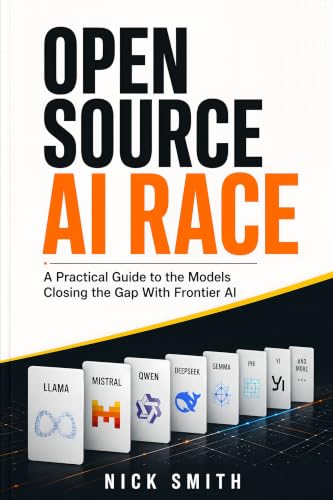
Open Source AI Race: A Practical Guide to the Models Closing the Gap With Frontier AI
As an affiliate, we earn on qualifying purchases.
As an affiliate, we earn on qualifying purchases.
Unresolved Questions About Sovereignty and Model Capabilities
While the performance and cost disadvantages of sovereign models are well-documented, it remains unclear how quickly sovereign providers will improve their offerings to close the gap. Additionally, the actual legal and security risks associated with cloud-based AI data access are debated, with some experts arguing that the threat is overestimated or manageable through existing legal frameworks. The long-term strategic implications of these dynamics are still evolving, and future developments could shift the balance.
As an affiliate, we earn on qualifying purchases.
Future Trends in AI Ownership and Sovereignty Strategies
Organizations are likely to accelerate their adoption of open-weight models and API-based solutions as performance and cost advantages become clearer. Meanwhile, sovereign providers may attempt to enhance their offerings or lobby for regulatory protections, but the economic and operational barriers remain significant. The coming months will reveal whether sovereign cloud solutions can innovate rapidly enough to compete with the open model ecosystem, or if the strategic focus will shift entirely toward model ownership.
As an affiliate, we earn on qualifying purchases.
Key Questions
Why is owning a top AI model more advantageous than relying on sovereignty?
Owning or licensing the best models provides superior performance, lower costs, faster deployment, and more control, whereas sovereignty often involves high expenses, slower updates, and limited capabilities.
Are sovereign cloud solutions entirely ineffective?
Not necessarily. They may offer legal or compliance benefits in specific jurisdictions, but current models show significant performance and cost disadvantages compared to open-weight models available via APIs.
Will sovereign providers catch up in AI model quality?
It is uncertain. While some providers are investing to improve their models, the current performance gap suggests that it may take years to close, if at all, given the high costs and technical challenges involved.
What should organizations prioritize in their AI strategy?
Organizations should focus on acquiring or developing the most capable models they can afford, balancing performance, cost, and strategic control, rather than over-investing in sovereignty that may limit agility.
Source: ThorstenMeyerAI.com