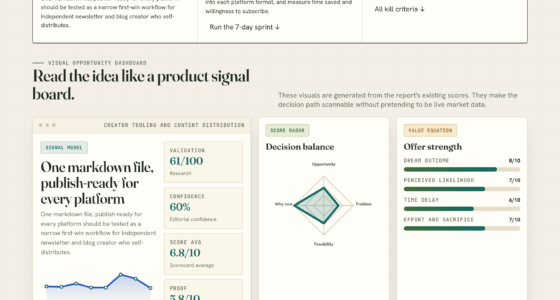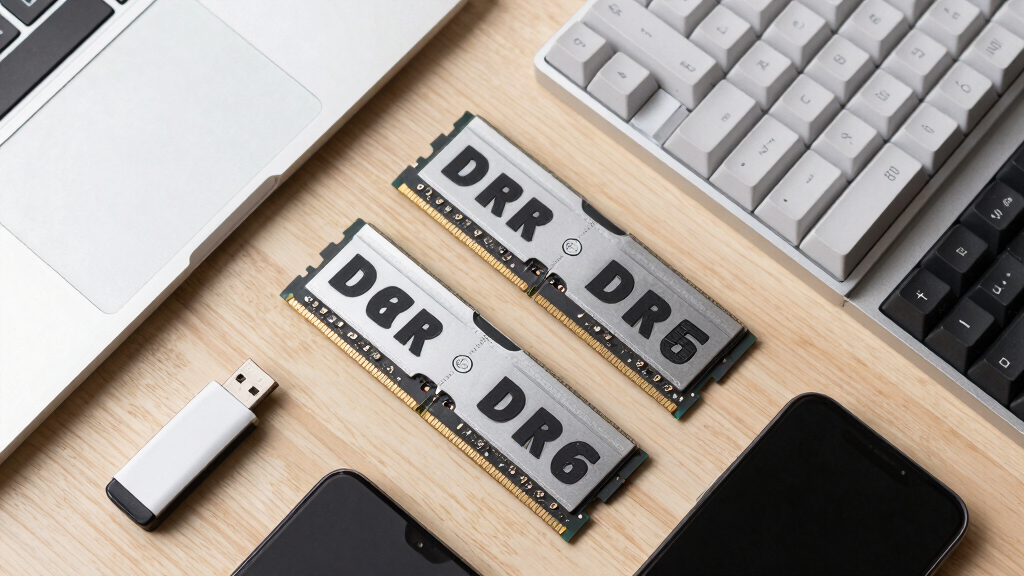

📊 Full opportunity report: DDR5 Now, DDR6 Soon: A Buyer’s Field Guide on ThorstenMeyerAI.com — validation score, market gap, and execution plan.
TL;DR
In 2026, DDR5 remains the practical choice for most buyers, with prices unlikely to drop soon. DDR6 is on the horizon but not yet ready for mainstream adoption, making current DDR5 the recommended upgrade path.
DDR5 memory remains the recommended choice for most PC builders in 2026, with prices unlikely to fall significantly until at least 2028. Meanwhile, DDR6 is still in development, with broad adoption not expected until 2027 or later, and at a much higher cost. This update clarifies the current market landscape and offers guidance for consumers navigating memory upgrades during the ongoing supply crunch.
Manufacturers and industry forecasts indicate that DDR5-6000 with CL30 timings offers the best value for mainstream users, providing optimal performance on both AMD and Intel platforms. Faster kits, such as DDR5-8000, are generally not cost-effective for most applications, as real-world gains are minimal. Capacity planning remains crucial: 32GB of DDR5 is sufficient for gaming and general use, while 64GB suits content creators and heavy multitaskers. Buying 128GB modules now is discouraged due to high prices and uncertain utilization.
Regarding DDR4, the market is shifting away from it, with prices now comparable to DDR5 and no future platform support. Building on DDR4 in 2026 is considered a poor investment, as it will become obsolete soon.
DDR6, on the other hand, promises significant performance improvements, including wider channels and higher speeds (up to 17,600 MT/s). However, it requires new CPUs, chipsets, and modules, with no backward compatibility. Its rollout is staged, starting with enterprise and AI servers in 2026–27, and reaching mainstream desktops around 2027, with widespread adoption not expected until 2030. Early adopters face immature technology, higher costs, and limited capacities. For more on current memory pricing trends, see this update on DDR5 prices.
DDR5 now, DDR6 soon
A buyer’s field guide. The 20-year instinct — wait for prices to drop, or wait for the next generation — is broken this cycle. Buy the DDR5 you actually need now; don’t wait for DDR6. Here’s the reasoning.
Driven to end-of-life, production slashed. Same money, dead-end socket. Leave a working DDR4 box alone — but never start a new build on DDR4 to “save.”
A framework, not a gamble. Buy the DDR5 you need now, at the sweet spot, in the capacity you’ll actually use — don’t buy DDR4, don’t wait for DDR6. The two costliest mistakes in this market are the ones that feel prudent: waiting for a price drop that isn’t coming, and waiting for a next-gen part that launches dearer than what’s on the shelf. Next: The SSD Squeeze.
Implications for PC Builders and Upgraders in 2026
This guidance helps consumers avoid overpaying for outdated or overpriced memory and prevents premature investments in DDR6, which is not yet ready for mainstream use. It emphasizes that waiting for DDR6 to mature and become affordable may result in delays and higher costs, especially since DDR5 offers a robust, cost-effective upgrade path for the foreseeable future. Strategic purchasing now ensures better performance and value, aligning with current and near-future platform support.
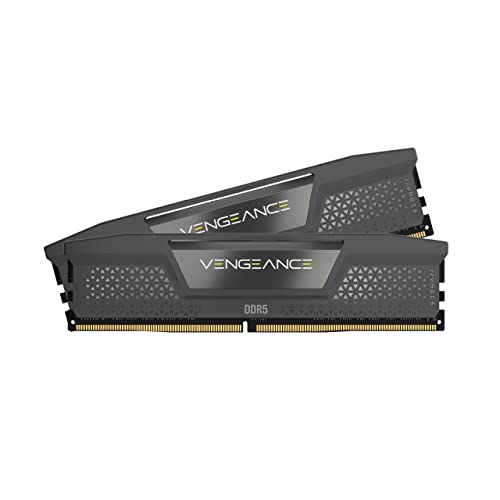
CORSAIR Vengeance DDR5 RAM 32GB (2x16GB) Up to 6000MHz CL36-44-44-96 1.35V AMD EXPO Intel XMP 3.0 Computer Memory – Grey (CMK32GX5M2E6000Z36)
- Maximum Speed Disclaimer: Requires overclocking and BIOS adjustments
- Enhanced Performance: Speeds up processing, rendering, buffering
- Onboard Voltage Regulation: Supports precise overclocking with iCUE software
As an affiliate, we earn on qualifying purchases.
As an affiliate, we earn on qualifying purchases.
Market Trends and Future Memory Developments in 2026
The memory market has experienced sharp price increases due to supply shortages, with forecasts indicating relief will not occur before 2028. DDR5 was introduced in 2021, and its adoption has been gradual, with most mainstream platforms supporting it since 2023. DDR6, designed to deliver higher bandwidth for demanding workloads, is still in development, with standardization and compatibility testing ongoing. Historically, new memory standards take several years to reach mass adoption, and DDR6 is no exception, with broad availability expected around 2027–28.
“DDR6 will begin rolling out in enterprise and server markets in 2026, with consumer platforms following in 2027, but prices and availability will be limited initially.”
— Manufacturers’ forecasts

TEAMGROUP T-Create Expert CL30 Overclocking 10L DDR5 32GB Kit (2 x 16GB) 6000MHz (PC5-48000) Intel XMP 3.0 & AMD EXPO Compatible Desktop Memory Module Ram Black – CTCED532G6000HC30DC01
- Capacity: 32GB (2 x 16GB) DDR5 RAM
- Speed: 6000MHz DDR5
- Compatibility: Intel XMP 3.0 & AMD EXPO
As an affiliate, we earn on qualifying purchases.
As an affiliate, we earn on qualifying purchases.
Uncertainties Surrounding DDR6 Adoption and Pricing
While DDR6 standards are now finalized, actual availability, pricing, and performance stability at launch remain uncertain. Early modules may face compatibility issues, and prices are expected to be high initially. The timeline for widespread adoption could shift depending on manufacturing yields, market demand, and platform readiness. Additionally, the exact performance gains relative to DDR5 in real-world scenarios are still being evaluated.

Crucial 32GB DDR5 RAM Kit (2x16GB), 5600MHz (or 5200MHz or 4800MHz) Laptop Memory 262-Pin SODIMM, Compatible with Intel Core and AMD Ryzen 7000, Black – CT2K16G56C46S5
- Memory Capacity: 32GB DDR5 RAM Kit (2x16GB)
- Memory Speed: 5600MHz, 5200MHz, or 4800MHz
- Performance Boost: Enhances multitasking and responsiveness
As an affiliate, we earn on qualifying purchases.
As an affiliate, we earn on qualifying purchases.
Next Steps for Consumers and Industry Stakeholders
Consumers should focus on building or upgrading PCs with DDR5 now, selecting configurations aligned with their workload needs. Monitoring JEDEC standard approvals and motherboard compatibility lists will be essential for early DDR6 adoption. Industry players will continue refining DDR6 modules and chipsets, with broader availability anticipated around 2027. Buyers should remain cautious of early-market prices and immature technology, waiting for mature, tested modules before committing.

Dell 64GB DDR5 5600 MHz CAMM Memory Module – KP7TJK-HYA-I, PC5-44800, 1.1 V, Non-ECC Upgrade RAM for Select Precision Mobile
- High Capacity: 64 GB DDR5 memory for demanding tasks
- Fast Performance: 5600 MHz speed for quick data transfer
- CAMM Form Factor: Proprietary module for better density and cooling
As an affiliate, we earn on qualifying purchases.
As an affiliate, we earn on qualifying purchases.
Key Questions
Should I buy DDR4 memory in 2026?
No. DDR4 is nearing end-of-life support, and building on DDR4 now will limit future upgrade options. It’s better to invest in DDR5 for new systems.
Is DDR6 worth waiting for?
For most users, no. DDR6 will be significantly more expensive and less mature in 2026–27. It’s better suited for specialized workloads and early adopters willing to accept risks.
How do I choose the right DDR5 kit?
Look for DDR5-6000 CL30 modules, which provide the best balance of performance and price. Avoid paying extra for higher speeds that offer minimal real-world gains.
When will DDR6 become mainstream?
Widespread availability is expected around 2027–28, with early enterprise and server adoption starting in 2026–27.
What are the risks of waiting for DDR6?
Delaying upgrades could mean missing out on platform improvements and performance gains achievable with DDR5 now. Early DDR6 modules may also face stability and capacity issues.
Source: ThorstenMeyerAI.com