
📊 Full opportunity report: Apple Is Reaching For Chinese Memory. Europe Doesn’t Even Have That Option. on ThorstenMeyerAI.com — validation score, market gap, and execution plan.
TL;DR
Apple is lobbying Washington to purchase memory chips from Chinese manufacturer CXMT, highlighting its dependence on Chinese supply. Europe, lacking domestic memory production, faces similar vulnerabilities with no alternative options.
Apple is lobbying Washington for permission to buy memory chips from Chinese manufacturer CXMT, a move confirmed by sources close to the matter. This development comes shortly after Apple raised prices on Macs and iPads, citing a global memory shortage. The move underscores Apple’s reliance on Chinese suppliers and the limited options available to it, even as it seeks to mitigate supply chain risks.
According to reports, Apple has initiated discussions with U.S. authorities to secure approval for purchasing memory chips from CXMT, a Chinese company on the Pentagon’s blacklist. This effort follows Apple’s recent price hikes, which are attributed to a global shortage of memory components crucial for its devices. The company’s lobbying effort signals a strategic move to diversify supply sources amid ongoing geopolitical tensions and supply chain constraints.
Meanwhile, Apple has alternative options within the U.S., including Micron, and can exert influence through lobbying efforts. However, the Chinese option remains significant due to CXMT’s capacity and the current supply-demand imbalance in the memory chip market. The move highlights a broader industry trend where major tech firms are increasingly dependent on Chinese manufacturing, despite geopolitical risks.
Apple is reaching for Chinese memory. Europe doesn’t even have that option.
The shortage exposes America’s dependence — and Europe’s far more brutally. Apple has a domestic supplier, political weight, and the China option. Europe has no memory of its own, no seat at the table, no leverage on what counts.
- EU makes < 10% of the world’s semiconductors
- Effectively no DRAM, no HBM from Europe
- 3–4 memory makers worldwide — none European
- Pure price-taker: memory ~4× in 3 quarters
- ASML: EUV monopoly — no leading-edge chip without it
- Zeiss: precision optics, unrivalled worldwide
- imec · CEA-Leti · Fraunhofer: world-class research
- Infineon, NXP, STMicro: automotive · power · SiC
The shortage is a sovereignty test — Europe fails on supply but still holds the leverage in its hand. If even Apple can’t buy its way out, Europe’s answer isn’t to buy its way in, but to run two tracks: press the unique chokepoints as real leverage — and cut dependence wherever it can without Brussels: local-first, open weights, quantization, right-sized hardware. Bury the 20% dream, defend what’s yours, need less.
Implications for Global Supply Chains and Europe’s Vulnerability
This development illustrates the fragility of global semiconductor supply chains, especially for memory chips, which are vital for high-performance computing, AI, and consumer electronics. Apple’s reliance on Chinese chips reveals how geopolitical tensions can threaten supply continuity. For Europe, which produces almost no memory chips and has limited manufacturing capacity, the situation exposes a critical vulnerability. The lack of domestic production and influence over global supply chains could leave European companies and consumers exposed to similar risks, especially during crises or geopolitical conflicts.
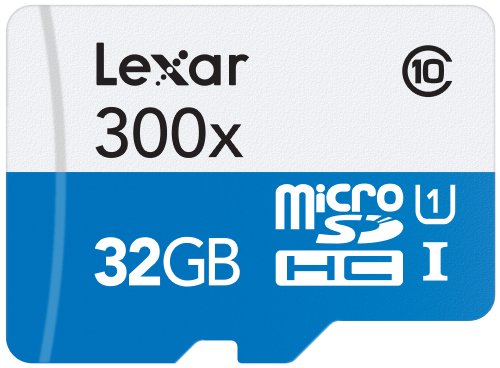
Lexar High-Performance MicroSDHC 300x 32GB UHS-I/U1 w/Adapter Flash Memory Card – LSDMI32GBB1NL300A
Premium memory solution for tablets, sports camcorders, and smartphones
As an affiliate, we earn on qualifying purchases.
As an affiliate, we earn on qualifying purchases.
Europe’s Semiconductor Manufacturing Gap and Strategic Limitations
Europe’s semiconductor industry is heavily dependent on imports, with less than 10 percent of global semiconductor manufacturing by value originating within the EU. The number of European DRAM makers has dwindled from over twenty in the 1990s to just a handful today, with none capable of producing advanced memory chips like HBM. Fabrication is concentrated in East Asia, and design is mainly in the U.S., leaving Europe as a price-taker with minimal influence over chip prices and supply.
European efforts to boost domestic capacity, such as the EU Chips Act aiming for 20 percent market share by 2030, have fallen short. Current projects face delays or collapse, and the overall goal now appears unlikely due to the enormous costs and technical barriers involved. This leaves Europe reliant on external suppliers and vulnerable to supply disruptions, especially in high-demand segments like AI and high-performance computing.
“Apple’s move to lobby Washington for Chinese memory chips exposes its dependence on Chinese supply chains, a vulnerability that Europe shares but cannot address with comparable manufacturing capacity.”
— Thorsten Meyer

64MB (2X32MB) EDO Non-Parity 60NS SIMM 72-PIN 5V 8X32
Number of Modules: 2
As an affiliate, we earn on qualifying purchases.
As an affiliate, we earn on qualifying purchases.
Unclear Impact of U.S. Approval and Future Supply Risks
It is not yet confirmed whether U.S. authorities will approve Apple’s request to purchase Chinese memory chips. The political and trade implications remain uncertain, and the broader impact on global supply chains depends on future regulatory decisions and geopolitical developments.

CORSAIR Vengeance LPX DDR4 RAM 32GB (2x16GB) Up to 3200MHz CL16-20-20-38 1.35V Intel XMP AMD EXPO Computer Memory – Black (CMK32GX4M2E3200C16)
Disclaimer: Maximum Speed requires overclocking/PC BIOS adjustments. Maximum speed and performance depend on system components, including motherboard and…
As an affiliate, we earn on qualifying purchases.
As an affiliate, we earn on qualifying purchases.
Next Steps in Apple’s Supply Strategy and European Response
Apple’s lobbying efforts will continue to unfold, with decisions from U.S. regulators expected in the coming months. Simultaneously, Europe will assess its own strategic options, potentially accelerating investments in domestic manufacturing or forming new supply alliances. The broader industry will monitor how geopolitical tensions influence global chip supply and pricing.

Timetec 8GB KIT(2x4GB) Compatible for Apple DDR3 1067MHz / 1066MHz PC3-8500 CL7 for Mac Book, Mac Book Pro, iMac, Mac mini (Late 2008, Early/Mid/Late 2009, Mid 2010) SODIMM Memory MAC RAM Upgrade
DDR3 1066MHz PC3-8500 204-Pin Unbuffered Non ECC 1.5V CL7 Dual Rank 2Rx8 based 256×8 Module Size: 8GB KIT(2x4GB…
As an affiliate, we earn on qualifying purchases.
As an affiliate, we earn on qualifying purchases.
Key Questions
Why is Apple seeking Chinese memory chips now?
Apple is facing a global memory shortage that has increased costs and constrained supply. The Chinese manufacturer CXMT offers an alternative source, and Apple’s lobbying aims to secure approval to diversify its supply chain amid geopolitical tensions.
What does this mean for Europe’s tech industry?
Europe’s lack of domestic memory chip production means it remains highly dependent on imports, making it vulnerable to supply disruptions and price fluctuations. The situation underscores the need for strategic investments in local manufacturing capacity.
Could Europe develop its own memory chip industry?
While technically possible, building a competitive memory chip industry in Europe would require decades and hundreds of billions of euros. Current efforts are focused on strategic chokepoints and partnerships rather than full autarky.
What are the risks of dependence on Chinese memory chips?
Dependence on Chinese chips exposes companies to geopolitical risks, trade restrictions, and supply disruptions, especially during conflicts or sanctions. Diversifying supply sources and developing local capacity are seen as ways to mitigate these risks.
Source: ThorstenMeyerAI.com