
TL;DR

Get business pricing on monitors, keyboards and dev gear
- Business-only prices and quantity discounts
- Tax-exempt purchasing
- Multiple users, one account, clear invoices
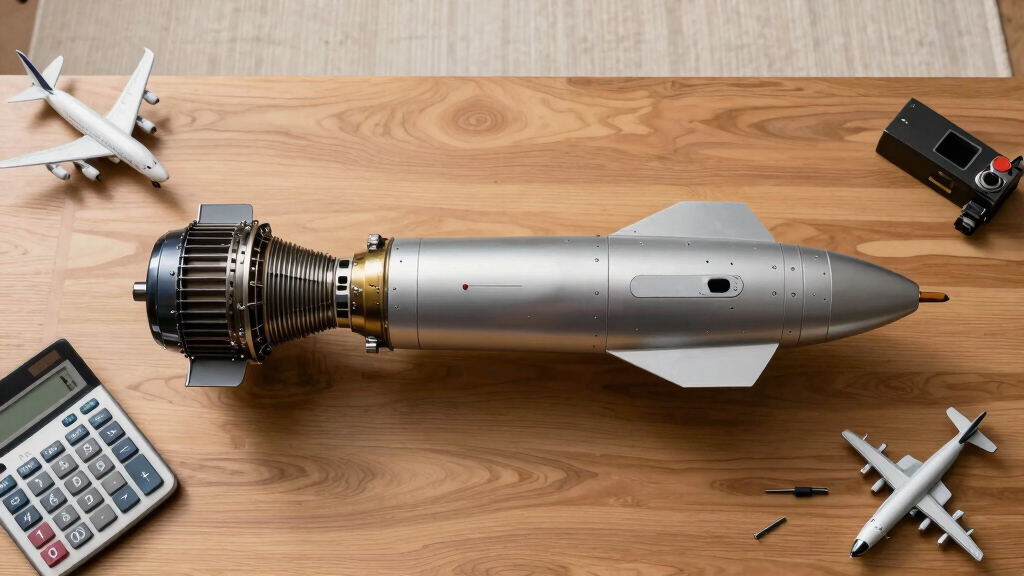
Japan’s JAXA and partners completed a ground combustion test of a ramjet engine designed for Mach-5 hypersonic aircraft. This milestone advances efforts to enable ultra-fast transoceanic travel, with future flights potentially reducing Tokyo-LA trips to two hours.
Japan’s Aerospace Exploration Agency (JAXA), in collaboration with several universities, has successfully completed a ground test of a ramjet engine designed for Mach-5 hypersonic aircraft, marking a significant milestone in hypersonic flight development.
The test, conducted at JAXA’s Kakuda Space Center, simulated flight conditions at five times the speed of sound (Mach 5) at an altitude of approximately 25 kilometers. The experiment validated the engine’s performance, heat shielding, and control systems under extreme thermal and aerodynamic stresses.
This ground combustion trial involved a scaled-down model mounted in a wind tunnel, with advanced thermal protection systems to manage surface temperatures exceeding 1,000°C. The successful test paves the way for future actual flight tests, which could occur via sounding rockets, with the goal of achieving operational hypersonic passenger aircraft by the 2040s.
Why It Matters
This development could revolutionize international travel, reducing transoceanic flights from around 10 hours to approximately two hours, significantly impacting global mobility and commerce. It also demonstrates Japan’s advancing capabilities in hypersonic technology, which could influence future aerospace innovation and strategic defense considerations.
As an affiliate, we earn on qualifying purchases.
Background
Hypersonic flight has long been a goal for aerospace engineers, with the U.S. and Russia conducting similar research. Japan’s recent success builds on prior efforts, such as NASA’s development of the X-59 Quiet Supersonic aircraft, and aligns with global trends toward faster, more efficient travel. Previous tests have focused on high-temperature materials and thermal management, but this marks the first successful ground combustion validation for Japan’s Mach-5 ramjet engine.
“This successful ground test confirms our engine design’s viability under hypersonic conditions, bringing us closer to real flight tests.”
— JAXA spokesperson
“Achieving stable combustion at Mach 5 in a controlled environment is a major breakthrough for hypersonic propulsion technology.”
— Professor Hiroshi Tanaka, Waseda University
Mach 5 hypersonic aircraft parts
As an affiliate, we earn on qualifying purchases.
As an affiliate, we earn on qualifying purchases.
What Remains Unclear
It remains unclear when actual flight tests will occur, and whether technical or regulatory hurdles could delay progress. The scalability of the engine design for full-sized passenger aircraft has yet to be demonstrated, and commercial viability is still years away.
thermal protection systems for high-speed aircraft
As an affiliate, we earn on qualifying purchases.
As an affiliate, we earn on qualifying purchases.
What’s Next
Next steps include mounting the engine on a sounding rocket for suborbital flight testing, expected within the next 1-2 years. Success there would lead to further development, certification, and eventual operational deployment possibly by the mid-2040s.
aerospace thermal shielding materials
As an affiliate, we earn on qualifying purchases.
As an affiliate, we earn on qualifying purchases.
Key Questions
What is a ramjet engine?
A ramjet is an air-breathing jet engine that relies on high-speed forward motion to compress incoming air for combustion, with no moving parts. It is suited for hypersonic speeds but cannot operate from a standstill.
How fast is Mach 5?
Mach 5 is five times the speed of sound, approximately 6,174 kilometers per hour (3,836 miles per hour) at sea level, but slightly less at high altitudes.
When could hypersonic passenger flights become available?
While initial tests are promising, commercial hypersonic flights are likely at least two decades away, with optimistic estimates targeting the 2040s for operational service.
What are the main challenges remaining?
Key challenges include scaling the engine for full-sized aircraft, ensuring thermal protection, meeting safety and regulatory standards, and developing supporting infrastructure for hypersonic travel.
Source: Hacker News
Halloween Picks
halloween
As an affiliate, we earn on qualifying purchases.