TL;DR
The z386 project is an open-source FPGA implementation of the Intel 80386 CPU, built around recovered original microcode. It can run DOS 6/7, protected-mode software, and classic games. This development offers both educational insight and practical emulation of early x86 architecture.
The z386 project has achieved a significant milestone by creating an FPGA-based 80386 CPU built around recovered original microcode, enabling it to run DOS 6, DOS 7, and protected-mode applications, including classic games like Doom.
The z386 is an open-source FPGA implementation of the Intel 80386 microprocessor, reconstructed from publicly available microcode disassembly. It can run real operating systems and software, including DOS 6/7 and protected-mode programs such as DOS/4GW and DOS/32A, and can execute classic games like Doom and Cannon Fodder.
This project is the fifth installment in a series exploring 386 architecture, with the current build performing at approximately 70MHz equivalent speed, comparable to a low-end 486. It features a 16 KB L1 cache, a microcoded control ROM of 2,560 entries, and maintains many original 386 structures, such as segmentation, paging, and protection units, while employing FPGA-specific optimizations.
Why It Matters
This development matters because it provides both an educational tool and a practical platform for emulating early x86 hardware, deepening understanding of microarchitecture and microcode. It also offers a foundation for hobbyists and researchers interested in hardware recreation and preservation of legacy software.
By reconstructing the 386 at this level, the project demonstrates the feasibility of detailed hardware emulation using open-source hardware and recovered microcode, potentially influencing future retro-computing and hardware research.

Cyclone 10 FPGA Development Board – CycloFlex
Altera 10CL016 FPGA with 16,000 Logic Elements. This FPGA Development Kit requires an external JTAG Programmer. The Cyclone…
As an affiliate, we earn on qualifying purchases.
As an affiliate, we earn on qualifying purchases.
Background
The 80386 was a pivotal CPU in the evolution of personal computing, introducing protected mode and hardware virtualization features. Its microcode was recently disassembled and shared, enabling projects like z386 to reconstruct the chip’s microarchitecture in FPGA form. Prior efforts focused on simpler CPUs like the 8086, but the 386’s complexity posed a greater challenge, requiring detailed understanding of its micro-operations and control logic.
This project builds on previous disassemblies and reconstructions, aiming to produce a functional, educational replica capable of running real software, not just emulators or simulators.
“z386 is now capable of booting DOS and running protected-mode programs, offering a new way to experience early x86 architecture.”
— Project developer
“Recreating the 386 microarchitecture from recovered microcode is a significant step for hardware preservation and educational purposes.”
— Hacker News contributor
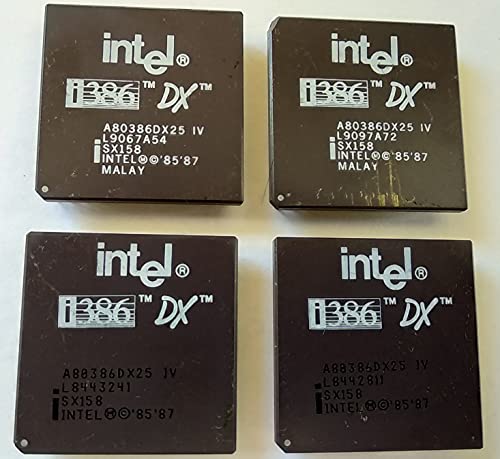
Intel – I386 80386 Processor 25MHz – SX218
As an affiliate, we earn on qualifying purchases.
As an affiliate, we earn on qualifying purchases.
What Remains Unclear
It is not yet clear how fully optimized or stable the current implementation is, and whether it can handle all features of the original 386, such as complex privilege and exception handling. Further testing and refinement are ongoing.

Interweb Compatible with TEAC FD-235HF Black Faceplate C829 1.44MB 3.5" Inch Internal Floppy Disk Drive 193077C8-29
Black Faceplate
As an affiliate, we earn on qualifying purchases.
As an affiliate, we earn on qualifying purchases.
What’s Next
Next steps include extensive testing with a broader range of software, optimizing performance, and possibly expanding support for additional features like hardware virtualization. The project aims to refine microcode accuracy and stability for broader use.

Notre Dame de Paris 7380 PCS Micro Building Blocks Set – Detailed Architectural Model Kit for Adults & Teens, Creative DIY Gift Idea, Miniature Construction Kit for Architecture Enthusiasts
Stunning Aesthetic Appeal:Construct the iconic Notre Dame Cathedral with 7380 intricately detailed micro building blocks, creating a visually…
As an affiliate, we earn on qualifying purchases.
As an affiliate, we earn on qualifying purchases.
Key Questions
Can z386 run all original DOS software?
It currently can run many DOS 6/7 applications and protected-mode programs, but full compatibility with all original software remains under development.
What hardware is needed to run z386?
An FPGA development board capable of supporting the z386 design, with at least 85MHz clock capability and sufficient memory resources, is required.
How accurate is the microcode reconstruction?
The microcode is based on publicly available disassemblies and reverse engineering, aiming for high fidelity but not yet perfect. Ongoing refinements are expected.
Is this project suitable for educational purposes?
Yes, it provides a detailed view of 386 microarchitecture and microcode, making it a valuable resource for students and hobbyists interested in CPU design and history.
Source: Hacker News