TL;DR
Artist Prune Nourry and Google Arts & Culture have made a 10-minute documentary using archival research and Google AI tools to visualize the studios of women sculptors who worked in Paris. The film accompanies the Petit Palais exhibition Visionaries, open from October 20, 2026, to January 30, 2027.
Artist Prune Nourry and Google Arts & Culture have released a 10-minute documentary that uses archival research and generative AI to recreate the studios of women sculptors who lived and worked in Paris. The film accompanies Visionaries, an exhibition at the Petit Palais that opened October 20 and presents Nourry’s plaster portraits of 18 historical women artists.

Get business pricing on monitors, keyboards and dev gear
- Business-only prices and quantity discounts
- Tax-exempt purchasing
- Multiple users, one account, clear invoices
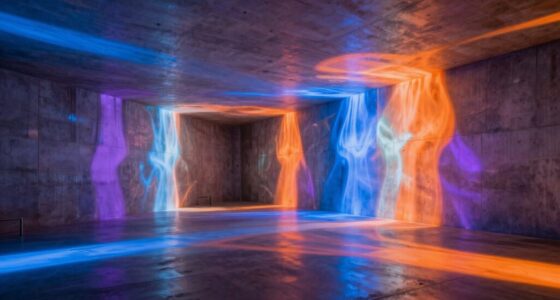
The documentary was made with film director Vincent Lorca after a year of research by three art historians. Their source material included letters, journals and photographic portraits. Google says few historical photographs of the sculptors’ actual workspaces survive, so creative technologist-in-residence Lynn Cherny used the company’s generative AI and image-editing models to visualize studios associated with artists including Nancy Elizabeth Prophet, Jane Poupelet and Camille Claudel.
According to Google, a custom tool built with Google Gemini helped the team create 3D models from archival photographs and animate camera paths through the reconstructed spaces. The film also includes an AI-edited sequence conceived by Nourry and Lorca: female students are gradually removed from an archival photograph of Antoine Bourdelle’s studio, leaving the men visible. The sequence is presented as a visual illustration of how women’s participation in artistic life was later obscured.
Visionaries runs at the Petit Palais through January 30, 2027, with the documentary installed in the museum galleries. Google Arts & Culture has also published a behind-the-scenes trailer online. The project’s visualizations are reconstructions, not surviving photographs of the artists’ studios.
Making Women Artists Visible
The project brings attention to a gap in the historical record: women sculptors worked in Paris during the late 19th and early 20th centuries, but few images of their studios remain. Recreating those spaces offers viewers a way to imagine the conditions in which the artists worked, while the film and exhibition foreground their work rather than treating women only as models or muses.
The approach also shows how generative AI can be used to interpret incomplete archives in a museum setting. Its value depends on viewers understanding the distinction between documented evidence and a visual reconstruction. The available account describes the research process and tools, but does not provide an independent assessment of the reconstructions’ historical accuracy.
Products Worth Considering

LG UltraGear 34G600A-B 34-Inch Curved WQHD Gaming Monitor, 160Hz

Jackery Explorer 300 Portable Power Station with 40W Solar Panel, 292Wh

Apple iPad 11-inch (A16), 128GB, Wi-Fi, Silver
As an affiliate, we earn on qualifying purchases.
The Archives Behind Visionaries
Google’s report places these artists in a period when women faced social constraints and limited access to artistic training. Despite those barriers, women sculptors lived and worked across Paris and contributed to the city’s art world. Their roles, the company says, were often later framed as those of models or muses, while their work as artists received less attention.
The exhibition responds to that history through monumental plaster portraits by Nourry, representing 18 historical female sculptors. The documentary extends the exhibition’s focus from portraits to workspaces, using research materials gathered over a year. The museum presentation began October 20, 2026, alongside Art Basel Paris, and is planned to continue until January 30, 2027.
““Because few historical photos of their actual workspaces exist,” the team used generative AI and image-editing models to bring the studios to life.”
— Google Arts & Culture report
What the Reconstructions Can Show
The source report does not identify which specific archival photographs, letters or journal entries support each studio detail, nor does it explain how the team handled gaps or conflicting evidence. It also does not describe a formal review of the AI-generated scenes by independent historians. The spaces should therefore be understood as interpretive reconstructions based on archival material, not verified documentary images of the studios as they appeared.
Google’s announcement does not provide details about the models’ technical limits, the extent of manual editing, or whether the museum will publish further documentation of the research. Those points remain unclear from the available information.
Exhibition Runs Through January
The Petit Palais exhibition is scheduled to remain open through January 30, 2027, with the film installation available in the museum galleries. Google Arts & Culture has made a behind-the-scenes trailer available online. The source material does not announce further screenings, additional exhibition venues or a later release date for the full documentary.
Visitors can view the portraits and film together during the exhibition period. Any further explanation of how individual studio scenes were constructed would depend on additional material from the artists, researchers, Google Arts & Culture or the museum.
Key Questions
What is the Prune Nourry documentary about?
The 10-minute film uses archival research and AI-generated imagery to visualize studios associated with women sculptors who worked in Paris.
Which artists’ studios are represented?
Google names Nancy Elizabeth Prophet, Jane Poupelet and Camille Claudel among the sculptors whose studios are brought to life. The report does not list every artist featured in the film.
Where and when can visitors see Visionaries?
The exhibition is at the Petit Palais in Paris and is scheduled to run from October 20, 2026, through January 30, 2027. The documentary is installed in the museum galleries.
Are the recreated studios historical photographs?
No. The studios are AI-assisted visual reconstructions built from archival materials. Google says few photographs of the actual workspaces survive, and the report does not claim that the generated scenes reproduce them exactly.
Source: rss