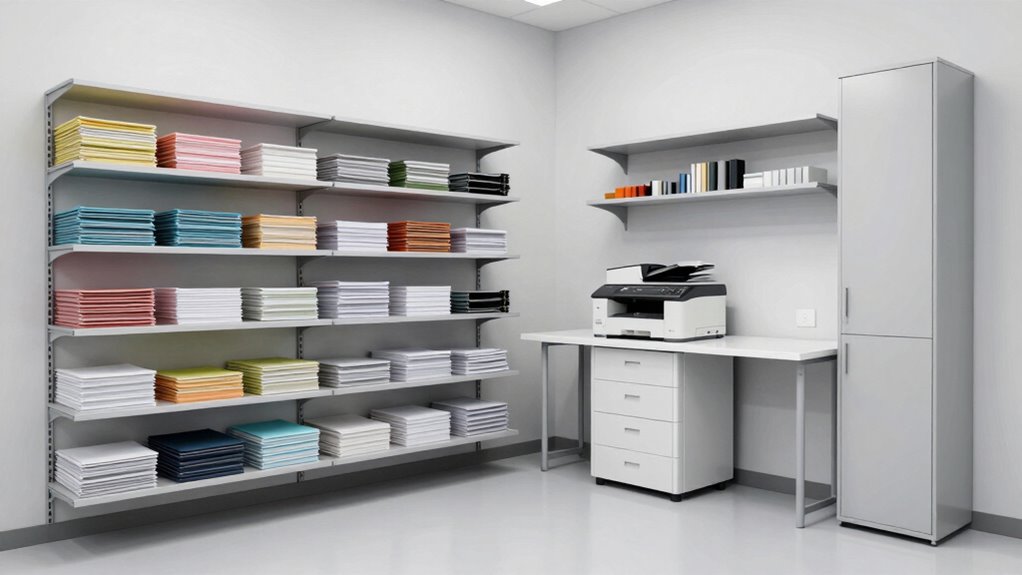

To organize your print room without wasting floor space, focus on maximizing vertical storage with wall-mounted shelves, pegboards, and adjustable units. Use space-saving furniture that can be tucked away or stacked, and install wall cabinets for tools and supplies. Designate specific zones for tasks like paper loading and printer maintenance to keep surfaces clear. For more tips on creating an efficient, clutter-free space, keep exploring this helpful guide.

Get business pricing on monitors, keyboards and dev gear
- Business-only prices and quantity discounts
- Tax-exempt purchasing
- Multiple users, one account, clear invoices
Key Takeaways
- Install wall-mounted shelves and cabinets to store supplies and equipment vertically, freeing up floor space.
- Use pegboards and wall hooks for tools, cords, and frequently used items for easy access and organization.
- Designate specific zones for printing, loading paper, and maintenance to keep work areas clear.
- Utilize under-desk storage, rolling carts, and stackable containers to maximize vertical and hidden space.
- Incorporate space-saving, ergonomic furniture that can be tucked away when not in use to optimize available area.

A well-organized print room can boost efficiency and save valuable floor space, especially when you make smart use of vertical storage options. Instead of cluttering the floor with bulky cabinets or stacks of paper, focus on maximizing wall space with shelves, racks, and pegboards. Vertical storage solutions help keep everything within reach while maintaining a clean and open environment. Invest in adjustable shelving units that can be customized to fit your equipment, supplies, and documents. This allows you to adapt your storage as your needs evolve, avoiding unnecessary crowding. Incorporating sustainable design principles can also help reduce waste and promote eco-friendly organization habits in your space.
Maximize wall space with adjustable shelves and vertical storage to keep your print room organized and adaptable.
Color coordination plays an essential role in creating an efficient print room. By assigning specific colors to different categories—such as paper types, ink cartridges, or stationery—you can quickly identify items at a glance. Use labeled bins or containers with color-coded labels for easy sorting. For example, all printing paper could be stored in blue containers, ink cartridges in red, and supplies like pens or staples in yellow. Not only does this streamline your workflow, but it also makes the space visually organized and less chaotic. When everything has a designated place and color code, you save time searching for supplies and reduce the risk of misplacing important items.
Effective storage solutions are key to keeping your print room tidy. Consider wall-mounted cabinets or pegboards to hang tools, scissors, or cords, freeing up surface space. Use stackable trays or drawer units to organize small items and paperwork, keeping everything neat and accessible. Clear containers allow you to see contents instantly, preventing wasteful rummaging. Additionally, utilize under-desk storage or rolling carts that can be tucked away when not in use, giving you flexibility without sacrificing space. Keep frequently used supplies within arm’s reach, and store less-needed items in higher or less accessible areas. Regularly updating your storage organization methods can help maintain a clutter-free environment and improve overall efficiency. Paying attention to space-saving furniture and accessories can further optimize your limited area and make the room more functional.
Finally, keep your work surfaces clear by designating specific zones for different tasks. For instance, set up a dedicated area for printer maintenance, another for paper loading, and a separate workspace for finishing or sorting printed materials. This compartmentalization enhances productivity and prevents clutter buildup. Regularly review and declutter your storage to make sure that only necessary items occupy your limited space. Maintaining a logical flow and consistent organization pattern will help you keep your print room efficient, functional, and free of wasted space. With strategic vertical storage, thoughtful color coordination, and practical storage solutions, you create an environment that supports smooth operations and minimizes clutter. Emphasizing ergonomic design principles can also contribute to a more comfortable and efficient workspace.
Products Worth Considering

Amazon Kindle Paperwhite (12th Generation, 2024), 16GB, 7-Inch Display, Raspberry

Bose QuietComfort Ultra Wireless Over-Ear Headphones with Spatial Audio and Noise Cancellation, Black

LG UltraGear 32-inch Curved QHD Gaming Monitor (2560×1440, 180Hz, 1ms, 1000R, HDR10)
As an affiliate, we earn on qualifying purchases.
Frequently Asked Questions
What Are the Best Compact Storage Solutions for Print Supplies?
You should consider using modular drawer units and color-coded shelving for your print supplies. Modular drawers maximize space by stacking and organizing different items efficiently, while color-coded shelving helps you quickly identify supplies and reduce clutter. Together, these compact storage solutions keep your print room tidy, accessible, and space-efficient, making it easy to find what you need without wasting valuable floor space.
How Can I Improve Lighting in a Small Print Room?
Imagine sunlight spilling through a window, illuminating every corner of your small print room. To enhance the lighting, add sheer curtains that soften but still brighten the space with natural lighting. Complement this with adjustable task lighting at workstations, casting focused light where you need it most. This combination creates an inviting, well-lit environment, making your print room brighter, more efficient, and easier to work in.
Are There Eco-Friendly Organization Options for Print Areas?
Yes, you can choose eco-friendly materials like recycled bins and biodegradable labels for your print area. Opt for sustainable storage options such as bamboo shelves or reclaimed wood cabinets to reduce environmental impact. Using these sustainable storage solutions helps you organize efficiently without wasting floor space, while supporting eco-conscious practices. This approach keeps your print room clean, functional, and environmentally friendly, aligning with your commitment to sustainability.
How to Prevent Clutter Buildup Over Time?
Imagine this: your print room’s like a well-oiled machine, not a cluttered junkyard. To prevent clutter buildup, stay vigilant with print room maintenance and implement clutter prevention strategies, such as designated storage for supplies and regular cleanups. Encourage staff to put everything back in its place immediately. This way, the space stays organized, efficient, and clutter-free, saving you time and energy in the long run.
What Safety Measures Should I Consider in a Print Room?
You should prioritize safety protocols to protect yourself and others from fire hazards in your print room. Make certain proper ventilation and keep flammable materials away from heat sources. Install smoke detectors and fire extinguishers nearby, and regularly check electrical wiring for damage. Train yourself and staff on emergency procedures, and keep pathways clear to prevent accidents. These safety measures help maintain a secure environment and reduce risk of fires.
Conclusion
Now that you’ve mastered the art of clever storage, your print room will be both efficient and spacious—like a well-oiled machine. Remember, a tidy space boosts productivity and keeps everything within reach, even if your printer’s as big as an old-fashioned printing press! With these tips, you’ll turn your print room into a streamlined haven, proving that even in a world of smartphones, a well-organized workspace is still king. Happy organizing!