🔍 Read the full analysis: 3 Best AI Content Creation Tools In 2027: Your Guide To The Options on ThorstenMeyerAI.com

Get business pricing on monitors, keyboards and dev gear
- Business-only prices and quantity discounts
- Tax-exempt purchasing
- Multiple users, one account, clear invoices
TL;DR
This roundup compares three instructional books about using AI tools, not three standalone content-generation platforms. Canva for Business and AI Tools is the clearest fit for business visuals, ChatGPT for Content Creation names major social platforms, and AI Content Creation for Beginners 2026 is aimed at newcomers seeking a broader workflow.
A roundup published by ThorstenMeyerAI.com compares three books about using AI for content creation, recommending Canva for Business and AI Tools for branded visuals, ChatGPT for Content Creation for social-platform work, and AI Content Creation for Beginners 2026 for newcomers seeking scripts, prompts and simple workflows. The products are instructional guides, not AI software subscriptions, so readers must use external tools to make content.
The roundup ranks the books by how clearly their descriptions identify an audience and use case, how directly the stated topics relate to practical tasks, and how much buyers can infer from the information provided, a useful contrast with other AI content creation options. The site says its comparison is based on available product descriptions and does not assume unlisted chapters, examples, exercises, software access or publishing results.
Canva for Business and AI Tools is the top pick for a defined visual-business need. Its described scope includes branding, business templates, presentations and Canva AI. ChatGPT for Content Creation is presented as the most platform-specific option, naming YouTube, Instagram and TikTok, as well as caption writing. The supplied description, however, gives fewer details about the rest of its instruction than broader AI content tool roundups.
AI Content Creation for Beginners 2026 covers a broader collection of tools and tasks, including ChatGPT, Canva, video tools, prompts, scripts and simple faceless-content workflows. The roundup says that breadth may suit someone starting out, but the description does not explain how deeply each tool or workflow is covered. It ranks the book third overall based partly on that limited detail, while noting it could still be the best personal match for a new creator.
The 3 picks
- 1
 Canva for Business and AI Tools: From Zero to Professional Visual AssetsView on Amazon →
- 2
 AI Content Creation for Beginners 2026: How to Use ChatGPT, Canva, Video Tool…View on Amazon →
- 3
 ChatGPT for Content Creation: A Practical Guide to Growing on YouTube, Instag…View on Amazon →
Match the Guide to Your Output
The comparison covers three books describing different content-production needs: visual consistency, social publishing and beginner workflows. Their product information identifies different tasks and tools.
The books are instructional guides, not content-generation software. The roundup does not report that any title includes software access or guarantees audience growth. Readers would need to use tools such as ChatGPT or Canva and, for video, other apps to create content.
The titles differ in the scope and detail of their descriptions. The Canva title identifies a visual-business focus; the social-media title names platforms but provides fewer details about its overall coverage; and the beginner title lists a wider range of tools while leaving the depth of instruction unclear. The source bases its comparison on these available descriptions.
Products Worth Considering

Apple AirPods Pro 3 Wireless Earbuds with Active Noise Cancellation

DJI Mic 3 (2 TX + 1 RX + Charging Case) Wireless Microphone
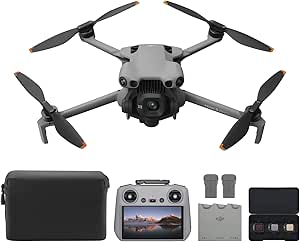
DJI Mini 5 Pro Fly More Combo Plus with DJI RC 2
As an affiliate, we earn on qualifying purchases.
How the Three Books Differ
The source presents this as a comparison of learning resources, rather than a ranking of AI products that generate content independently. Its selections are organized around three needs: business graphics and presentations, social-media captions and platform use, and entry-level workflows that combine text, design and video tools.
The roundup says the descriptions available to it are brief. It does not provide chapter lists, sample pages or detailed accounts of exercises. It also says it did not infer what the books teach beyond the tools, platforms and workflows explicitly named. The ranking is based on described fit, rather than a verified assessment of instructional quality or results.
The beginner guide’s third-place ranking reflects the source’s stated uncertainty about its detail, not a claim that it is unsuitable for beginners. The roundup says a reader seeking a broad introduction may find it the closest match.
“These are instructional guides, not standalone AI software.”
— ThorstenMeyerAI.com roundup
What the Descriptions Leave Out
The source does not provide sample pages, chapter lists or detailed contents for the three titles. The comparison therefore cannot establish how much instruction each gives, whether it includes practical exercises, or how current its tool-specific guidance is. The ChatGPT book’s description names social platforms and captions but says little about its other material; the beginner book lists several tools without specifying depth.
The roundup also supplies no independent review findings, product testing, sales information or evidence about reader outcomes. Its assessments of which guide fits each use case are editorial judgments based on the short descriptions it reviewed. Reader outcomes and whether the instructions match current versions of the named tools are not verified by the source.
Check Contents Before Buying
Readers can list the outputs they need to make, such as branded graphics, captions or short-form videos, and compare those tasks with each book’s stated scope. Before purchasing, they can look for sample pages, a table of contents and current tool references to assess the level of detail and relevance.
The source specifies no further product updates, testing or follow-up comparisons. Additional information could include fuller descriptions or previews from the publishers, particularly for books whose coverage is less clearly detailed.
Key Questions
Are these three AI content-generation apps?
No. The roundup describes them as books that teach readers to use AI tools. Readers need external software, such as ChatGPT, Canva or video apps, to create content.
Which guide is aimed at business graphics and presentations?
Canva for Business and AI Tools is the roundup’s pick for branding, business templates, presentations and Canva AI.
Which book names YouTube, Instagram and TikTok?
ChatGPT for Content Creation is the most directly tied to those platforms in the descriptions provided. The roundup also says the available description gives limited detail about the book’s full contents.
Is the beginner guide necessarily the least useful?
No. Its third-place position reflects the roundup’s limited information about the depth of its coverage. The source says its broad mix of prompts, scripts, ChatGPT, Canva and video tools may still suit a newcomer.
Does the comparison verify the books’ results or quality?
No. It ranks the titles by the clarity and stated relevance of their descriptions. The source does not provide independent testing, sample-page analysis or evidence of reader outcomes.
Source: ThorstenMeyerAI.com